UAE-Funded Initiative: First Artificial Rain in Lahore to Combat Smog Crisis
 Sabiha Rajpoot

UAE-Funded
Initiative: First Artificial Rain in Lahore to Combat Smog Crisis
In a groundbreaking effort to combat the persistent smog crisis in Lahore,
authorities initiated the first-ever artificial rain experiment on Friday.
Caretaker Punjab Chief Minister Mohsin Naqvi disclosed that the United Arab
Emirates (UAE) provided funding for this innovative approach, emphasizing that
the cost to the national exchequer was limited to water expenses.
Cloud Seeding Technique: 48 Flares and 10 Areas Affected
The artificial rain experiment employed the cloud seeding technique, where two
UAE aircraft dispersed chemicals into the clouds, triggering rain in a targeted
area. A total of 48 flares were fired during the process, leading to light rain
in 10 areas of Lahore. Chief Minister Naqvi highlighted that the clouds
generated around Shahdara and Muridke played a crucial role in the success of
the artificial rain endeavor.
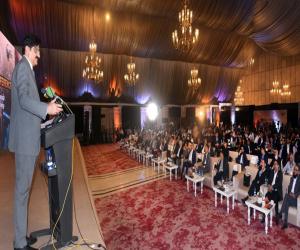
Addressing a press conference, CM Naqvi expressed optimism about the results
and announced future plans to install smog towers in the city. He underscored
the significance of this initiative in alleviating the hazardous air quality
that has plagued Lahore, transforming it into what he described as a
"poisonous gas chamber."
UAE Collaboration and Cloud Seeding Process
Detailing the collaboration with the UAE, CM Naqvi explained that the chemicals
in clouds were dispersed using aircraft provided by the UAE government. He
emphasized the minimal financial burden on the national exchequer, as the UAE's
support covered the expenses of the artificial rain experiment. Cloud seeding,
a form of weather modification, involves releasing silver iodide into clouds,
causing the formation of ice crystals and ultimately stimulating rainfall over
specific regions.
The successful implementation of artificial rain not only marks a significant
step in addressing Lahore's smog crisis but also opens avenues for further
exploration of innovative solutions to combat environmental challenges.