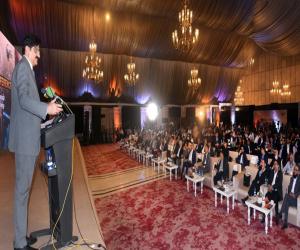
Murad says combination of physical, bio- chemical, methods to reduce BOD, COD in wastewater treatment
 Irfan Ali

Murad says combination of physical,
bio- chemical, methods to reduce BOD, COD in wastewater treatment
Polish Business climate change team
interested in joint venture
KARACHI Sindh
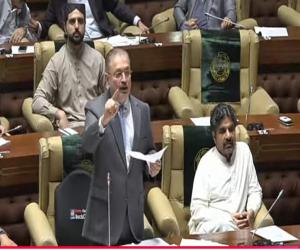
Chief Minister Syed Murad Ali Shah has said that reducing Biological Oxygen
Demand (BOD) and Chemical Oxygen Demand (COD) in wastewater treatment was
crucial for environmental protection, regulatory compliance, and public health
but employing the combination of physical, biological, chemical, and advanced
treatment methods could achieve significant reductions, leading to cleaner
water, healthier ecosystems, and cost-effective operations.
This he said while talking to a
high-level 14-member Polish Business
delegation led by the Polish Ministry of Climate Change and Environment along
with Polish Ambassador Mr Maciej Pisarski. In the meeting investment
opportunities in the province, particularly in the renewable energy, water,
air, green building, and smart cities projects were discussed. The meeting was
held at CM House and was attended by provincial ministers, Nasir Shah, Saeed
Ghani, Dost Mohammad Rahmoo, acting chief secretary Musadiq Khan, chairman
P&D Najam Shah and others.
Mr Shah and the visiting delegation
discussed investment opportunities in the province, particularly in the
renewable energy, water, air, green building and smart cities projects.
Wastewater Treatment Efforts: The CM
said that the Environmental Protection Agency has installed over 200 wastewater
treatment plants in various industrial estates across Sindh. Additionally, 87
tanneries were now required to treat their effluent through a combined effluent
treatment plant specifically designed for tanneries. He added that 55
industrial units were in the process of establishing their wastewater treatment
plants. “We want to utilise the treated water to increase green cover in the
province,” he said. He invited the business delegation to invest in these
projects either directly or on PPP mode.
Mr Shah quoting a recent industrial
survey conducted by the EPA in 2024 indicated that more than 650 industrial
units required wastewater treatment plants. “Sindh has 29 operational sugar
mills and seven distilleries, which face the major challenge of complying with
the Sindh Environmental Quality Standards of 2016 regarding wastewater. “These
standards require BOD levels of 80 mg/L and COD levels of 150 mg/L,” he said.
He added that therefore there were ample investment opportunities.
Challenges in Sludge Management:
During the discussion between the CM and the visiting climate change Polish
delegation it was pointed out that sludge often contained a high percentage of
water, making it bulky and expensive to transport and dispose of.
Proper handling and storage
facilities are necessary to prevent odours, pests, and contamination. The CM
and the delegation agreed that the treatment and disposal of sludge could be
costly, requiring significant investment in infrastructure and technology.
Finding sustainable and environmentally friendly disposal methods for sludge is
a persistent challenge.
Dust Emission (Particulate Matter):It
was agreed that addressing particulate matter (PM) was crucial for protecting
public health, preserving the environment, and ensuring economic
sustainability. Murad Ali Shah emphasizing the sources, health impacts, environmental
consequences, and effective control measures said that they could underscore
the importance of comprehensive strategies to reduce PM pollution.
Mr Shah said that Sindh has five
cement industries, six coal-fired power projects, and various industries with
coal-fired boilers. The delegation members said that the PM contributed to air
pollution, reducing visibility, and causing acid rain, which harms ecosystems
and structures. The CM said that meeting increasingly stringent national and
international air quality standards required significant investments in
emission control technologies. It was agreed that continuous monitoring and
accurate reporting of PM emissions were necessary for compliance, adding to
operational complexity and cost.
After the meeting, the CM and the
delegation members agreed to hold another session with Energy, Environment,
Industries, and local government departments to explore joint ventures. The CM
directed the acting chief secretary to arrange their meetings.