Hyderabad: Awami Tahreek Accuses IRSA and Federal Govt of Water Theft, Warns of Sindh’s Desertification
 Chehra WebDesk
Hyderabad: Awami Tahreek Accuses IRSA and Federal Govt of Water Theft, Warns of Sindh’s Desertification
Hyderabad,
Awami Tahreek has raised alarms over the alleged illegal diversion of Sindh’s water resources, accusing IRSA and federal government and Punjab of orchestrating a crisis that threatens to turn the province into a “barren desert.” In a joint press statement issued today, Awami Tahreek’s central president Advocate Vasand Thari, alongside leaders Noor Ahmed Katiar, Abdul Qadir Ranto, Noor Nabi Palijo, and Sarwan Jatoi, claimed that the Indus River System Authority (IRSA) has illegally created a 50% water shortage in Sindh, violating water-sharing agreements.
AT leaders alleged that Punjab has “stolen” Sindh’s rightful water share by operating the Tunsa-Panjnad and Chashma-Jhelum Link Canals, bypassing legal provisions. They dismissed Federal Minister Ahsan Iqbal’s recent denial of Punjab’s involvement as “false,” asserting that IRSA’s actions have already turned vast stretches of Sindh into arid zones. “Six canals are actively converting Sindh into a desert,” the statement warned, criticizing President Asif Zardari for “supporting the canals rather than opposing them.”
Awami Tahreek accused the Pakistan Peoples Party (PPP), a key federal ally, of complicity in the crisis, alleging its involvement in illegal land auctions and water encroachments. Despite governing Sindh and Balochistan, the PPP was accused of “tying the hands and feet of the people” and failing to protect provincial resources. References were made to the 26th Constitutional Amendment, PECA Act, and Form-47 as tools enabling corporate farming projects like the Green Pakistan Initiative, which activists claim prioritize elite interests over public welfare.
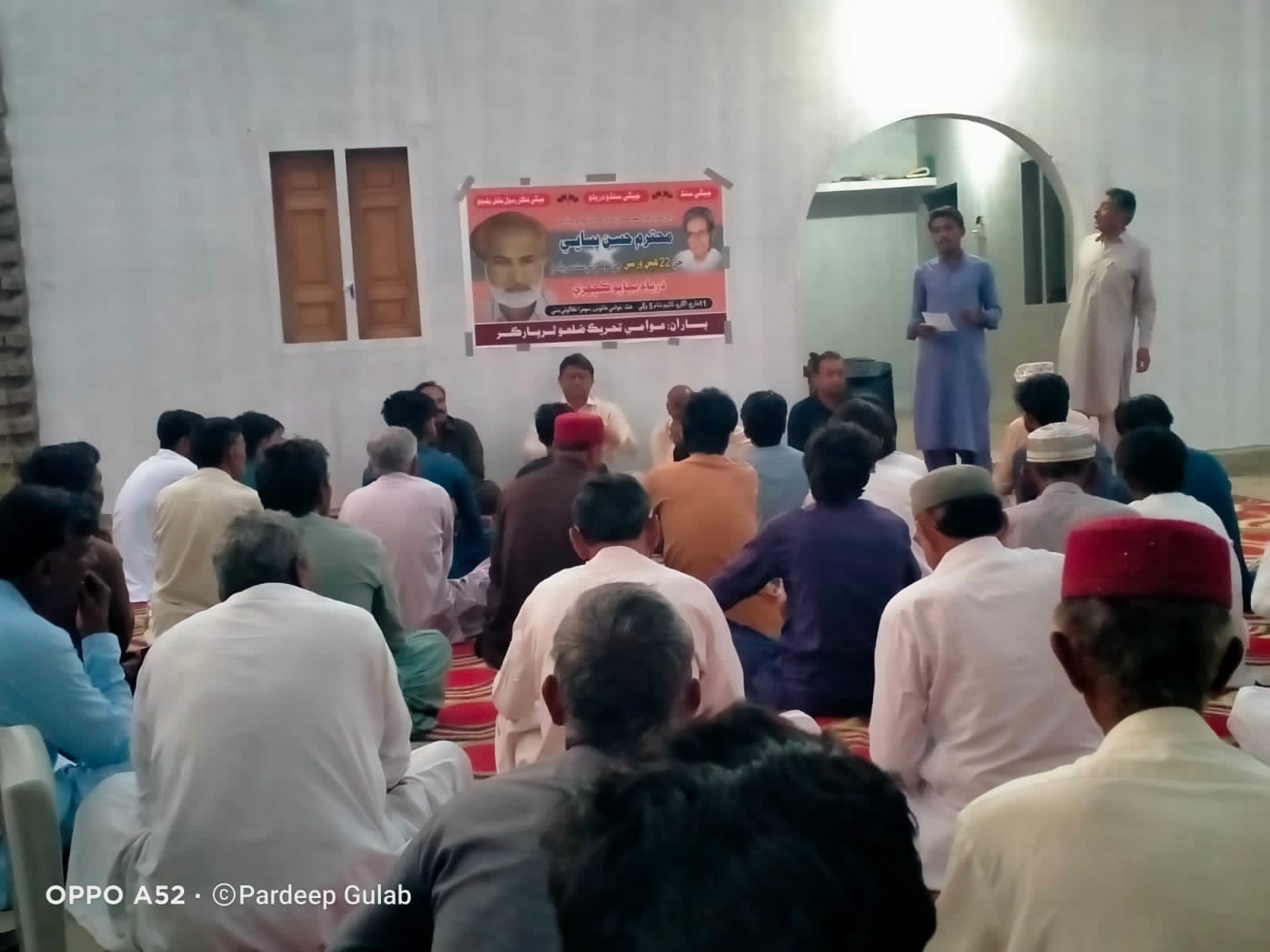
Awami Tahreek announced province-wide protests on March 14, coinciding with the International Day of Action for Rivers. Demonstrations will be held at key points along the Indus River, where activists and supporters of the Sindhiyani Tehreek will stage symbolic protests, including floating flowers in the river to mourn its “exploitation.” Rallies will demand the closure of disputed canals and an end to corporate agricultural projects.
Awami Tahreek leaders urged national and international media outlets to mark March 14 as Sindh River Day, amplifying awareness about the Indus’ ecological and cultural significance. “The media must spotlight this struggle,” the statement emphasized, framing the crisis as a battle for Sindh’s survival.
Awami Tahreek vowed to continue its opposition to canal networks and corporate farming, declaring, “The people of Sindh will resist until their land and water rights are secured.” With tensions escalating, the looming protests on March 14 are expected to draw thousands, further intensifying pressure on federal and provincial authorities.