High-Level Delegation Reviews Human Rights Conditions in Umerkot: Urgent Actions Recommended for Strengthening Human Rights and Service Delivery
 Irfan Ali
Umer Kot
A high-level delegation led by Mr. Rajveer Singh Sodha, Special Assistant to the Chief Minister Sindh on Human Rights, and Mr. Iqbal Detho, Chairperson of the Sindh Human Rights Commission (SHRC), conducted a comprehensive visit to District Umerkot to review human rights conditions within district level public units including the judicial lockup and civil hospital.
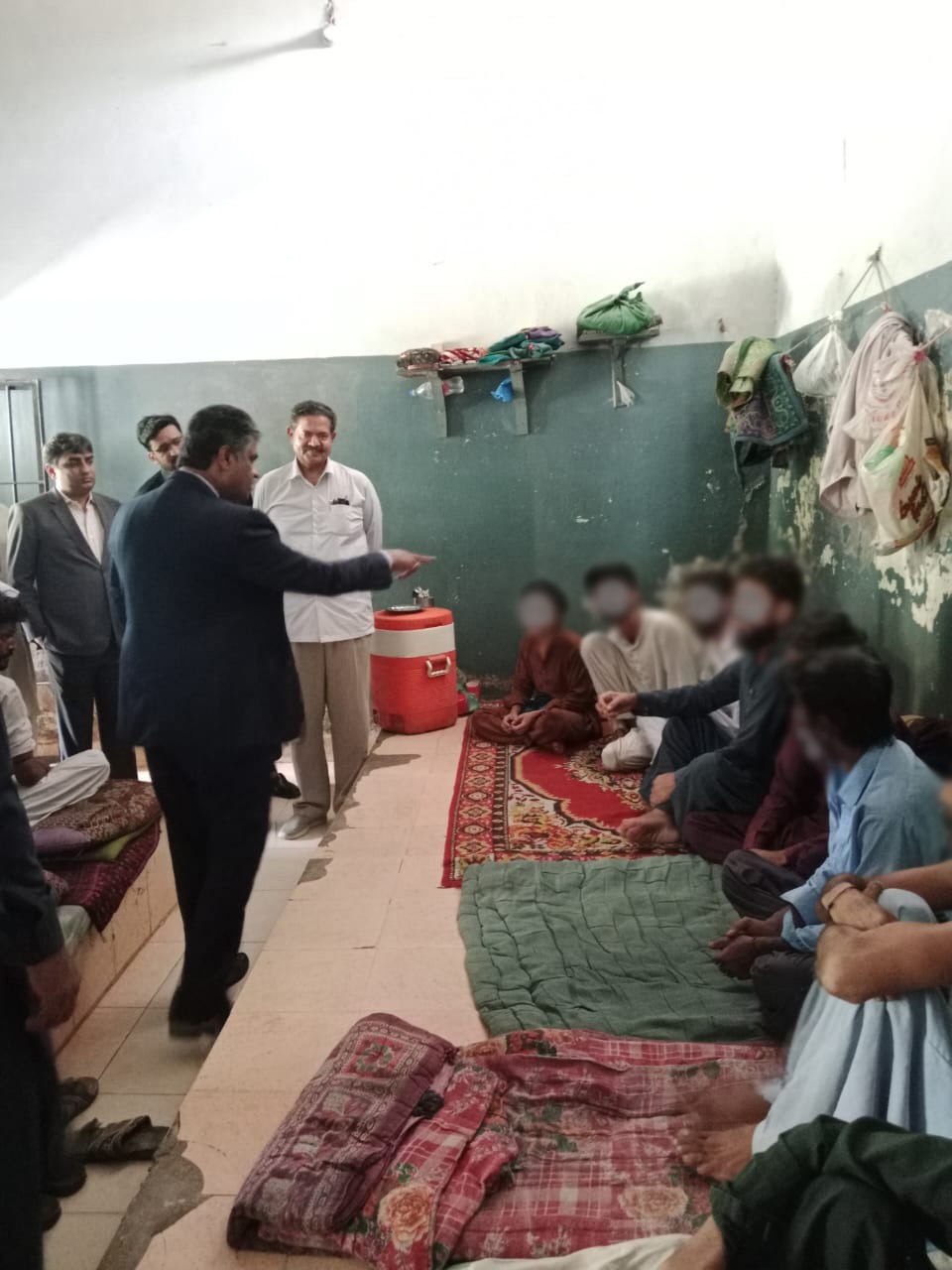
The delegation paid comprehensive visit to the judicial lockup in District Umerkot, accompanied by Deputy Commissioner Mr. Naveed Rahman Larik, law enforcement representatives, and members of civil society. The visit revealed deplorable living conditions including no functional electricity or ventilation, lack of lighting, and absence of ceiling fans—especially concerning during peak summer temperatures. Among the 44 inmates detained, majority were identified as narcotics addicts with limited or no legal aid, highlighting a major gap in justice and rehabilitation services. The delegation immediately directed the Deputy Commissioner to coordinate with relevant authorities ensuring the installation of alternate energy systems (solar panels); improve sanitation and hygiene facilities; engagement with District Legal Aid Committee for timely legal representation and liaise with the Health Department for screening and psychosocial support for drug-dependent inmates. Mr. Detho emphasized that even under-trial prisoners are entitled to rights under the Constitution and international human rights conventions. The delegation reiterated the Sindh Government’s commitment to uphold dignity and justice for all individuals, including those in detention.
The delegation also visited the District Headquarters Civil Hospital Umerkot, where they were briefed by DHO Dr. M. Ali Nohri and Medical Superintendent Dr. Fareed. The hospital faces serious challenges including shortages in essential staff; substandard and incomplete construction work and non-functional solar energy system, causing reliance on diesel generators burning approximately 100 liters of POL daily to operate essential medical equipment and lighting. The delegation expressed deep concern over these deficiencies and promised to escalate the matter to provincial health and energy departments for urgent intervention. They also highlighted the importance of sustainable energy solutions and strict monitoring of public sector construction projects to prevent misuse of resources and ensure efficient service delivery.
Earlier to visits, a district-level multi-stakeholder meeting was convened, chaired by Mr. Rajveer Singh Sodha and co-chaired by Mr. Iqbal Detho, to strengthen coordination between government departments, civil society, and academia on the promotion and protection of human rights. Mr. Detho presented the legal and institutional frameworks for human rights in Pakistan, stressing the critical role of duty bearers in ensuring rights-based governance. During the meeting, stakeholders highlighted the key issues including but not limited to the access to justice; protection of women, children, and minority rights; elimination of bonded labor and improved inter-departmental response and collaboration. Participants endorsed the need for continuous dialogue and joint action to build a people-centered human rights framework in Umer Kot district. The meeting brought together local civil society organizations, academia and media representatives.

During engagement with Umerkot Citizen Forum (UCF), Mr. Iqbal Detho, Chairperson of SHRC, held an interactive session with members of UCF and District Women Group (DWG) to enhance their understanding of rights-based advocacy and the procedural framework for engaging with government institutions at all levels. He emphasized that under the post-18th Constitutional Amendment framework, local advocacy must begin at the Union Council level and progress through the district and divisional tiers up to the provincial level for effective policy influence and systemic reform.
The high-level visit concluded with a shared commitment to strengthen human rights protections in Umerkot, promote institutional accountability, enhance access to justice and essential public services, and advance a rights-based development approach grounded in dignity, equality, and non-discrimination.

The Sindh Government and the Sindh Human Rights Commission reaffirmed their commitment to working closely with all stakeholders to ensure that human rights standards are implemented across all sectors.