Zulfiqar Ali Bhutto: A Great Leader
 Ishak Soomro
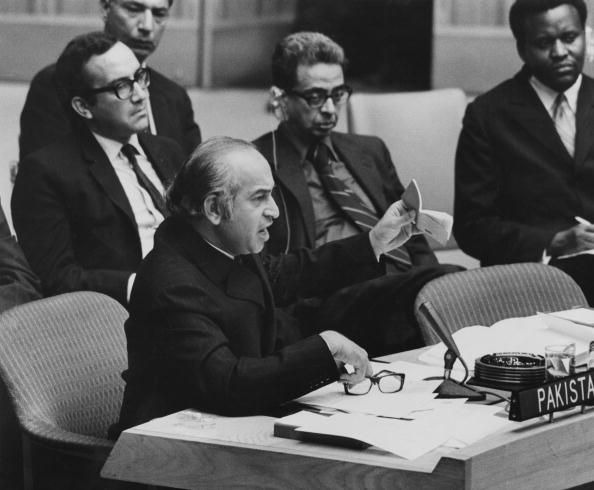
Zulfiqar Ali Bhutto remains one of the most popular and influential leaders in the history of Pakistan. Born on January 5, 1928, in Larkana, he rose to prominence in a remarkably short life. Executed at the age of 51 in Rawalpindi Jail, Bhutto achieved a level of popularity and political relevance that few world leaders have attained in such limited time.
Bhutto was born to Sir Shahnawaz Bhutto and his second wife, Lakhi Bai, also known as Khurshid Begum, who belonged to an ordinary Indian family from Poona. His mother was not well regarded within the traditional feudal structure of the Bhutto clan. This marginalization deeply influenced Bhutto’s personality and politics. His strong attachment to his mother shaped his lifelong sympathy for the poor, the dispossessed, and the marginalized people of Pakistan.
Unlike many feudal politicians of Sindh, Bhutto did not rely on traditional feudal power to rise. Instead, he emerged as an unconventional and rebellious figure within his class. Through political insight and mass mobilization, he challenged the feudal order itself. His rise disrupted entrenched power structures and eventually led to his execution, immortalizing him in the political history of Pakistan.
Even today, Pakistani politics is divided between Bhutto hostility and Bhutto loyalty. There exists what can be called “Bhutto phobia” among his opponents and “Bhutto philia” among his supporters. To understand the politics of Pakistan, one must understand Bhutto—his personality, his character, and the historical and social conditions in which he emerged.
A fundamental question remains: if Bhutto was merely a landlord or aristocrat, why do common people, farmers, and laborers still remember and love him? The answer lies in the fact that Bhutto gave the people a political language. He restored their sense of dignity and self-worth. His government introduced a culture of open dialogue, where ordinary citizens could speak freely. Public forums such as Khuli Kachari became popular, initiating an intellectual and political awakening among the masses.
For the first time, people raised slogans asserting their political ownership, famously declaring that “votes belong to Bhutto.” These slogans symbolized popular resistance against authoritarian forces and transformed Bhutto into a symbol of that resistance.
Bhutto had only twelve years—from 1967 to 1979—to build and lead the Pakistan People’s Party. During this brief period, he not only gained power but also empowered the people, introduced reforms, and pursued development. Ultimately, he was removed from office and executed as a result of conspiracies involving international forces, military generals, and sections of the judiciary.
Although born into a feudal family, Bhutto’s upbringing and his mother’s background kept him distant from traditional feudal politics. He emerged as a rebel leader of his class. In his speeches, he repeatedly emphasized that he was not greedy for wealth, that he did not misuse the national treasury, and that thousands of acres of his family’s land were distributed among farmers through agrarian reforms.
Bhutto famously declared that the power of the people was greater than the power of the atomic bomb. He described himself as a socialist committed to democracy and social justice, willing to sacrifice his life and even the lives of his children for the poor. His words proved prophetic. He faced death without fear, convinced that even if one Bhutto were killed, thousands more would rise.
Bhutto’s popularity and determination were intolerable to the powerful establishment, including military rulers, religious parties, and certain judicial elements. On July 5, 1977, he was overthrown in a military coup led by General Zia-ul-Haq and later imprisoned in a controversial murder case.
The legal proceedings against Bhutto were highly questionable. His case was tried directly in the Lahore High Court, bypassing lower courts. Judges who showed independence were removed, and those aligned with the regime were appointed. Ultimately, Bhutto was sentenced to death. When the case reached the Supreme Court, further judicial manipulation occurred, and despite dissenting opinions from several judges, the death sentence was upheld by a narrow majority.
Renowned American historian Stanley Wolpert, in his biography Zulfi Bhutto of Pakistan, documented serious concerns about the trial and its motivations. The case remains one of the most controversial judicial episodes in Pakistan’s history.
Following Bhutto’s execution, even his burial became a political issue. General Zia-ul-Haq considered several options, including burying Bhutto secretly or disposing of his body, before finally allowing his family to receive it. This reflects the deep fear Bhutto inspired even after death.
Today, Bhutto friendship and Bhutto hostility continue to shape national and Sindh politics. The sacrifices of Bhutto and his family, and his contribution in giving political consciousness, dignity, and voice to the people, remain central to Pakistan’s political discourse. While Bhutto, like all leaders, made mistakes, his role in history cannot be denied. The Bhutto factor remains one of the strongest political realities of Pakistan—even today.
Professional Profile: Ishak Soomro
Ishak Soomro is a highly experienced professional specializing as a Journalist, Research Associate, and Columnist with a distinguished career spanning 15 years.
He possesses extensive expertise in multilingual communication and analysis, having written and contributed across three major languages: Sindhi, Urdu, and English
ishaksoomro@yahoo.com