Empowering Voices: SHRDN Unveils Draft Law for Human Rights Defenders in Sindh
 Chehra WebDesk
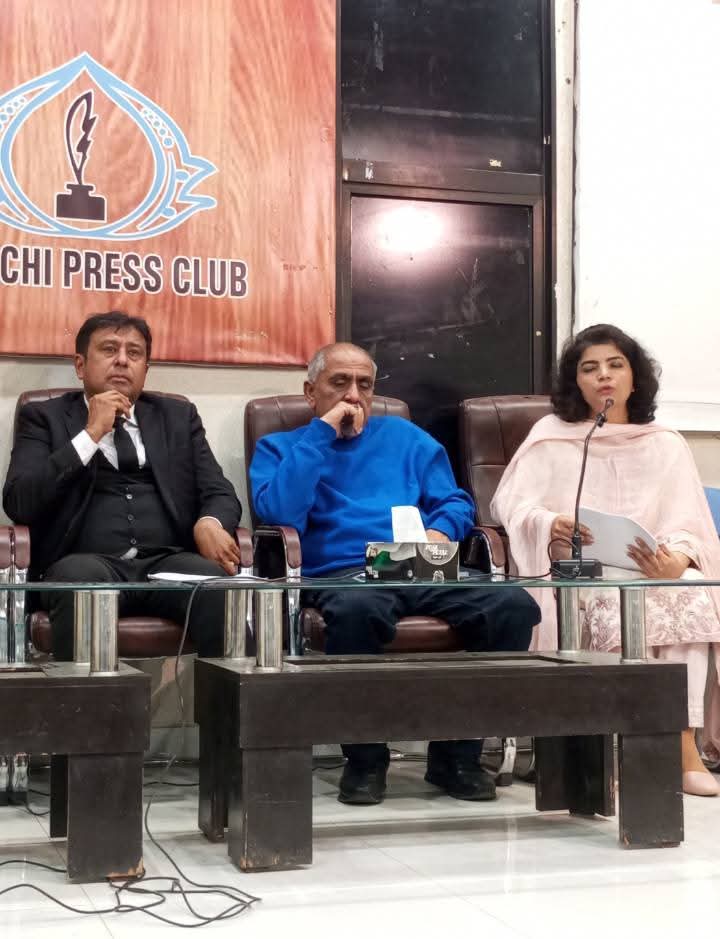
KARACHI,The Sindh Human Rights Defenders Network (SHRDN), a dedicated network of human rights defenders comprising individuals, groups, and organizations, has prepared a draft law for Sindh Assembly legislators to protect human rights defenders in the province.
The draft law was submitted to parliamentarians from various political parties in the Sindh Assembly for their input and consideration. Copies were also provided to the Law and Human Rights Ministry, the National Commission for Human Rights (NCHR), the Sindh Commission on Human Rights (SHRC), and the Human Rights Department to seek their support for this critical legislation.
Now, this draft law is being presented to the media to garner their support for its passage as an Act in the Sindh Assembly. The proposed legislation specifically addresses the protection of human rights defenders—individuals and organizations that risk their lives to promote and protect human rights both globally and within Pakistan.
The Sindh Human Rights Defenders Network (SHRDN) is committed to enhancing the safety and security of those advocating for human rights across Sindh province. The SHRDN focuses on building the capacity of human rights defenders, providing legal aid, and facilitating information sharing among them.
Since 2013, SHRDN has documented numerous incidents of violence against human rights defenders due to their work. Tragically, four human rights defenders have been murdered during this period, including Nazim Jokhio, who was abducted, tortured, and killed for advocating for environmental rights. Other notable victims include women rights defenders Parveen Rehman, Sabeen Mehmood, and Roshan Rajpar, all assassinated for their commitment to human rights. Additionally, journalists Nasrallah Gadani and Jan Mohammad Mahar were murdered for voicing concerns about human rights violations. Many other defenders have faced illegal detentions, enforced disappearances, torture, false accusations, intimidation, threats, and harassment.
Between 2016 and now, approximately 22 activists and journalists have experienced enforced disappearances or illegal detentions. Labour rights activists such as Nasir Mansoor and Saeed Balouch have been falsely implicated in terrorism and sedition cases. Environmental defenders like Masood Lohar have faced severe threats while seeking justice in high-profile cases.
To improve the safety of human rights defenders in Sindh province, Director SHRDN advocate Ali Palh urges the Government of Sindh and all members of the Sindh Assembly to swiftly pass a law protecting these essential advocates. He said this demand aligns with recommendations made by UN Special Rapporteur Michel Forst during his visit to Pakistan in February 2020, when he met with key state officials to emphasize the need for protective measures for human rights defenders.
The draft law comprises around 43 sections titled "Sindh Human Rights Defenders Protection Act." It includes provisions defining a human rights defender based on the UN Declaration on Human Rights Defenders adopted by the UN General Assembly 1998. The law reaffirms that the state has a primary responsibility to protect these defenders by refraining from actions that violate their rights due to their advocacy work, protecting them from abuses by third parties, and taking necessary steps to create an enabling environment for them.
While freedoms are not explicitly mentioned in the draft due to their existing protections under Pakistan's constitution, once enacted, the proposed commission on human rights defenders will ensure that no unreasonable barriers impede these freedoms. He stated that the draft guarantees essential rights such as life protection from illegal detention and enforced disappearances while addressing intimidation from both state and non-state actors.
Furthermore, it outlines additional rights, including privacy protection, non-disclosure of sources, safety from intrusion or interference, freedom from stigmatization or reprisal, and access to remedies. The law emphasizes environmental protection and highlights the need to safeguard environmental human rights defenders.
The draft also calls for establishing a commission dedicated to protecting Sindh's human rights defenders. However, SHRDN remains open to allowing existing human rights commissions to take on this mandate if it prevents duplication or unnecessary financial burdens. This commission should represent human rights defenders' interests and aspirations.
The final provisions of the law outlines the Sindh Government's obligations regarding robust protection measures for human rights defenders and the prevention of crimes against them. The commission will operate according to international principles (Paris Principles), ensuring all freedoms for defenders while continuously engaging with them across the province. It will also thoroughly investigate any crimes committed against defenders.
Recognizing the unique needs of women defenders, transgender individuals, and minority advocates is crucial; thus, monitoring their safety will be a priority for this commission. Additionally, accountability measures will be included to address any misconduct by government agencies or police forces involved in violations against human rights defenders.
Mr Palh said as Sindh Assembly and Sindh Government leads other provinces in passing pro-human rights legislation, SHRDN, and civil society, activists hope the Sindh Assembly will swiftly act on this crucial law.
Former Chair SHRC Justice R Majida Rizvi said she commends the initiative by the SHRDN. She hopes the Sindh Government will grab this opportunity and pass the law. human right defenders play an important role in the protection of human rights and face risks and threats. This law will enhance the ability of the Sindh Government to protect human rights defenders.
Krishan Sharma, minority rights activist, also survivor of enforced disappearence, echoed the demand of shrdn and said it will help improve the safety of the defenders. Minority rights activists face serious threat due to their rights work, this law will improve their security. Currently there is no protection mechanism or law for human rights defenders in Pakistan. Nuzhat Shireen, former chair of Sindh Commission on Status of Women said this law covers the protection needs of women rights defenders, is in need of the time. The Sindh Government should take the lead in this. Shazia Nizamani, chief of Sindh Women Lawyer said SHRDNs efforts for the draft of law are appreciated. This should be passed without any delay. Sarang joyo an activist and also survivor of enforced disappearence said activists are vulnerable due to their human rights work and qthis law will address qtheir issues.
SHRDN network appreciated the warm response of all political parties, parliamentarians and relevant departments and promised their full support to the cause of defenders.the