Chief Secretary Sindh Chairs Urgent Meeting on Rising Dengue Case, Orders Comprehensive Dengue Contingency Plans
 Irfan Ali

Accurate and Timely Data Crucial for Effective Dengue Control: CS Sindh
Fumigation and spray Around Dengue-Affected Areas Ordered by CS Sindh
Karachi,
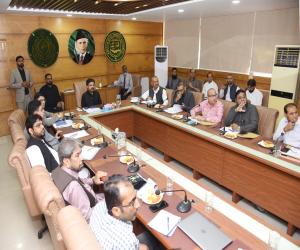
Chief Secretary Sindh Asif Hyder Shah presided over an urgent meeting at the Sindh Secretariat to review the ongoing dengue fever situation across the province, particularly in Karachi and Hyderabad. The meeting was attended by all Divisional Commissioners, Deputy Commissioners, Secretary Local Government, Secretary Health, Director General Health Services, and senior officers from the Health Department and Vector Control Wing. All Town Municipal Officers (TMOs) across Sindh also participated via video link.
During the meeting, the Chief Secretary expressed deep concern over the increasing number of dengue cases and emphasized the need for strong coordination between the Health Department, district administrations, and local government bodies to contain the spread of the virus. He directed the Health Department to strengthen the dengue reporting system, ensuring timely and accurate data collection from both public and private hospitals and laboratories. The Chief Secretary stressed that data accuracy is vital for effective decision-making and swift response measures. Asif Hyder Shah instructed that each district establish a control room operating 24 hours to monitor the dengue situation and coordinate immediate responses. He further ordered the formulation of a comprehensive contingency plan for surveillance, emergency response, and fumigation in all districts. The Chief Secretary directed that fumigation and spray activities be carried out around every dengue patient’s house and within 15 surrounding homes to curb the spread of mosquitoes. He also ordered daily reviews of dengue wards in hospitals to ensure patient care facilities remain fully functional. He instructed the Health Department to share dengue case data with media on a daily basis to keep the public informed. The Chief Secretary expressed sorrow over the deaths caused by dengue and directed that complete data of all fatalities be compiled and reviewed regularly.
He also directed the Local Government Department to intensify sanitation and fumigation campaigns and improve drainage systems to prevent mosquito breeding. Moreover, the Chief Secretary ordered that fumigation drives also cover cantonment board areas, and a policy regarding swimming pools be formulated to ensure regular monitoring and chlorination. The Chief Secretary directed that free testing and treatment facilities for dengue patients be ensured in all government hospitals, and that adequate stocks of medicines, platelets, and testing kits be maintained. He also called for public awareness campaigns to educate citizens about preventive measures and hygiene practices.
The meeting was also briefed by Chairman Planning and Development, Syed Najam Shah, who shares his experience as Secretary Health and highlighted that the dengue threat could persist until the onset of cold weather and emphasized the importance of continuous monitoring of stagnant water sites.
Divisional Commissioners briefed the meeting on district-level actions.
• Commissioner Karachi informed that spray guns, UC-level staff lists, and fumigation teams are being reorganized, and awareness drives are being launched in collaboration with the Information Department.
• Commissioner Hyderabad informed that Latifabad and Qasimabad are the main hotspots, with 210 dedicated beds already allocated for dengue patients, while public awareness committees have been formed at the neighborhood level.
• Commissioner Sukkur shared that awareness sessions are being held at school and neighborhood levels, and UC chairmen have been directed to procure fumigation machines for their respective areas.
The Chief Secretary concluded by urging all departments to maintain close coordination, ensure daily monitoring, and utilize all available resources to protect citizens from dengue and related health risks.