“Drowned by the Sea: Pakistan’s Indus Delta Faces Slow Collapse
 Chehra WebDesk
‘Water Has Surrounded Us’: Pakistan’s Indus Delta Faces Existential Collapse
By Asif Hassan and Israr Ahmed Khan
Al Jazeera, August 5, 2025
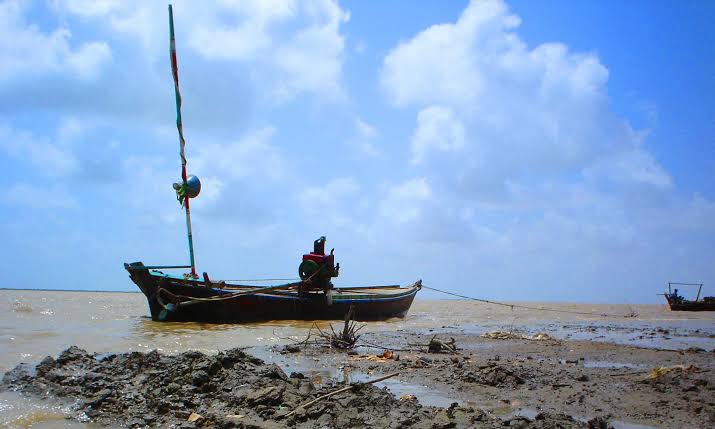
KHARO CHAN, PAKISTAN — The once-thriving villages of Pakistan’s Indus Delta are vanishing beneath rising seawater, leaving behind ghost towns and displaced communities in what experts call an ecological catastrophe decades in the making.
In Abdullah Mirbahar village, Habibullah Khatti walks across salt-crusted earth to bid farewell at his mother’s grave. “The saline water has surrounded us from all four sides,” he says, preparing to abandon his ancestral home for Karachi. His village, like many others in Kharo Chan, has been swallowed by the Arabian Sea.
A Shrinking Delta
The Indus Delta, where the mighty river meets the sea, has lost 80% of its freshwater flow since the 1950s due to upstream dams, irrigation canals, and climate change. The result: seawater intrusion, rising salinity, and the collapse of farming and fishing livelihoods. According to the Pakistan Fisherfolk Forum, over 1.2 million people have been displaced from the region in the past two decades.
Vanishing Livelihoods
Once rich in shrimp, crab, and mangrove forests, the delta now offers little sustenance. “In the evening, an eerie silence takes over the area,” Khatti says, describing the deserted bamboo homes and roaming stray dogs. The population of Kharo Chan has plummeted from 26,000 in 1981 to just 11,000 in 2023.
A Climate Warning
Muhammad Ali Anjum of WWF Pakistan warns, “The delta is both sinking and shrinking.” The salinity of water has increased by 70% since 1990, rendering agriculture nearly impossible. The delta’s collapse is a stark reminder of the vulnerability of low-lying coastal regions amid global climate shifts.
Migration to Megacities
With few options left, families like Khatti’s are relocating to Karachi, joining a growing wave of climate migrants. The city, already strained by economic pressures, is absorbing thousands from the delta’s coastal districts.
The Indus River, which begins in Tibet and flows through Kashmir into Pakistan, irrigates 80% of the country’s farmland. But its delta, once a cradle of biodiversity and human settlement, is dying—slowly, silently, and irreversibly.