Sindh’s Historical Identity and Political Reality: An Analytical Review Analysis in the context of a report by Waqar Mustafa for BBC News Urdu
 Chehra WebDesk
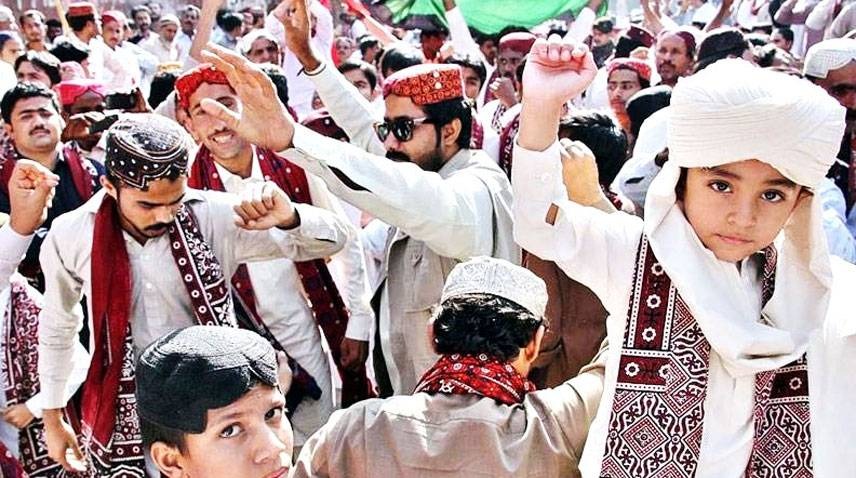
The statement by India's Defence Minister, Rajnath Singh, that Pakistan's province of Sindh has 'culturally always been a part of India' has sparked a new diplomatic and historical debate. The Pakistani Ministry of Foreign Affairs termed the statement 'unrealistic, provocative and a dangerously distorted attempt to distort history'.
Singh, referencing a book by former Deputy Prime Minister Lal Krishna Advani, said that Sindhi Hindus, particularly those of Advani’s generation, have never accepted the separation of Sindh from India. He further elaborated, saying: 'Today perhaps the land of Sindh may not be part of India, but culturally Sindh will always be part of India. And as far as land is concerned, borders can change. Who knows, tomorrow Sindh might return to India'.
How do experts in history, political science, and culture view this statement, and how did Sindh decide to become part of Pakistan as an independent political entity? This analysis reviews these questions in light of historical evidence.
The Indus Valley Civilization: Center and Expansion
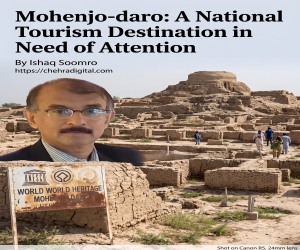
The area of the current province of Sindh, which is part of the Indus River delta, was the center of the ancient Indus Valley Civilization. This civilization, represented by sites like Mohenjo-daro and Kot Diji, existed from approximately 2300 BCE to 1750 BCE. According to Encyclopaedia Britannica, among the three earliest great civilizations of the world (Mesopotamia, Egypt, and the Indus Valley), the Indus Valley Civilization was the most extensive in terms of area.
This civilization spanned across present-day Pakistan's region and extended south and east into the current Indian provinces of Gujarat, Rajasthan, and Haryana, and west into Afghanistan.
Historians agree that the heartland of this civilization is the entire region now located in Pakistan, including Punjab, Balochistan, Khyber Pakhtunkhwa, and Sindh. Dr. Tahir Kamran, a historian, stated that this region is culturally coherent, and it would be 'very unnatural' for Sindh to separate and join India. Kamran further clarifies that 'Sindh' here refers not just to the province but to the entire region that was the center of the Indus Basin civilization.
A Crucible of Empires, But Never Permanently 'Hindustan'
Following the Indus Valley Civilization, the historical record shows a break of over a thousand years. Sindh subsequently came under various empires, including the Achaemenid (Persian) Empire. After Alexander the Great’s conquests, it was controlled by Seleucus I Nicator and later by Chandragupta Maurya. During the Kushan era in the first century CE, Buddhism dominated the population of Sindh. By the seventh century, Buddhism was the most prevalent religion, though Hinduism was also present, under the Brahman minister Chach's kingdom.
The arrival of the Arabs in 711 CE established the foundation for the entry of Islam into the subcontinent. For nearly two centuries (712–c. 900), Sindh was part of the province of 'Al-Sind' under the Umayyad and Abbasid Caliphates. Later, Sindh was ruled by the Mughals (1591–1700).
Political scientist Dr. Ameer Ali Chandio emphasizes that a brief look at history reveals that Sindh 'has never been part of Hindustan or India'. Even when the Mughal Empire briefly occupied Sindh, the Sindhi populace offered strong resistance. When the British Army conquered Sindh in 1843, Sindh was an independent country, not part of India. It was forcibly included in the Bombay Presidency in 1847 against the wishes of the people through a conspiracy.
Political Struggle and the Decision to Join Pakistan
Sindh waged a long struggle against the British occupation and its incorporation into the Bombay Presidency, involving both parliamentary efforts and the armed resistance of the Hur movement. Muhammad Ali Jinnah, the founder of Pakistan, demanded the separation of Sindh from Bombay in his 14 points. The British government granted Sindh separate provincial status in 1936 in response to Muslim demands.
Sindh's role in the formation of Pakistan was critical:
1. Support for the Pakistan Resolution: The people of Sindh were among the first to accept the 1940 Lahore Resolution (Pakistan Resolution). Earlier, in 1938, the Sindh Assembly had already declared, 'We will not remain with Hindustan'.
2. The Historic Resolution: On March 3, 1943, the Sindh Assembly passed the first resolution in favor of Pakistan. This resolution was moved by Sheikh Abdul Majeed Sindhi, with G.M. Syed playing a key role.
3. Voluntary Inclusion: On June 26, 1947, the Sindh Assembly decided in a special session to become part of the new Pakistan Constituent Assembly. Sindh thus became the first province to join Pakistan.
Dr. Ameer Ali Chandio clarifies that Sindh, which was an independent homeland under British occupation, voluntarily became part of Pakistan. The people of Sindh never accepted the supremacy of Hindustan, and they do not, nor will they ever, accept India’s imperialistic aspirations.
Political Insight or Provocation?
Scholar Wajahat Masood states that the Indian Defence Minister's statement only causes unnecessary bitterness. He argues that history’s journey is not guided by old manuscripts; the subcontinent was divided three-quarters of a century ago, and two nation-states were established. Masood points out that if Rajnath Singh's logic were correct, Delhi, Awadh, and Hyderabad Deccan could also potentially become parts of Pakistan. He advises that both countries should learn to live as good neighbors and focus on improving the standard of living for their people.
Dr. Tahir Kamran suggests that Rajnath Singh has merely 'set off a firecracker that lacks any intellectual depth or substance'. According to Dr. Chandio, the statement 'reflects sheer imperialistic mentality' and smells clearly of 'expansionism'.
Conclusion:
While Sindh's historical and cultural roots are undoubtedly expansive and connected to the broader Indus basin, the formation of modern nation-states is based on political decisions, sovereignty, and the demands of national units. Based on expert analysis, Sindh achieved separation from the Bombay Presidency through democratic struggle and voluntarily decided, through resolutions, to join a new political entity, Pakistan. Therefore, claiming territorial ownership based on cultural proximity is not only provocative but also a disregard for the political realities and principles of sovereignty established at the time of Pakistan’s creation.
The historical moment of March 3, 1943, when the Sindh Assembly first passed a resolution in favor of Pakistan, demonstrates that the land of Sindh determined its political destiny itself; just as a flowing river, despite its vast history, chooses a direction and meets the sea, this choice is a symbol of Sindh's freedom and attachment to Pakistan.