BALOCHISTAN IS ON SALE
 Chehra WebDesk

BALOCHISTAN IS ON SALE
By Sardar Shoukat Popalzai, President - Balochistan Economic Forum
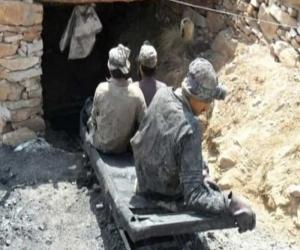
Balochistan today stands at a troubling crossroads, rich in resources, strategic in geography, yet alarmingly poor in outcomes for its own people. A quiet rush is underway as foreign companies line up for mineral exploration and extraction across Pakistan, with Balochistan at the centre of this renewed global interest. Yet, for the people of the province, the most fundamental questions remain unanswered: At what cost? On what terms? And for whose benefit?
What makes this moment especially unsettling is not merely the scale of interest, but the absence of public knowledge, consultation, and consent. Agreements are discussed in boardrooms and capitals far from the mountains, deserts, and coastlines of Balochistan, while local communities, who bear the social, environmental, and security consequences, remain spectators to decisions that shape their future.
The story is painfully familiar. When CPEC was announced, it carried immense hope, promises of connectivity, jobs, industry, and shared prosperity. Simultaneously, friendly and brotherly countries expressed interest across multiple sectors. Yet over time, that promise narrowed almost exclusively to extractive activities, particularly mining, while other critical economic pillars were sidelined.
Agriculture, fisheries, and livestock sectors that sustain livelihoods for millions remain largely ignored, under-invested, and technologically stagnant. Ship-breaking, once a proud and productive industry, now lies in a state of neglect and regulatory paralysis. Industrial estates, meant to anchor manufacturing and employment, are steadily losing relevance, competitiveness, and investor confidence. Even energy and power projects, despite their strategic importance, have failed to translate into visible socio-economic uplift for local communities.
This imbalance has created a deep sense of unease. The people of Balochistan are not opposed to investment; they are opposed to exclusion. They are not against foreign participation; they are against non-transparent deals and one-sided outcomes. They see their land rich, their resources valuable, yet their lives unchanged, schools underfunded, healthcare fragile, jobs scarce, and opportunities elusive.
Adding to this distress is the failure of political elites, both provincial and national to safeguard the expectations of the people. Representation has not translated into protection; authority has not delivered accountability. As regional dynamics shift rapidly new alliances forming, strategic competition intensifying, and critical minerals becoming global priorities, Balochistan increasingly appears not as a partner in progress, but as a commodity on offer.
If Balochistan is to be part of Pakistan’s future prosperity, it cannot remain merely a resource frontier for others. Development must be inclusive, diversified, transparent, and locally rooted. Minerals alone cannot define a sustainable economy, nor can secrecy build trust.
Until that shift occurs, the perception will persist, painfully and persistently, that 'Balochistan is on sale', while its people wait, watch, and wonder what will remain once the deals are done.....