Stolen Childhood: The Silent Crisis in Sindh
 Mehran Khan
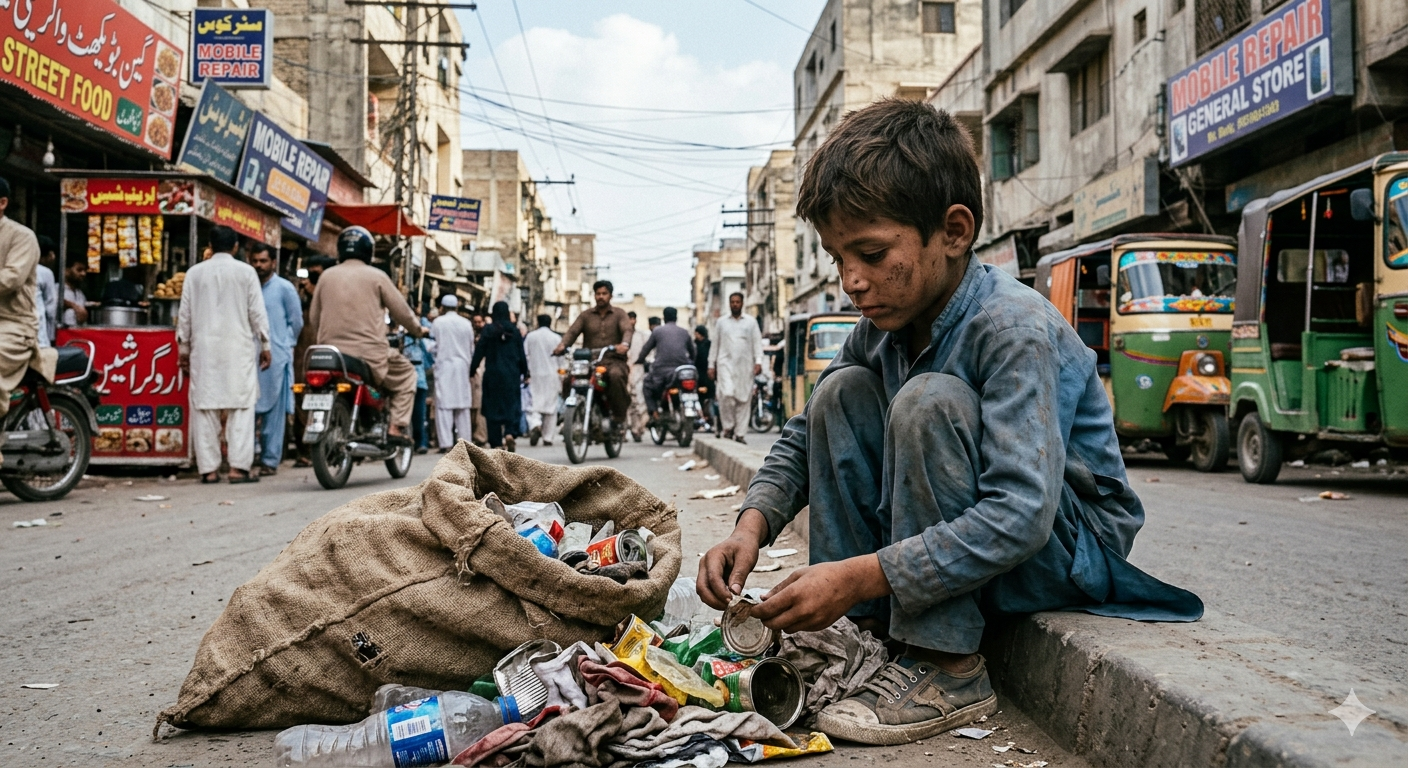
In a quiet neighborhood in Shahdadkot, Sindh, the concept of "childhood" for a young boy named Sarang did not end with a transition—it was severed.
Sarang was only twelve years old when his mother passed away. Her absence replaced the laughter of their home with a heavy, hollow sorrow. His father, a laborer who returned from work late each night, found himself helpless, unable to manage the household or provide for his son. As neighbors whispered suggestions and relatives offered traditional "solutions," a decision was reached that would alter the trajectory of Sarang’s life forever.
Instead of seeking domestic help or community support, Sarang’s father decided that marriage was the answer.
A Union of Children
At twelve, Sarang was wed to a girl his own age. She, too, was a child—at an age where she should have been attending school, playing games, and nurturing dreams. Instead, she was thrust into the role of a matriarch, expected to manage a household and cook meals she barely knew how to prepare.
In their world, the sacrifice of two childhoods was framed as a logistical solution. No one asked the children what they wanted; in this society, children are expected to be silent recipients of adult decisions.
While other boys their age spent their evenings playing cricket or dreaming of becoming doctors and teachers, Sarang spent his days in a grease-stained mechanic shop, repairing vehicle parts. His wife’s routine began before dawn, sweeping floors and tending to a home that felt more like a cage than a sanctuary. Their youth slipped away without a protest, buried under the weight of premature responsibility.
The Heavy Burden of Parenthood
Before a year had even passed, the couple welcomed a baby boy. In most homes, a birth is a cause for celebration; here, it brought only fear. Two children were now responsible for a third life.
Sarang began working even longer hours to provide, while his wife carried the physical and emotional toll of motherhood before her own body had fully matured. Sleepless nights and constant worry became her reality, leading to a deep psychological trauma that time may never truly heal. While society labeled her "strong," there is a cruel irony in that praise: strength should never be forced upon a child who is not yet allowed to be weak.
Law vs. Reality
The tragedy of Sarang and his wife is not just a social failure; it is a legal one. According to data from UNICEF and the World Bank, Pakistan is home to nearly 19 million child brides. Nationally, one in six young women is married in childhood, with the Sindh Province being the most severely affected.
Under the Sindh Child Marriage Restraint Act of 2013, marriage below the age of 18 is strictly prohibited. The law classifies it as an offense punishable by both imprisonment and fines. Yet, in small towns and rural areas like Shahdadkot, these laws often remain dead letters—ink on paper that never reaches the ears of those it is meant to protect.
In Sarang’s case, no authority intervened. No one questioned why two children were married or why a 14-year-old girl was in a maternity ward. Tradition, poverty, and a culture of silence acted as a shield for the crime.
A Cycle That Must Break
Years have passed, and Sarang and his wife have grown into their responsibilities long before they grew into adulthood. Soon, their son will begin to ask about school, about dreams, and about the power of choice. Whether they can offer him the agency they were denied remains a haunting uncertainty.
This is not merely Sarang’s story; it is the story of thousands across Sindh and Pakistan. Their futures are bartered in the name of "necessity" or "honor." Until these laws are rigorously enforced, communities are educated, and the silence is shattered, childhoods will continue to be stolen—one wedding at a time.