Unprecedented Rise: 2023 Poised to Break 125,000-Year Temperature Record
 Nadia Nawaz

Unprecedented Rise: 2023 Poised to Break 125,000-Year Temperature Record
Brussels is facing a climate crisis as European Union scientists reveal
alarming data pointing to this year being the warmest in the last 125,000
years.
The recent announcement comes after
October 2023 was recorded as the hottest October on record, surpassing the
previous high from 2019 by a staggering 0.4 degrees Celsius, according to the
EU’s Copernicus Climate Change Service (C3S) Deputy Director Samantha Burgess.
The rising temperatures are attributed to a combination of continued greenhouse
gas emissions from fossil fuel burning and the emergence of the El Nino climate
pattern in the Pacific Ocean. Despite the current record-holder being 2016,
also an El Nino year, 2023 is expected to surpass it, making this year
"virtually certain" to be the warmest ever recorded, according to
C3S.
The Culprit: Greenhouse Gas Emissions and the Unpredictable El Nino
Copernicus’ dataset, stretching back to 1940, when combined with data from the
UN climate science panel IPCC, paints a dire picture. Samantha Burgess emphasizes
that, when considering both datasets, the unprecedented warmth extends to a
scale not seen in 125,000 years.
This data includes information from
sources such as ice cores, tree rings, and coral deposits, providing a
comprehensive understanding of the climate's historical context.
The consequences of this warming trend are evident in 2023, with destructive
extremes including deadly floods in Libya, severe heatwaves in South America,
and Canada experiencing its worst wildfire season on record. The global average
surface air temperature in October, at 15.3 degrees Celsius, was 1.7 degrees
warmer than the pre-industrial period (1850-1900), as defined by Copernicus.
Global Concerns: Combating Climate Change Amidst Record-Breaking Trends
The combination of human-induced climate change and the El Nino effect raises
concerns about intensified heat-fueled destruction globally. Australia, in
particular, is bracing for an exceptionally severe bushfire season amid hot and
dry conditions.
The El Nino weather pattern is
expected to persist until at least April 2024, heightening worries about the
future impacts of climate change.
As the world grapples with these alarming trends, the UN climate negotiations,
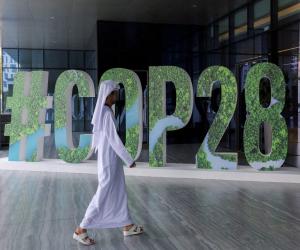
COP28, are just around the corner. Set to take place in Dubai, the conference
will bring together nearly 200 countries to negotiate stronger actions to
combat climate change.
A critical issue at COP28 will be the
potential agreement to phase out the burning of carbon dioxide-emitting fossil
fuels.
Despite ambitious emission-cutting
targets, global CO2 emissions hit a record high in 2022, highlighting the
urgent need for decisive and immediate action.