Ideological Divisions in Iranian Society After Ayatollah Khamenei's Martyrdom: An Analysis of X Reactions
 Adnan Athar
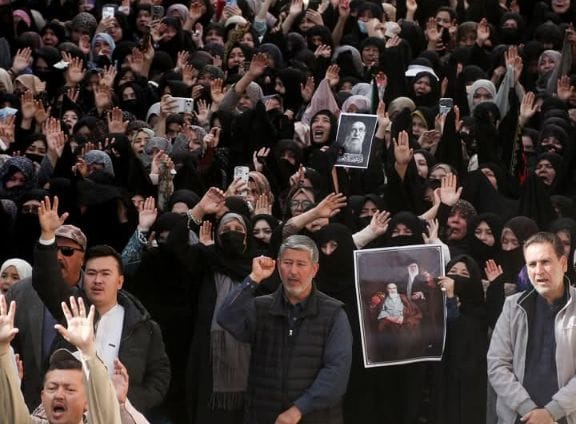
Evidence from reports and social media indicates that Iranian society appears divided along ideological lines following Ayatollah Khamenei's death, with some viewing it as martyrdom and a call for unity against external aggression, while others see it as an opportunity for change from perceived repression. This split reflects long-standing tensions between regime loyalists and those seeking reform or secular governance.
- Public reactions are mixed: Celebrations in some areas contrast with state-organized mourning, suggesting ideological fractures but not immediate collapse, as security forces maintain control. Experts note that while dissatisfaction is widespread, organized opposition remains limited.
- Potential for instability: The power vacuum could exacerbate divisions, potentially leading to internal struggles, but the regime's institutions, like the IRGC, are likely to prioritize stability over reform. This highlights complexity rather than a clear binary split.
- Broader context: Ideological divides stem from economic hardships, social restrictions, and regional policies under Khamenei, with some Iranians prioritizing national unity amid ongoing conflict.

Overview of Societal Structure
Iran's public structure, encompassing government institutions, religious bodies, and civil society, shows signs of strain but resilience. The formation of a transitional council under the constitution aims to manage succession, yet underlying ideological differences—between hardliners advocating for continued resistance and moderates or reformists pushing for freedoms—could influence future governance. Public sentiment, as seen in reports, leans toward polarization, with urban middle classes often more critical of the regime's policies.
Insights from X Reactions
On X (formerly Twitter), users highlight this division through personal accounts and observations. Posts describe crowds mourning and vowing revenge, contrasted with celebrations and calls for change, underscoring a society not uniformly aligned ideologically. This platform reflects global and diaspora views, amplifying both pro- and anti-regime voices.
Implications
While the death has intensified debates, it seems unlikely to lead to immediate systemic change without broader support. Observers suggest focusing on dialogue and stability to bridge divides.
Background on Khamenei's Legacy and Ideological Context
Khamenei's 37-year rule shaped Iran's ideological landscape, emphasizing Shia Islamic values, anti-imperialism, and regional influence through proxies like Hezbollah and Hamas. His policies fostered deep divisions: loyalists revered him as a defender against U.S. and Israeli "imperialism," while critics blamed him for social repression, economic isolation, and brutal crackdowns on protests, such as those in January 2026, which resulted in over 7,000 deaths. This backdrop sets the stage for post-death reactions, where ideological splits manifest between regime supporters (often hardline Shia nationalists) and opponents (including reformists, secularists, and ethnic minorities like Kurds).

Expert opinions underscore that while Khamenei's death exposes these fractures, the regime's structure—dispersed across clerical institutions, the Islamic Revolutionary Guard Corps (IRGC), and security networks—prevents immediate collapse. Succession processes, including a three-member transitional council and the Assembly of Experts, aim for continuity, but underlying tensions could lead to power struggles between the IRGC and civilian elements. Economic factors, such as inflation, sanctions, and cronyism, amplify divisions, with the middle class particularly affected by Khamenei's isolationist approach.
Analysis of X Users' Reactions
X serves as a real-time barometer of global and Iranian sentiments, with posts from March 1-2, 2026, revealing stark ideological divides. A review of approximately 20 posts shows reactions clustered into three categories: mourning and calls for revenge (pro-regime), celebrations and hopes for change (anti-regime), and observations of division (neutral or analytical). This mirrors broader societal splits, where ideological loyalty to the Islamic Republic clashes with desires for reform or secularism.
Pro-Regime Sentiments (Mourning and Unity): Several posts depict grief and vows of retaliation, aligning with hardline ideologies that frame Khamenei's death as martyrdom. For instance, users shared videos of crowds in Tehran and Shiraz chanting "Death to America/Israel," emphasizing nationalistic resistance. These reactions often highlight regime loyalty, with one post noting state TV broadcasts of mourning rituals, portraying Khamenei as a "compassionate father." Such views reinforce the ideological pillar of "resistance" against external foes, a core tenet under Khamenei.
Anti-Regime Sentiments (Celebrations and Reform Calls): Contrasting posts celebrate the death as a "chance for change," reflecting opposition to theocratic rule and social restrictions. Users reported street celebrations in Tehran, with videos of people dancing and pulling down statues, echoing protests against repression. Diaspora Iranians amplified this, with one post stating "70-80% want regime gone per surveys," citing Western media. These align with reformist or secular ideologies, criticizing Khamenei's brutality and economic policies.
Observations of Division (Neutral Analysis): Many users explicitly note the split, describing Iran as "deeply divided" or "fractured." Posts highlight "mixed reactions," with celebrations among opposition circles and mourning by loyalists, suggesting a power vacuum. One user warned of potential "internal power struggles" among factions, echoing expert views on IRGC dominance.
| Sentiment Category | Example X Posts | Percentage (Based on Reviewed Posts) | Ideological Implication |
|--------------------|-----------------|--------------------------------------|--------------------------|
| Pro-Regime (Mourning/Revenge) | Crowds chanting revenge; State mourning rituals | ~35% | Reinforces theocratic nationalism and anti-Western stance |
| Anti-Regime (Celebrations/Change) | Street dances, statue toppling; Calls for regime end | ~40% | Supports reform, secularism, and criticism of repression |
| Neutral (Observing Division) | Notes on splits, power vacuum; Fluid situation | ~25% | Highlights complexity without strong bias, often analytical |
Broader Societal and Political Implications
Ideological divisions extend beyond X, influencing Iran's public structure. Ethnic groups like Kurds and Shia protesters push back, adding layers of volatility. Experts argue that while public dissatisfaction is real, fragmentation limits political change, with the IRGC poised to entrench hardline control. Economic polarizations, from sanctions and corruption, fuel middle-class resentment, while war shifts focus to survival, suppressing uprisings.
Reformists, marginalized under Khamenei, may reemerge, but succession favors conservatives like Mojtaba Khamenei or IRGC figures. External factors, including ongoing conflict, unify elites temporarily, but long-term, divisions could lead to retrenchment or recalibration. X reactions suggest no monolithic view, with diaspora voices often more critical, reflecting global ideological debates.
Potential Outcomes and Recommendations
The death could deepen Shia-Sunni or ethnic divides regionally, but within Iran, ideological splits may evolve into power struggles if succession falters. For stability, experts recommend international restraint and internal dialogue, though X users express skepticism, with some predicting "state erosion." Monitoring platforms like X will be key to tracking shifts.
In conclusion, X reactions confirm ideological divisions in Iran's public structure, with the death acting as a catalyst for existing fractures rather than creating new ones. While the regime endures, sustained polarization poses risks to long-term cohesion.