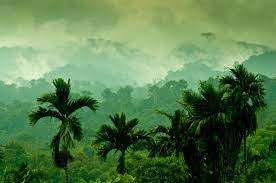
Unlocking the Secrets: Asian Forests' Resistance to Climate Change Revealed In a recent study from Australia, surprising findings suggest that Asia's tropical forests may possess a higher level of resilience to climate change than previously believed. However, the key lies in maintaining diversity within these crucial ecosystems. While the Amazon and boreal forests often take the spotlight as carbon storage sites, the forests of Southeast Asia could prove to be equally vital in the fight against climate change. The study, led by a researcher at the University of Sydney, delves into the historical aspects of Southeast Asian forests, dating back to the Last Glacial Maximum over 19,000 years ago. The research unveils a diverse mosaic of vegetation, including tropical rainforests alongside grasslands or savannah, emphasizing the need to prioritize the protection of tropical dry forests and high-altitude forests. Preserving Montane Forests: A Climate Change Mitigation Strategy Dr. Rebecca Hamilton, the lead author of the study, highlights the significance of protecting forests above 1000 meters, known as "montane forests," and seasonally dry forest types. The team's analysis of 59 paleoenvironmental sites in tropical Southeast Asia, using preserved pollen grains from lakes, reveals the persistence of forests during the Last Glacial Maximum. This evidence indicates that mountain forests at high altitudes endured and even expanded, providing valuable insights into preventing the potential 'savannisation' of Asia's rainforests. Hybrid Forest Biome: A New Perspective for Climate Resilience The researchers propose a paradigm shift in understanding the ecological dynamics of Southeast Asian forests. The discovery of a 'hybrid' open forest biome challenges the traditional binary ecologies, offering new insights into ecological resilience. Dr. Hamilton's team concludes that prioritizing the protection of these unique forest types is crucial for preserving the rich biodiversity of Southeast Asia and beyond.

 Nadia Nawaz