The Agony of Gorano Dam
 Chehra WebDesk
Author: Afaq Bhatti
Translation: Mujtaba Baig
On the call of the Thar Rajooni
Tanzeem, to raise a voice for a fundamental issue connected to the lives of the
people of Thar, we reached Gorano Dam, near Islamkot, on Saturday, March 9,
2024. We met with the villagers and inquired about their well-being. Each one
of them, whether children, women, young or old, narrated stories of the
atrocities they have endured. Their stories are so heart-wrenching that they
could bring tears to the eyes of the sensitive-hearted or those with weak
nerves.
The colourful billboards on the roads
might make us believe in the development claims of Thar, but as soon as we
leave the roads for the unpaved paths, the harsh realities become apparent.
Even in this modern era, the people of Thar are forced to live as if they are a
hundred years behind. The ruins of homes made of baked bricks have been found
in the city of Mohen (Mohenjo-daro), which was inhabited more than five
thousand years ago, yet in today's modern age, apart from a small urban
population, there are no homes made of baked bricks in the entire Thar.
Apart from other amenities, the
residents of Thar are still yearning for clean drinking water. After the Thar
Coal project, the problems of the residents have become more severe and
numerous. Let alone the absence of sweet water, now even the right to clean air
has been snatched away from them.
A villager told us that ever since
the coal-powered plants were installed, many people in their village have
fallen prey to dangerous diseases like asthma, while skin and itch-related
diseases are also common in the desert. We saw all the trees dried up at Gorano
Dam. The villagers said that the water of around 55 wells around Gorano has
become poisonous, forcing the people of the area to migrate.

The company only makes false
promises; they said adding; now where do we take our children and go?
I told them that the company claims
that RO plants have been installed for the villagers, providing them with clean
water. In response, the villagers said that not every village has RO plants,
and another major problem is that each person is only given two litres of water
per day. Now you tell us, what we are supposed to do with these two litres, and
another thing is that the RO plants are closed on Sundays.
What do we do when guests arrive?
When guests come, we give them our share of water and stay thirsty ourselves.

No one is there to listen to us, they
complained.
We, the local people, have suffered a
lot of damage from the Thar Coal project. A human tragedy has occurred around
Gorano Dam, and the natural environment of the surroundings has been destroyed.
The negative and environmental effects of coal have had a significant adverse
impact on the habitat of burnt trees, plants, birds, and wildlife.

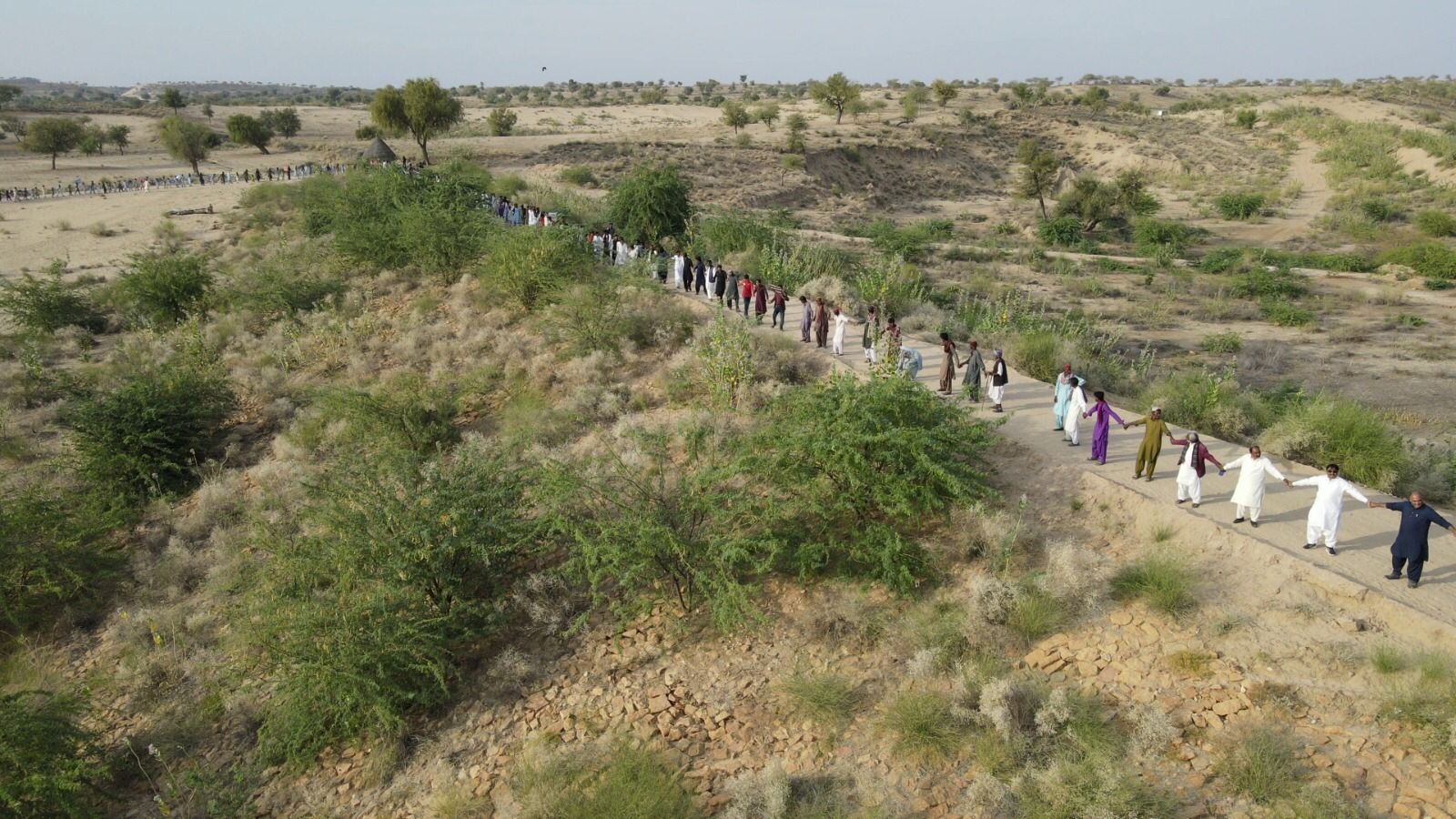
In response to the poisoning of
groundwater due to the bitter water of Gorano Dam, the Thar Rajooni Tanzeem
formed a human chain to express solidarity with the natural environment of
Thar. Environmental activists, artists, writers, and journalists from different
parts of the country also participated in the event to express solidarity with
the affected villagers.
After the public meeting held at
Gorano Dam, the leaders of the public meeting, Bhim Raj, Lachhman Das, Deedar
Bhil, Rasool Bakhsh Samoon, and student leader Kash Kumar presented the
following demands:
- Compensate for the damages caused
by the poisonous water resulting from coal mining.
- Introduce alternative energy
projects instead of coal.
- Ensure the protection of the lands
and environment of the local population, including providing them with clean
drinking water.
- The local people demanded that the
storage of coal's dirty water be constructed safely and far from human
populations and that legal measures be taken to prevent the negative effects of
coal.
Jeevan Sanjh Rajooni, Pakistan
Environmental Protection Movement, Climate Action Center Director Yasir Darya,
Indigenous Rights Alliance, President of Hyderabad Press Club Lala Rehman,
Fisher Folk leader Fatima Majeed, and a delegation of students from Sindh
Agriculture University, Tandojam led by Professor Ismail Kumbhar, along with a
large number of journalists from different regions including Islamkot,
participated in the protest.