Chief Secretary Sindh Assures Major Interventions for Korangi Industrial Area After KATI Delegation Meeting
 Sidra Arif

KATI Calls for Rs. 10 Billion Industrial Development Package.
KATI Briefs CS on Neglected TMC Roads, Government to Enforce Standards for Underperforming TMCs, Chief Secretary Warns.
Karachi
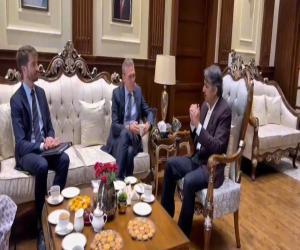
A delegation of the Korangi Association of Trade and Industry (KATI) called on Chief Secretary Sindh Asif Hyder Shah on Saturday and held an extensive meeting to discuss multiple issues related to industrial infrastructure, water and sewerage systems, road connectivity, and regulatory matters concerning Korangi Industrial Area.
The delegation was led by Deputy Patron-in-Chief KATI Muhammad Zubair Chaya and included President Muhammad Ikram Rajput, Chairman KITE Zahid Saeed, CEO KITE Saleem uz Zaman, Senior Vice President Zahid Hameed, Vice President Syed Muhammad Talha Ali, Former Presidents Rashid Ahmed Siddiqui, Masood Naqi and Junaid Naqi, and Secretary General Osman Matun.
The meeting was attended by Commissioner Karachi, ACS Local Government, Secretaries of Industries department, Transport departments, Municipal Commissioner KMC, Managing Director Karachi Water & Sewerage Corporation, Director General Sindh Food Authority, and Deputy Commissioner Korangi and others
During the meeting the KATI delegation presented their primary demand regarding allocation of development funds for industrial areas. They requested that Rs. 10 billion be provided directly to industrial associations for infrastructure development, with oversight from Commissioner Karachi, Sindh Industries Department and SITE. They assured that the Association would execute the projects with complete transparency. The Chief Secretary termed the proposal logical and assured the delegation that he would place it before the provincial government for consideration. He directed the formation of a system ensuring proper utilisation of funds and transparency in industrial development projects.
The delegation highlighted the condition of Korangi Causeway and Korangi Crossing, where choking and congestion have caused significant delays. They stressed the need for urgent improvement of Korangi’s road infrastructure. The industrial community raised serious concerns regarding water and sewerage issues in Korangi Industrial Area. They informed the Chief Secretary that the major pumping station in the area is nearly 60 years old and requires immediate repair or complete replacement. KWSC briefed that submersible pumps currently being used are insufficient to handle the rising load. The corporation proposed that a new pumping station be established at an estimated cost of Rs. 1.5 billion, which could be completed within one year if funds are released.
The Chief Secretary expressed deep concern over the matter and assured that necessary funds would be arranged. He directed the Water Board to devise interim solutions until the permanent facility is established. He stated that Rs. 100 million would be allocated for new generators and pumps under the short-term plan and directed that immediate measures be taken to reinforce the existing pumping system. The issue of damaged sewerage lines and stormwater drains maintained by KMC was also discussed. The Chief Secretary directed the KMC Municipal Commissioner to expedite repair and cleaning of the drains. The MC KMC informed that the capacity of stormwater drains has been affected due to rapid expansion of industrial units, which requires redesigning and capacity enhancement. Discussing road connectivity, the Chief Secretary informed the delegation that the new Korangi Bridge would be completed by January, while the Taj Hyder Bridge has already been completed, significantly improving access to the industrial area.
The issue of TMC internal roads was also raised, with the delegation informing that internal town roads are in deteriorated condition. The Chief Secretary directed the Secretary Local Government to resolve the matter in coordination with the Town Municipalities. He expressed dissatisfaction over the performance of TMCs despite nearly Rs. 1 billion being allocated to each town and stressed that the Sindh government would define minimum standards for their functioning and take corrective measures if mandated responsibilities are not fulfilled.
The delegation also shared their concerns regarding Sindh Food Authority operations. While stating that industries are compliant and maintain canteens for their workers, they requested SFA to adopt an educator-first approach before regulatory action. They also shared complaints regarding the behavior of certain SFA staff members. The Chief Secretary directed the DG Sindh Food Authority to begin inspections from commercial sectors and to prioritise key sectors identified through the MEGA plan.

The delegation further highlighted issues related to nearly 1,80,000 cottage and small-scale industrial units operating in and around residential areas. The Chief Secretary assured that industrial activities would not be permitted in hardcore residential areas, however, areas adjoining industrial zones would be surveyed to regularize and adjust viable units accordingly.