Climate Change Takes a Trillion-Dollar Toll on Global Economy
 Nadia Nawaz
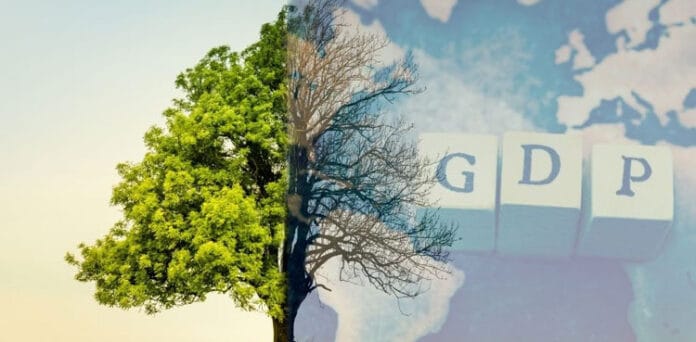
University of Delaware has highlighted the severe economic impact
of climate change, revealing that it has already cut billions from the world's
economy. The study, released just before the COP28 climate negotiations,
underscores the disproportionate burden falling on developing nations.
The University of Delaware's research estimates that human-induced
climate change led to a 6.3 percent reduction in global economic output in the
previous year. This calculation takes into account both the direct consequences
of climate change, such as disruptions in agriculture and manufacturing, as
well as the indirect effects on global trade and investments due to these
disruptions.
Global Economic Inequities: A Closer Look at the Numbers
Lead author James Rising emphasizes that the world is now trillions
of dollars poorer due to climate change, with a significant portion of this
economic burden disproportionately affecting poorer countries. The report
discloses that the global GDP loss, when not accounting for impacts on the
average person, amounted to 1.8 percent of GDP, equivalent to approximately
$1.5 trillion in 2022.
The uneven distribution of impacts becomes evident when examining
the figures. Low-income countries and tropical regions, characterized by higher
populations and lower GDP, bear a more substantial share of the burden. Least
developed countries experienced a staggering 8.3 percent population-weighted
GDP loss, with Southeast Asia and Southern Africa being particularly hard-hit,
losing 14.1 percent and 11.2 percent of their GDP, respectively.
Vulnerable Economies at Risk: COP28's Crucial Discussions
While some developed countries, like Europe, saw short-term gains,
the report warns that these advantages are temporary. The warmer winters that
contributed to Europe's five percent net gain in GDP are anticipated to be
offset by hotter summers in the future. As the COP28 talks in Dubai approach,
the establishment and funding of a dedicated support system for vulnerable
countries dealing with climate-related "loss and damage" will be a central
point of negotiation