Cash-based stipend programme for adolescent girls in the Merged Districts (MDs) of KP.
 Chehra WebDesk

WFP Pakistan
and the Elementary and Secondary Education Department (E&SED) have
officially joined hands to launch a cash-based stipend programme for adolescent
girls in the Merged Districts (MDs) of KP.
At a
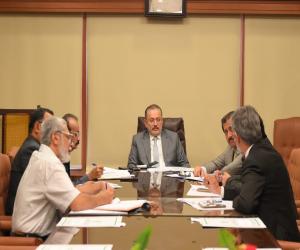
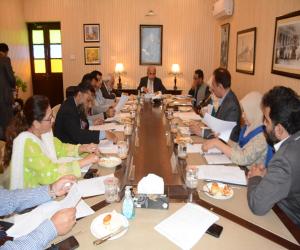
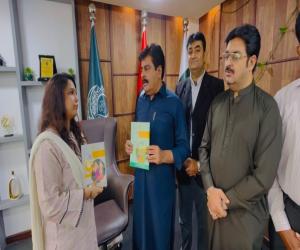
gathering attended by KP government representatives, donors and stakeholders,
WFP Country Director Coco Ushiyama highlighted the paramount importance of
education, stating, "When women and girls are empowered with better access
to education, information, resources, services and economic opportunities, the
ripple effects are far-reaching.”
The Girls’
Stipend Programme aims to improve girls’ access to and retention in schools,
especially at the higher grades where drop-out rates are high in the merged
districts, through the provision of income support to the families of
adolescent girls.
Over three years of the programme some 30,000
girls in grades 6 -12 in more than 500 government girls' middle and higher
schools will receive PKR 1000 per month.
The Girls’
Stipend Programme builds on decades-long partnership between the Department of
Education, KP and WFP. Most recently in 2021, WFP in support of the
Government’s COVID-19 response piloted a cash-based Stipend Programme in the
merged districts reaching some 21,000 girls in 280 schools. An impact
assessment of that pilot found a significant 14 percent increase in enrollment,
and a 96 percent improvement in attendance rates.
The
Adolescent Girls Programme will be implemented under the overall supervision of
E&SED, with WFP‘s technical support in cash-based transfer operations, data
collection, profiling, and skill enhancement for the Education Department staff
involved in the education programme.

This event is
part of a series of school-based interventions by WFP Pakistan to advance human
capital development. School-based programmes are one of the most extensive
social safety nets worldwide, which can help maximize the return on investment
in education, because it facilitates access to school and improves the
nutritional status, health and cognitive development of children.