World Hepatitis Day
 Imran
Imran

KARACHI, On the occasion of World Hepatitis Day, stakeholders from across the healthcare spectrum gathered in Karachi to commemorate the success of a pioneering public-private partnership that has made remarkable strides in eliminating Hepatitis C from high-burden communities in Sindh.

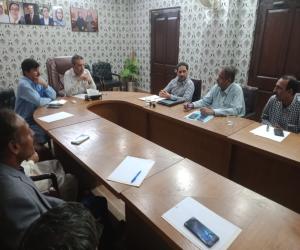
Held at a local hotel, the event brought together Sindh Health department officials, healthcare professionals, Nigahban Welfare Association and representatives from Roche Diagnostics Pakistan. The gathering celebrated the achievements of the Kambar-Kemari Project – a large-scale Hepatitis C elimination initiative led by Nigahban, for the Health department,Government of Sindh .
Launched as a pilot in one Taluka of District Kambar Shahdadkot, the project was expanded to whole of districtKambar and Kemari Town, Karachi. It screened over 1 million individuals ( 99% of total population)provided free diagnostic tests locally followed by free antiviral treatment to over 7500 patients and trained hundreds of healthcare workers, offering a scalable and replicable model for low- and middle-income countries (LMICs) fighting Hepatitis CElimination
Dr. Saad Khalid Niaz, President of Nigahban and former Caretaker Health Minister, Sindh, stated:
“The Kambar and Kemari Projects proves that public health challenges of this magnitude can be overcome when we work together with purpose and determination. Today, we not only celebrate results, we renew our commitment to taking this success nationwide.”
Dr. Azra Pechuho, Sindh Minister for Health, shared her thoughts on the occasion:
“The Government of Sindh remains committed to eliminating Hepatitis C and scaling successful pilots like the Kambar-and Kemari Projects. This collaboration demonstrates the impact we can achieve when government, civil society and the private sector work together.”
Khurram Khalid Ilyas, Country Manager, Roche Diagnostics Pakistan & Afghanistan, added:
“Reliable diagnostics are essential to turning ambition into action. We are proud to have been part of this transformative journey, demonstrating what’s possible through public-private partnership.”
Key Outcomes of the Kambar and Project:
● 1,030,000+ ( target population 1,041,500 - 99%) individuals screened for Hep C in Kambar and Kemari
● 20,000+ confirmatory lab tests conducted at no cost locally
● 7,500+ patients found positive on lab tests provided free antiviral therapy
● 96.7% cure rate (SVR) confirmed in follow-up study
● 1,367 healthcare workers trained in screening and treatment pathways
● Zero new infections found in post-intervention screening of previously negative individuals
The event also featured panel discussions on lessons learned, policy implications and the path forward for scaling the initiative to other districts.

As Pakistan accelerates progress toward its national goal to eliminate Hepatitis C by 2030, the Kambar and Kemari Projectsstand as a beacon of what is possible through collaboration, commitment and community engagement.