Sindh Government Intensifies Flood Preparations with 24/7 Control Rooms, Relief Camps, and Rescue Operations.
 Imran
Imran

Comprehensive Flood Preparations Underway in Sindh to Safeguard Lives and Livelihoods.
**Karachi, August 31, 2025:** The Sindh Government has intensified its preparations to deal with the impending flood situation following heavy inflows of water from Punjab, with Chief Minister Syed Murad Ali Shah leading a coordinated, province-wide response. All relevant departments, including the Irrigation, Health, Livestock, PDMA, Rescue 1122, Police, Rangers, and the Armed Forces, have been mobilized to safeguard lives, livestock, and property.
The Chief Minister Sindh Syed Murad Ali Shah personally visited Guddu, Sukkur, and other areas where water discharges have reached alarming levels. At Guddu Barrage, the upstream discharge was recorded at 322819 cusecs with 307956 cusecs downstream. Sukkur Barrage registered 303480 cusecs upstream and 252110 downstream, while Kotri Barrage was measured at 273844 cusecs upstream and 244739 downstream. Engineers of the Irrigation Department have been deployed around the clock with heavy machinery to reinforce embankments, conduct stone pitching, and monitor eighteen vulnerable points across the province.
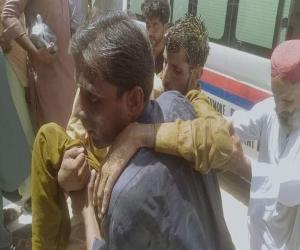
In anticipation of evacuation needs, Rescue 1122 has deployed 192 official boats and secured an additional 565 privately arranged vessels, while the Pakistan Navy has placed 26 boats on standby to support operations. Rescue teams, police, and Rangers are actively preparing for emergency evacuations, while the armed forces are on alert for immediate deployment if required.
Relief and rehabilitation measures are being led by the Provincial Disaster Management Authority (PDMA), which has already established 511 relief camps across vulnerable districts, along with 948 dedicated livestock protection centers. These camps are equipped with tents, kitchen sets, mosquito nets, mattresses, generators, and dewatering machines to meet the urgent needs of displaced communities. The Health Department has dispatched 36 mobile health units to flood-prone districts, ensuring availability of essential medicines including antidotes for snakebites, rabies vaccines, and other life-saving drugs. A total of 9,950 first aid kits and 68 field hospital tents have been positioned in at-risk areas to provide immediate medical relief.
The Livestock Department, recognizing the importance of protecting rural livelihoods, has set up 300 veterinary camps and has already treated more than 87,600 animals, providing vaccinations and medical care while arranging fodder supplies for displaced livestock. The Agriculture Department is monitoring standing crops and is preparing a contingency plan to provide seed and input support to farmers if large-scale crop losses occur.
*The Chief Minister Sindh Syed Murad Ali Shah is personally holding daily high-level meetings with concerned departments, divisional commissioners, and senior officials to review water levels at barrages, the condition of embankments, the pace of relief operations, and the requirements of people in the affected areas. In addition to this, Chief Secretary Sindh Asif Hyder Shah is chairing meetings twice a day to obtain updates from all divisional and district administrations, ensuring swift decision-making and timely response. These regular review meetings are helping to identify urgent needs, mobilize additional resources where required, and strengthen coordination among all departments including Irrigation, Health, Livestock, PDMA, Rescue 1122, and district administrations, so that no gap is left in the province’s preparedness and relief mechanisms.*
In addition to administrative measures, members of the Sindh Cabinet have also been actively visiting various flood-prone areas along with the respective district administrations. Their visits have focused on reviewing the pace of work on the strengthening and stone-pitching of Indus River embankments, inspecting vulnerable points, and ensuring that relief activities are being carried out effectively on the ground. Cabinet members held direct interactions with local officials, rescue teams, and communities to identify urgent needs and provide necessary directives for swift respons.
To ensure uninterrupted communication and real-time monitoring, the Sindh Government has activated a comprehensive network of control rooms across the province. The **Provincial Rain and Flood Monitoring Cell in Karachi** is operating round-the-clock with direct helplines **021-99222902, 021-99222967, 021-99222758, and 021-99222759**. In addition, divisional control rooms have been established in **Hyderabad (022-9200553, 022-9200554), Sukkur (071-9310615), Larkano (074-9410706), Shaheed Benazirabad (0244-9370157), and Mirpurkhas (0233-9290453)**. Each of these control rooms is manned 24/7 by trained staff who are providing updates to citizens regarding flood forecasts, embankment safety, evacuation routes, and relief camp locations.
At the **district level**, control rooms have been made operational in all flood-prone areas. Citizens of Kashmore can directly contact **0722-920160**, while those in Jacobabad may reach **0722-920028**. Control rooms in Ghotki are accessible at **0723-682020**, while Sukkur’s district helpline remains active at **071-9310615**. In Shikarpur, residents may dial **0726-920190**, while Larkano has its control cell at **074-9410706**. Similarly, in Khairpur, the control room can be reached at **0243-9280035**, while Naushahro Feroze operates through **0244-9370157**. The Shaheed Benazirabad control room is open at **0244-9370157**, Sanghar can be reached at **0235-920075**, and Mirpurkhas district operates through **0233-9290453**. Umerkot citizens can call **0238-920026**, and Tharparkar at Mithi can connect via **0232-920113**. In the south, Hyderabad’s district control room is functional at **022-9200553**, while Thatta may be reached at **0298-920061** and Sujawal at **0298-920191**.
According to government estimates, 1.65 million people living in 1,651 villages across 167 union councils of 15 districts are at potential risk. To address this challenge, 948 relief camps and 300 cattle camps have been designated in advance to provide shelter, food, and medical support to the affected population.
Chief Minister Syed Murad Ali Shah, in his statement, emphasized that protecting lives is the government’s highest priority. “We are leaving no stone unturned to protect our people and their livelihoods. I urge citizens living in vulnerable areas to cooperate with local administration and shift to safe places ,” he said. Chief Secretary Asif Hyder Shah has also directed all departments to maintain close coordination, monitor river flows in real time, and submit situation reports on a regular basis. Through this unified approach, the Sindh Government has demonstrated that its preparedness to confront the flood threat is at the highest level in recent years. With the coordinated efforts of the Irrigation, Health, Livestock, PDMA, Rescue 1122, law enforcement agencies, and the armed forces, Sindh is ready to meet the challenges of this natural calamity with resilience, organization, and resolve.