Sindh Identifies 102 Vulnerable Points, Deploys Machinery Ahead of Flood Threat
 Adnan Athar
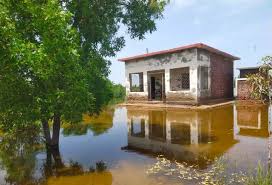
493,159 Cusecs Recorded at Panjnad as Inflows Surge Towards Guddu Barrage
KARACHI Sindh Rain and Flood Emergency Monitoring Cell’s focal person, Zubair Channa, said on Saturday that the provincial government had completed all necessary preparations to deal with potential flooding across the province. Acting on the directives of Chief Minister Sindh, a 24/7 Flood Relief Emergency Control Room has been established at the office of the Chief Secretary, with dedicated helplines 021-99222967 and 021-99222758 for public complaints and flood-related information. Officers from the information, irrigation, PDMA, health, livestock, and general administration departments are deployed round-the-clock to ensure coordination with field representatives, redress public grievances, and maintain a steady flow of updates on the evolving situation.
Mr Channa informed that all embankments across Sindh were in stable condition, while 102 vulnerable points had been identified and equipped with machinery and emergency materials to respond swiftly to any breach. Expressing concern over rising water levels, he revealed that high inflows were moving from Trimmu towards Panjnad, where, as of 9am, both inflows and outflows were recorded at 493,159 cusecs. He warned that the flow from Panjnad was accelerating towards Guddu Barrage, necessitating heightened vigilance.
Under the Super Flood Relief Strategy, it is anticipated that 40 to 50 per cent of the affected population will be shifted to relief camps, while the remainder will relocate to safer places with their relatives. Sindh has already established 515 relief camps and 300 livestock shelters between Sukkur and Guddu, while 272 boats, including those of security forces, have been made available for rescue operations. The government is maintaining special focus on the districts of Sukkur Division, including Ghotki, Sukkur and Khairpur; Larkana Division, including Kashmore, Jacobabad and Larkana; Hyderabad Division, including Dadu, Jamshoro, Matiari, Tando Muhammad Khan, Sujawal and Thatta; as well as Shaheed Benazirabad Division, including Nawabshah.
The provincial health department and the People’s Primary Healthcare Initiative (PPHI) have placed all medical facilities on high alert, with round-the-clock availability of doctors and medicines ensured. More than 70 mobile health units have been deployed in high-risk districts, while special medical forms for snake and dog bite emergencies have been introduced to facilitate immediate treatment.
Mr Channa noted that Sindh had previously confronted a super flood of over 1.1 million cusecs in 2010 and had since strengthened embankments and flood protection systems considerably. He stressed that with improved preparedness and reinforced infrastructure, the province was in a stronger position to manage the current challenge effectively.