Media Freedom Under Siege: PEMRA's Unprecedented Regulatory Clampdown (2021-2025)
 Imran
Imran
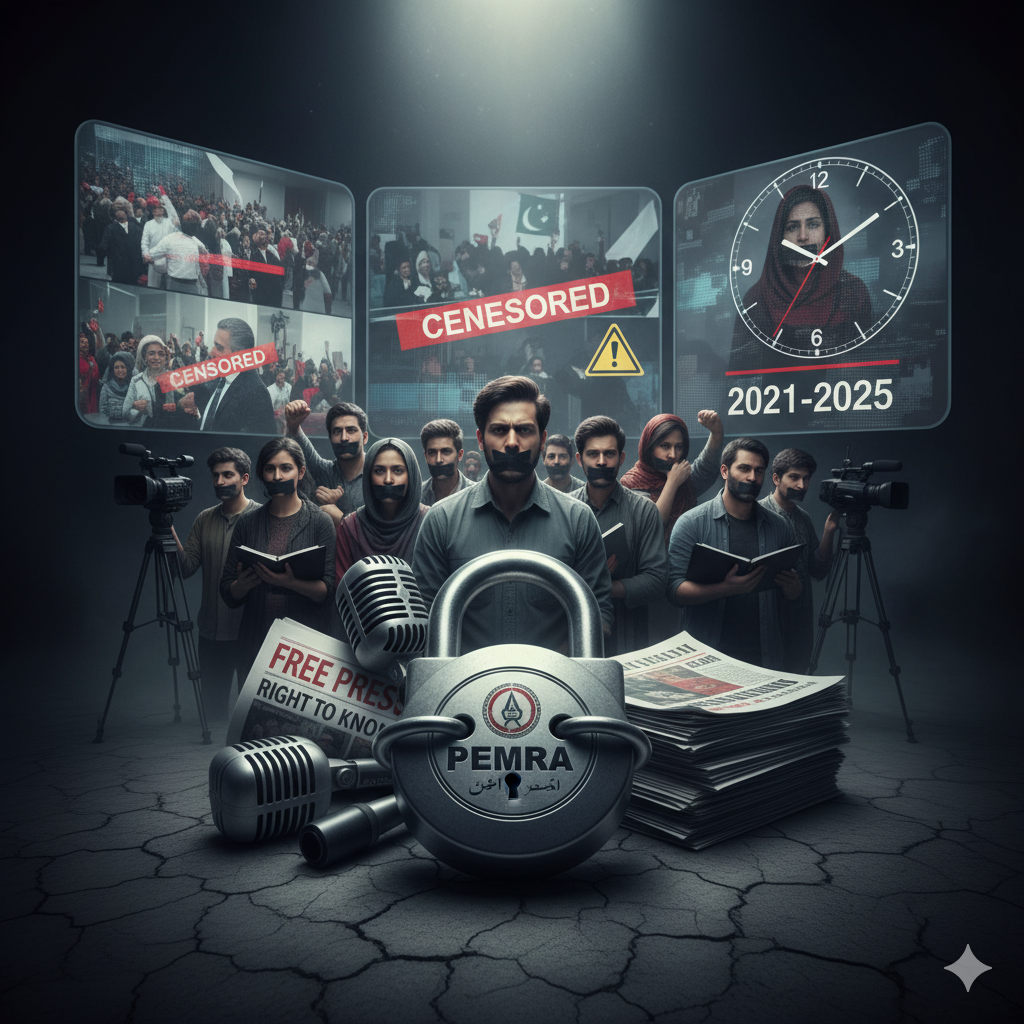
Karachi, Pakistan – A recent analysis of regulatory actions by the Pakistan Electronic Media Regulatory Authority (PEMRA) from 2021 to 2025 reveals a profound tightening of control over electronic media, frequently blurring the lines between standard content regulation and outright censorship. The period is marked by a surge in directives, show-cause notices, and penalties, significantly impacting journalists' ability to report on politics, state institutions, and public safety.
Repeated Bans and Blackouts: Silencing Political Dissent
The regulator repeatedly employed blanket bans to limit coverage of politically sensitive issues and opposition figures:
Political Blackouts: PEMRA prohibited the live broadcast of speeches by former Prime Minister Imran Khan multiple times in 2022 and 2023, citing the need to maintain public order. This action included suspending the transmission of channels like ARY News for defying the order.
Proscribed Groups: The ban on media coverage of the outlawed Tehreek-e-Labbaik Pakistan (TLP) in October 2021 was highly controversial. It prevented broadcasters from providing essential public safety information—such as road closures and security updates—forcing citizens to rely on often-disrupted social media platforms.
Targeting Journalists: In a startling move in August 2023, PEMRA banned the coverage of 11 individuals, including prominent journalists Moeed Pirzada, Sabir Shakir, and Shaheen Sehbai.
Undermining Judicial and Political Reporting
A clear pattern of shielding state institutions from media scrutiny emerged through targeted directives:
Protecting Institutions: In May 2022, PEMRA directed all TV channels to refrain from airing content that could “undermine state institutions,” specifically the judiciary and armed forces. This was followed by multiple notices to channels for alleged violations in subsequent years.
Sub Judice Restrictions: The regulator aggressively clamped down on reporting related to court proceedings. A May 2024 ban on commentary regarding sub judice matters—permitting only the reporting of written court orders—led to 20 notices within 24 hours and 34 more in June, despite a later ruling by the Sindh High Court declaring the directive unlawful.
Banning Judicial Conduct Commentary: A March 2023 directive banned any discussion of the conduct of sitting judges, resulting in multiple penalties for channels airing derogatory remarks.
Moral Policing and Content Scrutiny
PEMRA also acted as a moral guardian, issuing broad directives on social and cultural content:
Moral Censorship: In October 2021, the Authority warned broadcasters to avoid “hug or caress scenes, extramarital relations, bold dressing, and bed scenes” in television dramas, demanding channels uphold “moral values.”
Political Propaganda: In November 2021, PEMRA instructed all media outlets to air the “political map” of Pakistan for two seconds before the 9 p.m. news bulletin daily.
Uniform Dignity: An August 2024 directive banned the use of official uniforms in comedy or satire, claiming such portrayals "compromised the dignity of the uniform."
Curbs on Crime, Public Safety, and Accuracy
While some directives targeted sensationalism, they also restricted information vital for public awareness and accountability:
Crime Scene Bans: The most recent intervention on August 27, 2025, prohibited all television channels from airing footage of crime scenes, recovered evidence, or custodial interviews of detained suspects, citing concerns about interference in investigations. This follows earlier warnings against broadcasting graphic visuals of explosions and terrorist attacks, such as the penalty issued to 23 channels in October 2024 for live visuals from a blast near Karachi's Jinnah International Airport.
Factual Accuracy as a Tool: Throughout the period, PEMRA issued dozens of notices and penalties for alleged "false reporting," "speculative reporting," and "unverified information," especially concerning cabinet meetings and court proceedings, underscoring the authority's heightened focus on enforcing its own "standards of accuracy."
The documentation by the Pakistan Press Foundation (PPF) highlights that the cumulative effect of these actions—from blanket bans on political rallies to micro-management of drama content and sub judice commentary—has been a chilling effect on Pakistan's independent media, severely limiting the free flow of information and undermining the public's right to know.