Murder or Suicide? Three Hindu Youths Found Hanging from a Tree in Tharparkar
 Suneel Kumar
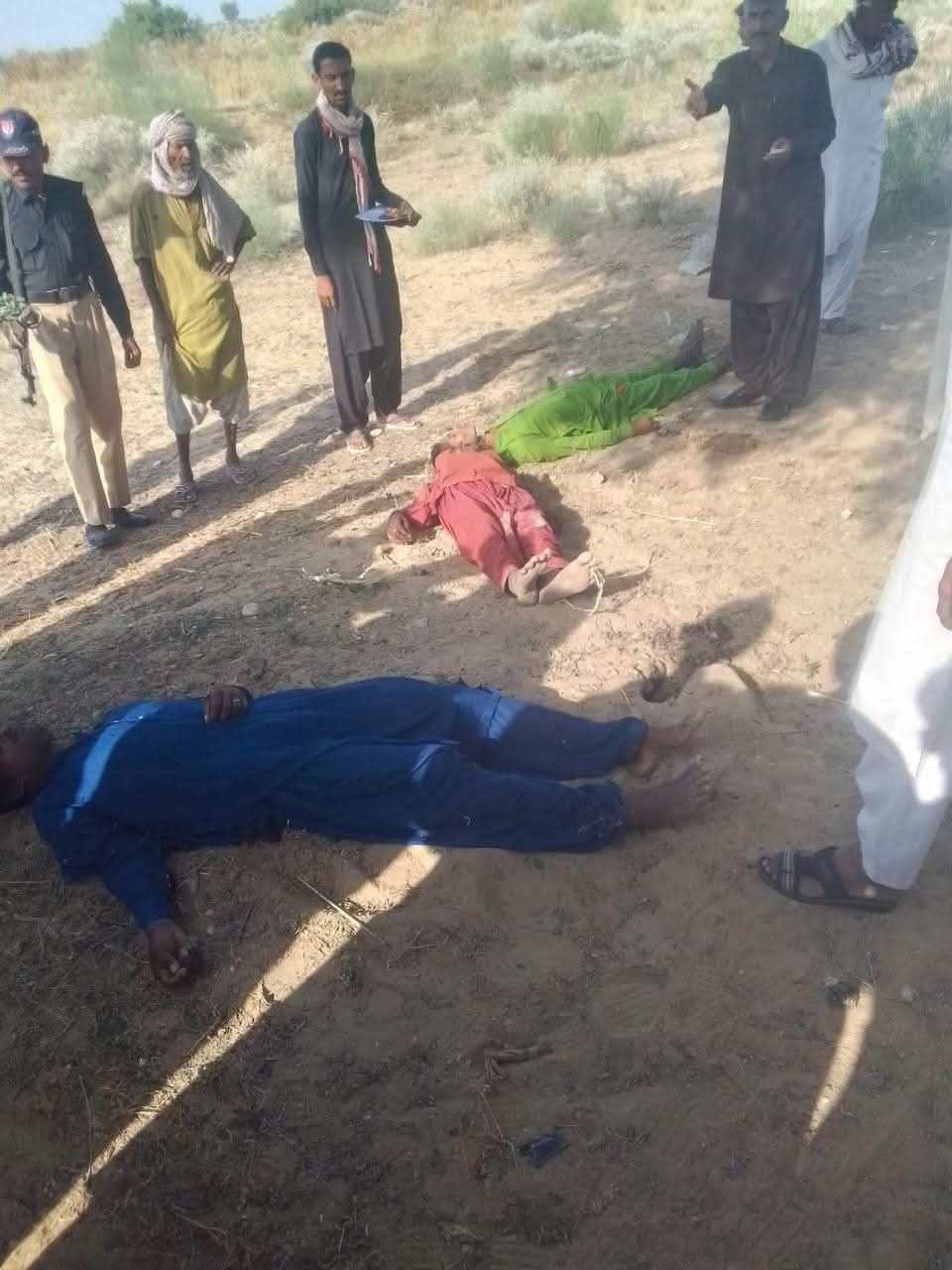
A heart-wrenching tragedy has once again drawn attention to the deepening despair in the desert region of Tharparkar, as three Hindu youths were found hanging from a tree near Sundar village, within the jurisdiction of Danodandal police station in Nangarparkar taluka.
The victims — identified as 22-year-old Dhanji Kolhi, 19-year-old Shankar Kolhi, and 15-year-old Jiram Kolhi — belonged to poor families of farm workers who had been struggling to make ends meet amid worsening economic hardship. According to family members, the youths went to the fields on Wednesday evening to tend crops but never returned. Their bodies were discovered the following morning, sending shockwaves through the local community.
Police shifted the bodies to Taluka Hospital Nangarparkar for post-mortem examination. SSP Tharparkar Shoaib Memon stated that preliminary findings suggest suicide, though an inquiry led by DSP Chachro has been initiated to rule out foul play.
However, villagers and eyewitnesses expressed doubts, claiming there were visible wounds and bloodstains on the victims’ faces. “It doesn’t look like a suicide,” said one local resident, requesting anonymity due to fear of reprisals. “These boys were young and full of life. Something terrible happened that we don’t understand.”
Dr. Ramesh Kumar, who conducted the post-mortem, said that initial reports point towards suicide, suggesting that the marks could have been caused by insect bites from the tree. But this explanation has done little to ease the growing unease in the village, where silence and fear prevail.
This incident has sparked a wider debate about the mental health crisis, poverty, and social marginalization affecting the Hindu community in Tharparkar. Human rights activists say that the case reflects a grim reality — where extreme poverty, social exclusion, and lack of state support often push marginalized youth into despair.
“Every few months, we hear of such tragic deaths,” said a local rights worker. “These are not just suicides — they are symptoms of a system that has failed to protect its most vulnerable citizens.”
While investigations continue, the grief-stricken families of Dhanji, Shankar, and Jiram wait for justice — and for answers that might never come.
As the government remains preoccupied with political battles and constitutional amendments, the voices of Thar’s poor and marginalized communities grow quieter, buried under layers of hunger, hopelessness, and silence.