Economic Massacre’: The Growing Rural Revolt Against Corporate Farming in Sindh
 Chehra WebDesk
Badin
In the remote village of Mahadiyo Solanki, under the sweltering sun of Badin, a different kind of storm is brewing. It is not the monsoon floods that the locals fear this time, but what they call a "deliberate economic massacre" orchestrated by the state.
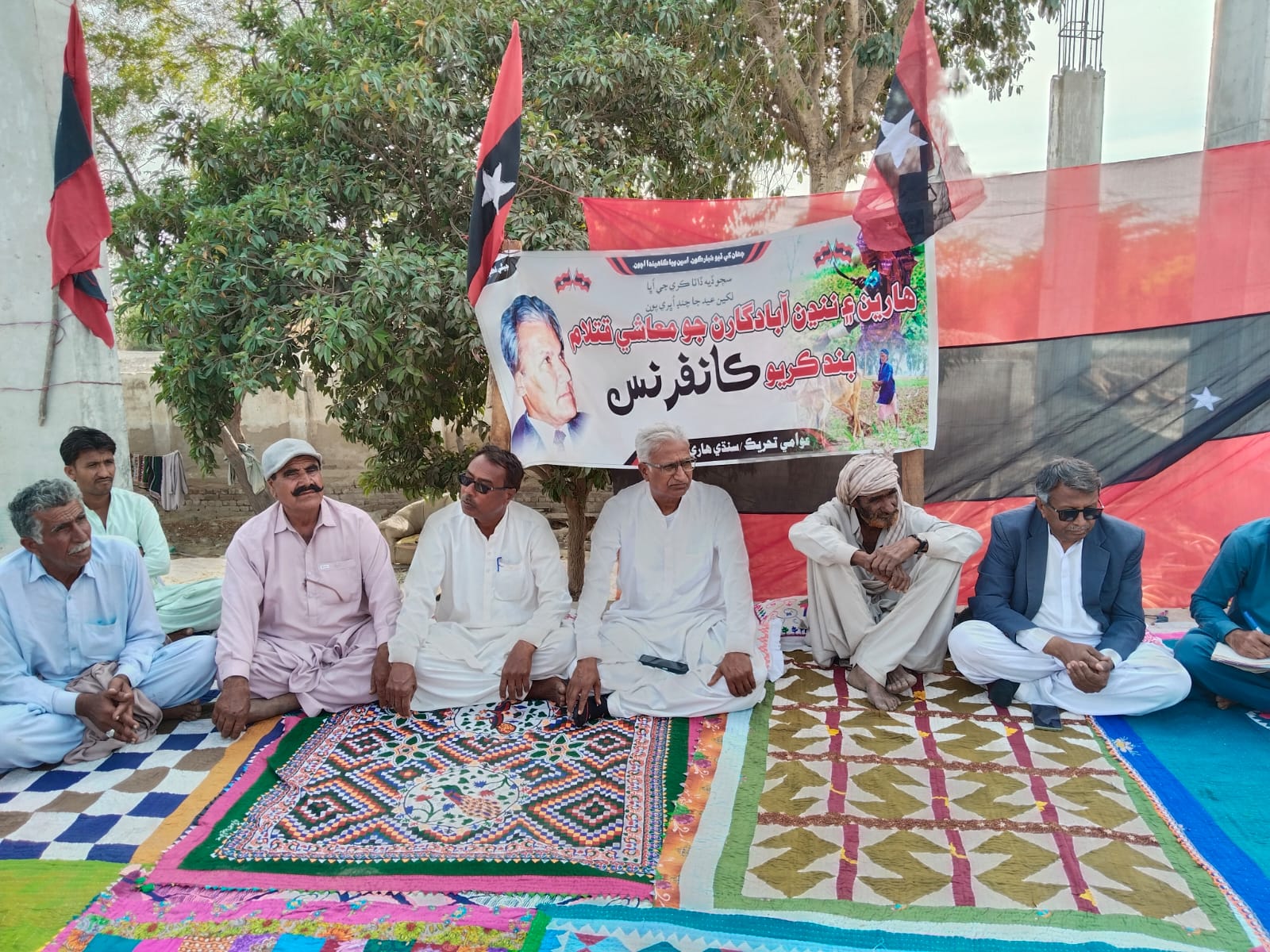
Hundreds of weathered hands—belonging to small-scale growers, landless laborers, and local youth—gathered on Thursday for a defiant conference organized by the Awami Tehreek and Sindhi Hari Tehreek. Their message was singular and stark: the traditional agriculture of Sindh is being pushed toward an induced death.
The Corporate Shadow
At the heart of the protest is the government’s shift toward corporate farming. Leaders at the conference, including Lal Jarwar and Advocate Ayaz Kaloi, accused the Pakistan Peoples Party (PPP) led government of betrayal. While the party claims to represent the rural poor, protesters argue it is handing over 1.3 million acres of Sindh’s land to corporate giants rather than the landless "Haris" (farmers) who have tilled it for generations.
"Farmers are being forced into suicide; bodies are being found hanging from trees," a speaker told the crowd, painting a grim picture of the desperation caused by suppressed crop prices and the soaring costs of fertilizers. The government's "Kisan Card" initiative was dismissed by attendees as a hollow promise that systematically excludes the landless.
The Battle for the Indus
The grievance extends beyond the soil to the water. The conference reignited the long-standing tensions over the Indus River, with leaders vowing to resist the construction of six strategic canals in Punjab. They described these projects as an "anti-Sindh" alliance between the federal authorities and the provincial leadership.
"Punjab has been exploiting Sindh's water for over a century," the leaders stated, reiterating that the people of Sindh will not tolerate any further dams or diversions on their lifeline.
A Province Under Siege
The rhetoric at the conference touched on a broader sense of insecurity. Speakers linked the economic hardship of farmers to a "managed" rise in crime—kidnappings, drug trade, and arms smuggling—which they claim is protected by local tribal elites.
The organizers also took aim at a sensitive political nerve: the renewed discourse surrounding a separate province for Karachi. The Awami Tehreek leadership warned that any attempt to divide Sindh would be seen as an act of "national enmity," vowing that the province's borders, established over millennia, are non-negotiable.
Demands for Justice
The conference concluded with a list of demands aimed at restoring the dignity of the rural worker:
* The establishment of 'Farmer Courts' to settle disputes and ensure justice.
* Interest-free loans and fair pricing for crops.
* A halt to corporate land transfers, demanding instead that land be distributed to local growers.
* Protection of water rights to ensure supply reaches the "tail-end" farmers in districts like Badin.

As the "post-hybrid" political system in Islamabad tightens its grip through new restrictive laws, the voices from Mahadiyo Solanki suggest that the rural heartland of Sindh is no longer willing to remain a silent observer of its own displacement.