*Workshop in Sukkur trains girls to track education budgets and raise their voice*
 Chehra WebDesk
Workshop in Sukkur trains girls to track education budgets and raise their voice
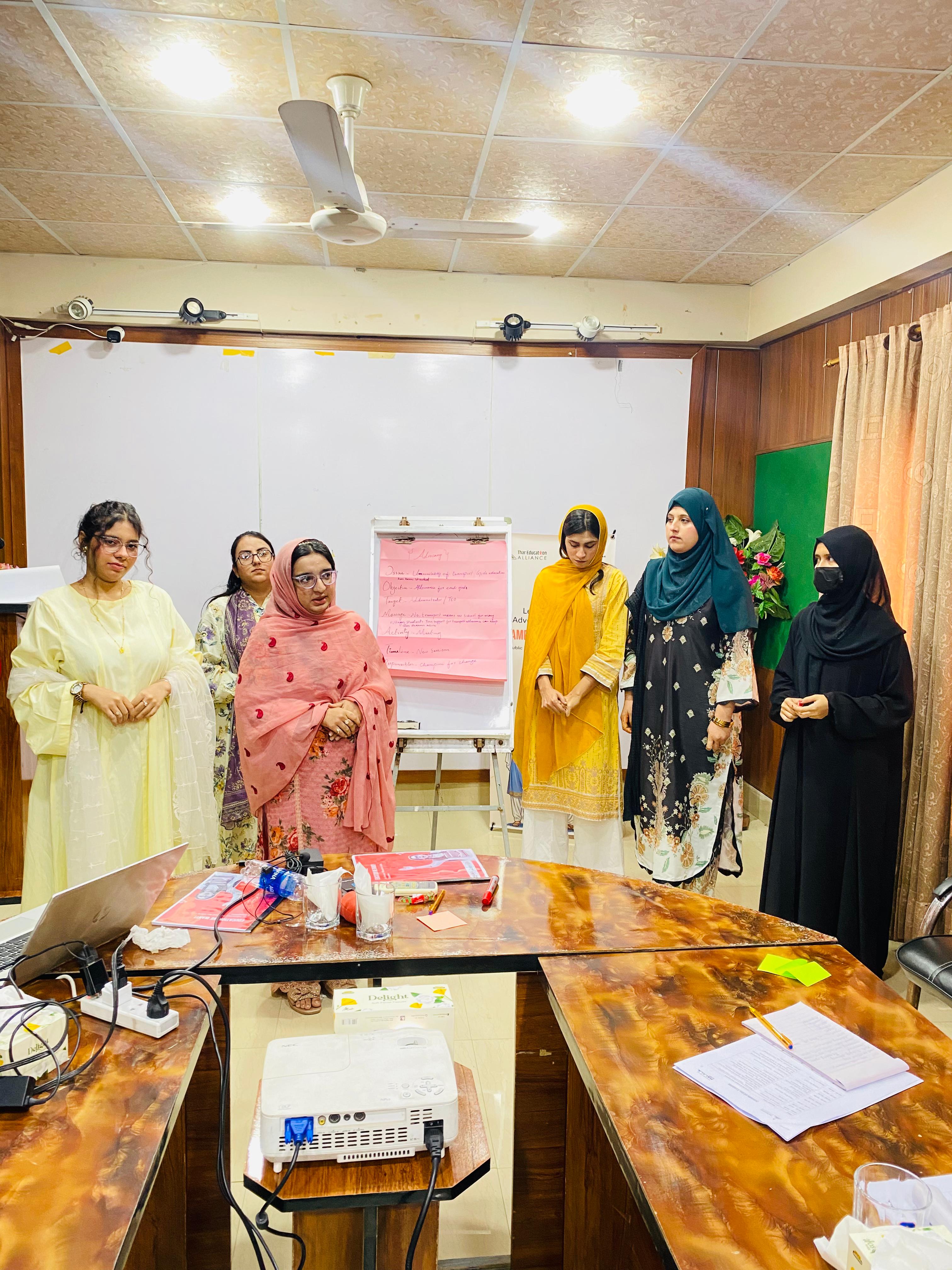
Sukkur: More than 25 girls from the “Champions for Change” network participated in a workshop in Sukkur aimed at building their understanding of education budgets and strengthening their ability to advocate for improved facilities in schools and colleges.
Organised by Thar Education Alliance (TEA) in collaboration with Malala Fund, the session—held at a local hall focused on the challenges girls face in accessing quality education and the importance of informed engagement in budget-related decisions.
Addressing the participants, CEO TEA, Partab Shivani, said that efforts are ongoing across Sindh to promote girls’ education and secure adequate funding. He noted that girls themselves are increasingly stepping forward to demand better resources and opportunities. He also welcomed the Sindh Education and Literacy Department’s initiative of granting financial authority to headteachers, stating that it can help resolve institutional issues more efficiently at the school level.
He further shared that under the “Champions for Change” programme, girls across districts including Sukkur, Larkana, Sanghar, Badin, Karachi Malir, and Tharparkar are being trained to take on active roles within their communities highlighting issues and advocating for improved education budgets.
The training was conducted by master trainers Kapil Dev and Kiran, who led sessions on advocacy planning, communication, and the use of data. Participants were introduced to key concepts such as budget structures, documents, and the budget cycle, along with practical tools including stakeholder mapping, message development, and risk analysis.
Social activists Jawad Ahmed Mirani and Aqran Khan Memon also engaged with participants, encouraging them to translate their learning into action and remain actively involved in addressing education challenges.

Participants said the training helped them better understand how education budgets work and how they can raise their voice against lack of facilities in their institutions. They also expressed commitment to sharing this knowledge with their peers to expand awareness within their communities.
The workshop also covered gender-responsive budgeting, policy engagement, community outreach, media interaction, and petitioning equipping participants with practical pathways to engage with decision-makers. Certificates were distributed among participants at the conclusion of the session.