Freedom of Expression and Rule of Law Under Siege: HRCP Releases Annual Report 2025
 Chehra WebDesk
Freedom of Expression and Rule of Law Under Siege: HRCP Releases Annual Report 2025
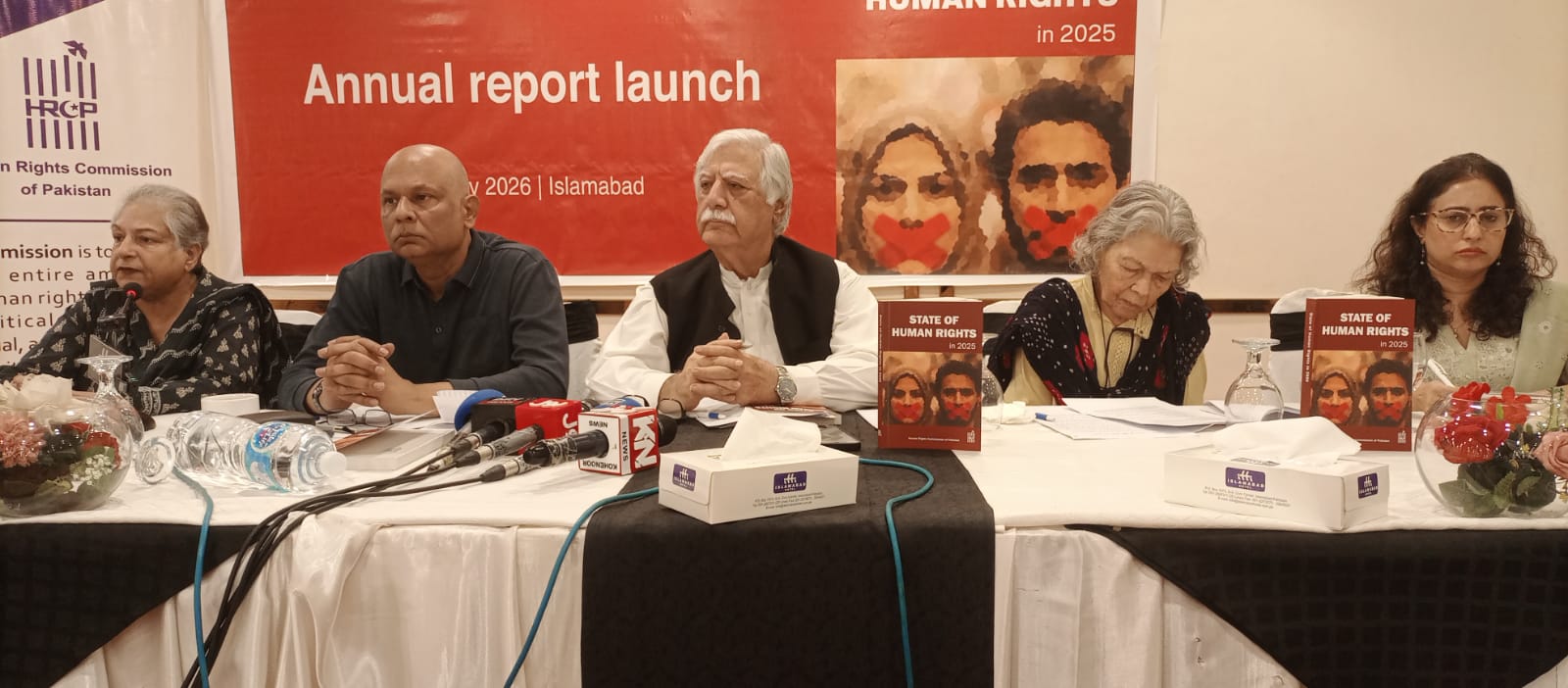
ISLAMABAD | The Human Rights Commission of Pakistan (HRCP) has officially launched its flagship annual report, State of Human Rights in 2025. The report paints a sobering picture of a year characterized by the shrinking of civil spaces, the erosion of judicial independence, and a pervasive sense of insecurity across the country.
The Systematic Silencing of Dissent
HRCP expressed grave concern over the unprecedented crackdown on freedom of expression in 2025. The report highlights that the right to question authorities and demand accountability was systematically suppressed.
Legal Weaponization: The government increasingly utilized the Prevention of Electronic Crimes Act (PECA), alongside sedition and anti-terrorism laws, to target journalists, political activists, social workers, and lawyers.
Climate of Fear: Reports of threats, enforced disappearances, and restrictions on movement have fostered a culture of fear and self-censorship, effectively stifling public discourse and masking human rights violations.
Erosion of the Rule of Law
The report identifies a significant decline in the independence of the judiciary, particularly following the passage of the 27th Constitutional Amendment.
Executive Influence: The amendment has granted the executive branch greater influence over judicial appointments, upsetting the fundamental principle of the ‘separation of powers.’
Controversial Rulings: Key judicial decisions—such as the trial of civilians in military courts and the political sidelining of Pakistan Tehreek-e-Insaf (PTI) by depriving it of reserved seats—have raised serious questions regarding judicial transparency and democratic inclusivity.
Security Crisis and Civil Liberties
Escalating militancy and counter-terrorism operations have disproportionately affected Khyber Pakhtunkhwa and Balochistan, resulting in high casualties among both civilians and law enforcement personnel.
Detention Without Trial: Amendments to the Anti-Terrorism Act (ATA) 1997 now allow security forces to detain individuals for up to three months without charge or judicial oversight, severely undermining the right to a fair trial.
Persistent Violations: Enforced disappearances and extrajudicial killings continue unabated, while vulnerable groups—including women, children, religious minorities, and transgender persons—face systemic violence without adequate legal recourse.
Social and Environmental Challenges
Labor Rights: Sanitation workers and miners remain highly vulnerable to fatal accidents, with little progress made in improving safety standards.
Climate Change: While climate-induced disasters caused significant loss of life and infrastructure in Gilgit-Baltistan, the government’s response remained reactionary rather than focused on long-term resilience.
Pockets of Progress
Despite the overarching gloom, the report acknowledges several positive legislative steps:
The enactment of the National Commission for Minorities Act.
New laws in Islamabad and Balochistan prohibiting child marriage.
Higher court rulings strengthening women’s inheritance rights and addressing marriage-related grievances.
Statements from Leadership
The report’s key findings were presented by Chairperson Asad Iqbal Butt, alongside former Chairperson Hina Jilani, Co-Chair Munizae Jahangir, Vice Chair Nasreen Azhar, and Secretary-General Harris Khalique, who called on the state to move beyond rhetoric and take concrete action to defend constitutionally guaranteed rights.
"There can be no genuine democracy as long as the state uses the law as a tool for intimidation rather than a shield for its citizens." — HRCP Leadership