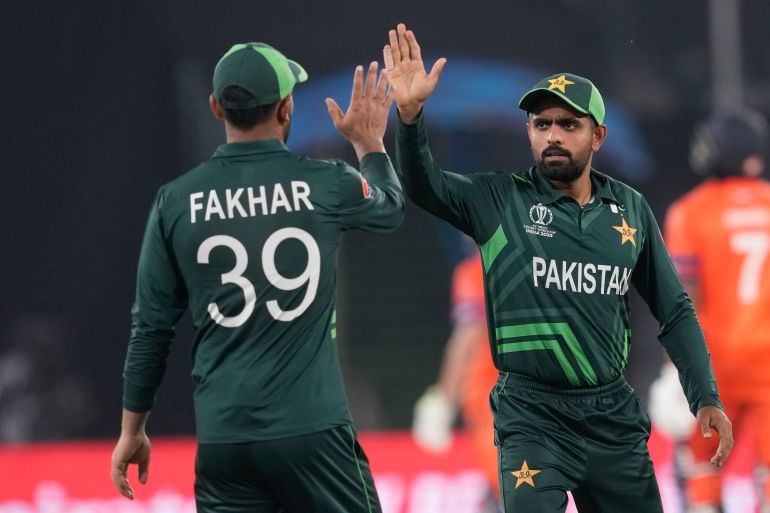
Pakistan's recent performance in the World Cup has been underwhelming, marked by a series of concerning patterns.
The team's consistent losses, combined with issues such as conceding excessive extras, struggling against specific types of spinners, and a lack of consistent batting, have contributed to their diminished prospects in the tournament.
The decision to open the bowling with Iftikhar may have been questionable, particularly when facing a formidable batsman like Quinton de Kock.
Considering his expensive over in the Powerplay, it appears the strategy did not yield the desired results.
Moreover, Pakistan's struggles against left-arm wrist-spinners, evident in recent matches, indicate a significant gap in their preparation.
Their lack of exposure to this particular bowling style in domestic cricket may have left them ill-equipped to counter it effectively on the international stage.
Babar Azam, the team's key batsman, has faced criticism due to his comparatively low strike rate, particularly when juxtaposed against other prominent batters in the tournament. His failure to capitalize on free hits has added to concerns about his ability to provide the necessary impetus at crucial moments. While Shaheen Afridi's recent performance has been commendable, highlighted by his wicket-taking abilities, his expensive over in the initial Powerplay today underscores the need for consistency in maintaining tight bowling spells throughout the game. Additionally, Pakistan's struggles to play out 50 overs in multiple matches, coupled with a reliance on lower-ranked teams to create upsets for their semifinal chances, reflects a concerning dependency on external outcomes rather than focusing on their own performance.
In contrast, Aiden Markram's evolution as a batsman, demonstrated by his improved strike rate and impressive performance in 2023, highlights the importance of consistent development and adaptability in the competitive world of cricket.
His notable contributions in crucial matches underscore the significance of individual growth within the sport. To regain their footing in the tournament, Pakistan must address their shortcomings, including their vulnerability to specific bowling styles, inconsistency in playing full innings, and strategic decisions that affect their overall gameplay.
A collective effort to strengthen their weaknesses, coupled with a focus on consistent performance, will be crucial for their future success in the World Cup.