Elections, Minorities and Reservations of Sindh
 Imran
Imran
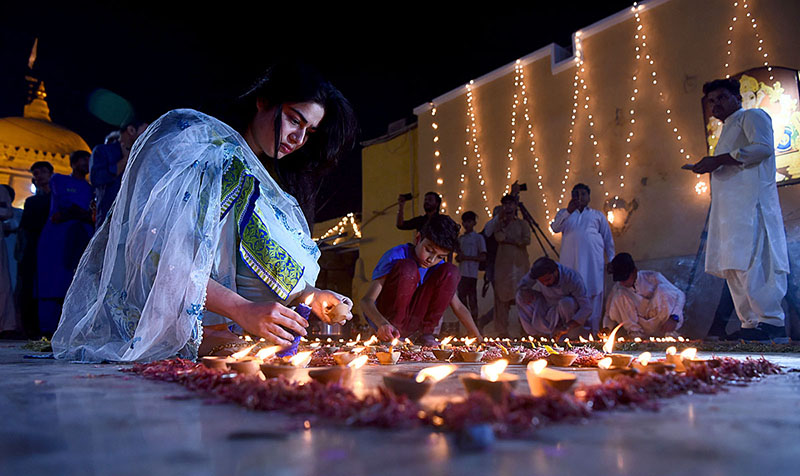
Minority people living in Sindh complain that they are not only not fully included in the electoral process, but are also not counted during the census, i.e. their population is reduced and then at the time of registration in NADRA. They also face injustice, similarly they face problems during voter registration.
A citizen must first be a registered voter to be a part of the electoral process or exercise their right to vote, but people belonging to the lower caste Hindus, the largest minority living in Sindh, claim that their Registration is low compared to their population.
In this regard, the social leader of the minority community, Mukesh Meghwar says, "We are not counted properly. If you visit different districts of Sindh, you will realize that the word Hindu and Dalit are used in the box of religion. Dalit is related to the Hindu community. The keepers are lower caste people like Kohli, Bagri etc. So when you are not given a proper status even as a Hindu, you will be considered inferior, then what rights will the process of voting go ahead?
One thing that is most prominent in the minority community is the class difference. The minority people who belong to the business community are economically prosperous and do not face the same problems as other workers, farmers and farmers. Problems are faced. It is not heard anywhere that the family tree is not correct in the field of religion, if someone's father's ID is made, then it is not the mother's, and if the mother's is made, then the father's is not the father's, due to these types of problems, they are not taken forward in the election process.
All over Sindh, except in the two districts of Tharparkar and Umarkot, the members of the minority community cannot think of contesting for the general seat because they have not been properly counted anywhere else.
Chairman of Pakistan Mandir Management Community Krishan Sharma says that to understand the election, first of all, it is necessary to understand the mood of Sindh. Whoever is a minority in Sindh or the common people, the most obvious and important difference between them is the status class. Which class you belong to, community, tribe and if you are a good businessman, a businessman with money, then you are easily selected by the political party by giving a ticket and then you are also assigned a position.
In real sense, that elected person is not a public representative, he has not risen from the grass root level where he has nothing to do with anyone, be it the issue of employment, education.
Then the most important thing is that choosing the election method is very expensive Election in Pakistan is a very expensive process. The ticket of any political party is a kind of permit. In the old days, only posters and banners were displayed on the walls in the constituencies. Till now the campaign was run in different ways. Now the procedure has completely changed.
The biggest and most powerful campaign that runs is the medium of television, where various advertisements are prepared and aired on various channels for the promotion of the party in the name of paid content to attract voters. An advertisement is run on TV for at least 30 seconds. A 30-second advertisement running on one channel at a time requires at least fifty thousand and this money increases further in prime time. Time is from six in the evening to twelve in the night.
Then the party tries to run this ad on Pakistan's biggest channel and run it repeatedly. If you see an ad running only on TV channels many times, you can imagine how expensive this campaign is. Staff expenses, other expenses are separate.
Well, making this advertisement also requires a lot of money. Which includes camera shoot, team idea and editing, music, graphics, script etc. And
That expense has to be allocated to the party or the candidate. Apart from this, pina flex, digital boards have come which are seen on different roads in the form of digital advertisement, the process of running advertisement continues. In Pakistan, MQM and Jamaat-e-Islami bear the expenses of their candidates themselves, they only conduct elections. I stand while Pakistan Muslim League-N, Pakistan People's Party, Pakistan Tehreek-e-Insaf their party candidates bear their own expenses.
Apart from this, the issue of buying and selling of vehicles to mobilize the workers, this cost reaches to crores of rupees, if the candidates can afford this cost, then they go and run a lively campaign. Then, apart from this, each constituency needs to create its own social media wings, where a complete IT graphics and creative team sits, who are running campaigns to bring about various reforms including negative propaganda.
It is not easy for a common man to get a ticket nor does he have that much money
In the election of 2018, Dr. Naich Kumar Malani from Tharparkar was declared the successful candidate by getting 150,000 votes in which 70 percent of the votes were from MuslimsThe decision of winning or losing is made on the polling day. You also know how the elections are conducted.
In Election 2018, 10 crore 59 lac 55 thousand 407 voters exercised their right to vote. In the election lists, the names of 36 lac 26 thousand 365 voters of the minority community were included
Among the minority community, the highest number of votes was 17 lac 77 thousand 289 of the Hindu community
There were 16 lac 38 thousand 748 voters of the Christian community
The number of Qadiani voters was 1 lakh 65 thousand 369
8 thousand 833 voters of the Sikh community,
There were 4,222 Parsi voters
The number of Buddhist voters is 1,866
The number of voters belonging to religious minorities in Pakistan has increased to 44 lac 30 thousand, which was 36 lac 30 thousand in 2018 and 27 lac 70 thousand in the electoral rolls for 2013 general elections. In this sense, the increase of 1 million non-Muslim voters in Pakistan has increased the vote of the minorities, but still the minorities suspect that this number is also less
|
Proportion of Hindu population living in different provinces of Pakistan |
|
|
Hindu population |
Area |
|
93% |
Hindu population living in Sindh |
|
5% |
Hindu population residing in Punjab |
|
2% |
Hindu population residing in Balochistan |
Hindus speak different languages
Such as Sindhi, Saraiki, Er, Dhatki, Gera, Gwariya, Gargula, Jandwara, Kobutra, Koli, Luwarki, Marwari, Sansi, Wagharia and Gujarati
According to Article 51 of the Constitution, 10 seats are reserved for minorities in the National Assembly and 24 seats in the provinces under Article 106, which are distributed as follows
Sindh: 9, Punjab: 8, Balochistan: 3, Khyber Pakhtunkhwa: 4 seats are allotted in 4 seats.
|
|
|
|
Pakistan total registered voters 12 crore 21 lakh 96 thousand 122 |
|
|
39 lac, 56 thousand 336 |
The number of minority voters is |
|
2073983 |
Number of Hindu voters |
|
1703288 |
Number of Christian voters |
|
174165 |
Votes of other minorities |
|
Data of Election Commission of August 2022
|
Four hundred thousand twelve thousand seven hundred and sixty one |
|
Number of registered votes of minorities in last election(2013) |
Three million, thirty-one thousand four hundred and seventy-one |
|
Increasing the number of minority votes
|
Four hundred eighty one thousand two hundred ninety |
Well-known journalist, writer and social leader Masoom Thiri says that according to the constitutional amendments of 2002, the right to elect minority representatives on reserved seats has been given to the political parties of Pakistan on the basis of proportional representation
Now the representatives are chosen by these political parties. A person who is not a public representative is from a certain business class or a wealthy businessman who is later given the best positions but he never pays attention to the problems of the minorities because he is not answerable to them because he depends on their votes.
No, it should be decided that there should be a regular competition for the minority community in the reserved seats, those who get more votes should enter the field, but due to this method not being proper, the minorities cannot be fully represented
For the minorities, the selection process of the seats given in the election process is not correct Most of the population in Tharpakar and Thar desert is nomadic, they migrate according to the season and travel from one place to another.
Sometimes it happens that the process of voter registration is going on in one area, but most of the people from there have migrated to another area and thus they cannot be registered at the voting stage.
Social leader Safina Gill says that the biggest problem with the Hindu community is illiteracy, poverty, backwardness and lack of awareness about their rights. If a person is worried about eating two meals a day, how can he think about other things?
Second, the NADRA office in Sindh is not close to the villages to go and get an identity card or to register to vote. It is located far and wide so that it is not possible for a common man to move from one place to another
Then in our country, the minorities do not have any equal rights, they cannot become the Prime Minister and the President, this is a kind of appropriation.
Minority Member of the National Assembly Dr. Ramesh Kumar presented the Minority Rights Amendment Bill in the National Assembly in 2013, which was presented five times, but a committee was formed, but the seats of the minorities are still only ten. Direct elections should be held on safe seats, they should not be done by parties.
|
Area /Province |
General Seats |
Women seats |
Non Muslim |
Total Seats |
|
Balochistan |
16 |
4 |
|
20 |
|
Khyber Pakhtunkhwa |
45 |
10 |
|
55 |
|
Punjab |
141 |
32 |
|
173 |
|
Sindh |
61 |
14 |
|
75 |
|
Federal Capital |
3 |
|
|
3 |
|
|
|
|
10 |
10 |
|
Total |
266 |
60 |
10 |
336 |
As far as provinces are concerned, 141 general seats were given to Punjab, 61 to Sindh, 45 to Khyber Pakhtunkhwa, 16 to Balochistan and three to Islamabad.
Krishna Kumari Kohli belongs to Tharparkar Sindh. Krishna is the first senator from the Hindu community.
Krishna became a member in 2018
She said that if the seats of all other parliaments can increase, then the seats of the minorities should also increase and should be balanced with their population. If currently there are four seats in the Senate, then they should be increased to at least eight and Sindh has nine reserved seats, then there is a dire need to increase them to at least 15.
I am from Hindu community but I got elected on general seat. I think that all Pakistanis, whether they are a minority or a Muslim, in this sense, it should be made mandatory to have a minority seat in every district, so that we can best represent ourselves
Apart from this, she said that there is a dire need to increase the number of seats for women. Men are not as interested as a woman in legislation.
We were bringing the Minority Protection Bill from the Senate, but it was rejected. Thi who protested that if that bill is also passed, many problems of minorities could be solved
Deepna Karan, who went to Germany for higher education after graduating from NED University in Karachi, says that forced conversion, kidnapping for ransom, forced marriage, lack of educational opportunities, lack of employment facilities. Health issues, we have not been counted well in any census till date and there are securities concerns
I think that the number of women in the Sindh Assembly should be more than the minorities, as long as all the men who pass the bill should be men belonging to the special class, even if it is the minority. How can women get their rights?
If a Hindu girl represents in the assembly tomorrow, then only she can properly highlight the problems of women.
Only then the problems of a woman and a girl can be solved. Unless your representative is a woman herself, you Your voice will not be heard
For this process, it is necessary that women actively participate in the elections, women candidates participate in the elections and all the women of the minority communities should try to choose their female candidates.
We should have our own syllabus in education. We should have our own schools and our own method of education which should be run by the Hindu community
In terms of education, you should make community schools by marking the population at each place. Here there is a representation of welfare community, then a school should be built for them, the principal of this school should also be from the Hindu community. either by the government or by the community so that their education flows forward
Regarding the census, we say that the community is not represented as much as it should be. People still have no idea how many Hindus there are in Karachi and Tharpar. Where there is a minority community, people should know about it through census and news
There are also a large number of minority communities, whose history, culture, and religion are all present here. And if Karachi is not counted properly in the census, then how can we be counted?
Secretary of Hyderabadabad Union of journalists, Senior News Editor of Sindhi newspaper Ibrat and Editor of Lok Sajag web portal ,Sindh Jay Prakash Morani says that our population is also increasing and we demand that there should be at least 15 seats for the minority community which is time. There is an important need.
There is a need for special legislation regarding the minority community, on which some work has been done and some work needs to be done. If you see, the quality of life of our people is not much better.
Roz mithani minority’s activists say that hatred should be eliminated, a syllabus should be made in which religious harmony is created and the minority should get the same rights in the election that everyone has. There is still room for better and more accurate counting.
Munwar Ali Ghangharu, director of Pakistan Statistical Office, when spoken to regarding the population of Hindu community and minority community, said that till now we have not compiled any data. He will be in a position to announce or make it public. He was asked again that according to your estimate, how much the population of the minority will be, and he said that I cannot say anything about it.
When we tried to talk to Sindh Assembly Speaker Agha Siraj Durrani regarding the minority community not being counted properly and other issues, he did not respond to the message nor did he bother to pick up the phone. of Apart from this, Pakistan People's Party Senator Sasai Plaju, Shazia Atta Murri, and Surath Thibo,Pml n leader Nihal Hashmi and other former members of the Sindh Assembly tried to contact them, but they refused to talk about it and some did not answer the phone. picked up.
Social leaders say that their voices are silenced in education, employment, health and other sectors due to not counting the minority community properly.
They do not get the rights that a human being gets socially. Due to their low number, they are not represented in the House and they are further left behind in the legislation
Non-creation of identity cards, non-representation due to non-obtainment of voter registration, with which all life development and personal identity are suppressed.