Rs163 m transferred to pregnant, lactating mothers under social protection program: Murad Shah
 Imran
Imran
Rs163 m
transferred to pregnant, lactating mothers under social protection program:
Murad Shah
15 poorest Distt
selected to support mother, child for 3 years
KARACHI Sindh Chief Minister Syed Murad Ali Shah has said that through the Social
Protection Delivery System, the Mother and Child Support Programme (MCSP) has
been launched under which so far Rs163.584 million cash has been transferred to
pregnant and lactating women.
Mr Shah said
that the MCSP has been introduced to encourage pregnant women and mothers of
under two-year-old children to utilize maternal, newborn, and child healthcare
services (MNCH) throughout the continuum of care for 1,000 days/ three years
from conception. The programme will provide conditional cash transfers to
support and strengthen the scale of the Mother and Child Support.
This emerged in
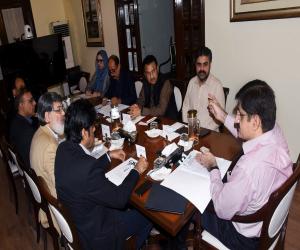
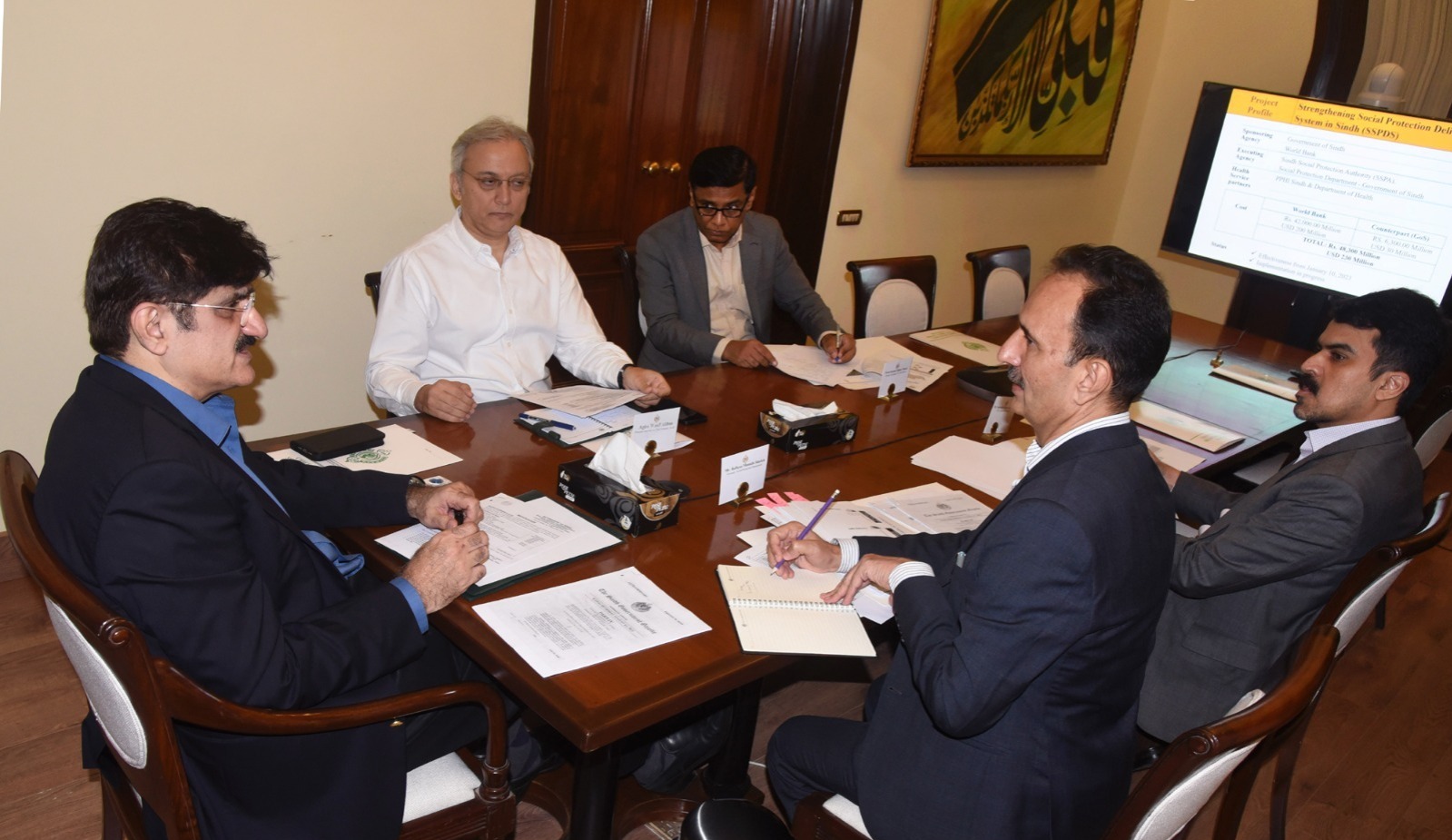
a meeting he presided over to review the progress of ‘the Strengthening Social Protection Delivery
System in Sindh (SSPDS)’ here at CM House on Monday. The meeting was attended
by PSCM Agha Wasif, Secretary of Social Protection Dept Rafiq Mustafa Shaikh,
CEO of Social Protection Authority Samiullah Shaikh and others concerned.
The MCSP program
has a budget of $201.85 million to strengthen and expand the existing Mother
and Child Support Program by providing conditional cash transfers to pregnant
women and mothers of children under two years old.
The
Strengthening Social Protection Delivery System in Sindh (SSPDS) has been
launched with the International Development Association (IDA). The IDA has
funded $200 million and counterpart funding of the Sindh government share is
$30 million which shows the project cost is $230 million. The project will be
implemented over five years (2023-2027).
Mother &
Child Support: The Mother and Child Support Programme (MCSP) has been initiated
for $201.85 million to strengthen and increase the scale of the Mother and
Child Support via conditional cash transfer to pregnant women and mothers of
under two-year-old children encouraging them to utilize maternal, newborn and
child healthcare (MNCH) services throughout the continuum of care for 1,000
days (3 years) from conception.
Secretary Social
Protection Rafiq Mustafa to the CM that the MCSP which has been piloted in two
districts (Umerkot and Tharparkar) in 2021, offer cost-effective instruments
for increasing the uptake of these essential services by poor rural households.
He said that it
was also an effective way to target small cash transfers to poor women at times
in the life cycle (when they are pregnant or have young children) for when they
most need additional support to look after their health and the nutrition of their
children. The MCSP encapsulates some significant advances in this area,
including partnership between social protection and health service providers,
coordination among stakeholders at the local level, initial development of
IMIS, beneficiary registration and verification, and online payment mechanisms.
The
beneficiaries of the MCSP will avail of WHO-recommended MNCH services
throughout the continuum of care for 1,000 days from conception and are
considered essential for the well-being of the mother, newborn, and child.
CEO Social
Protection Authority Samiullah Shaikh said that a total of 16 touchpoints have
been identified throughout the 1,000 days. These include antenatal, safe
deliveries, postnatal maternal and newborn checkups, and child growth and
immunization monitoring.
The 15 poorest
districts – Umerkot, Tharparkar, Mirpurkhas, Tando Mohammad Khan, Matiari,
Tando Allahyar, Sujawal, Thatta, Badin, Sanghar, Kahsmore, Jacobabad, Shikarpur
and Kambar-Shahdadkot - selected based on the Multidimensional Poverty Index
(MPI) to roll out the program.
Expected
Beneficiaries: The CM was told that there would be 1.3 million beneficiaries -
pregnant and lactating women in 5 years.
To a question,
the CM was told that an amount of Rs285. 656 million have been released for
cash transfer, of them Rs163.584 million have been transferred and the
remaining was being transferred.
The Chief
Minister instructed the Social Protection Department to issue CNICs to mothers
who did not have them so that they could take advantage of the project.