Massive Protest by Awami Tehreek in Golarchi against Corporate Farming and Six New Canals.
 Chehra WebDesk
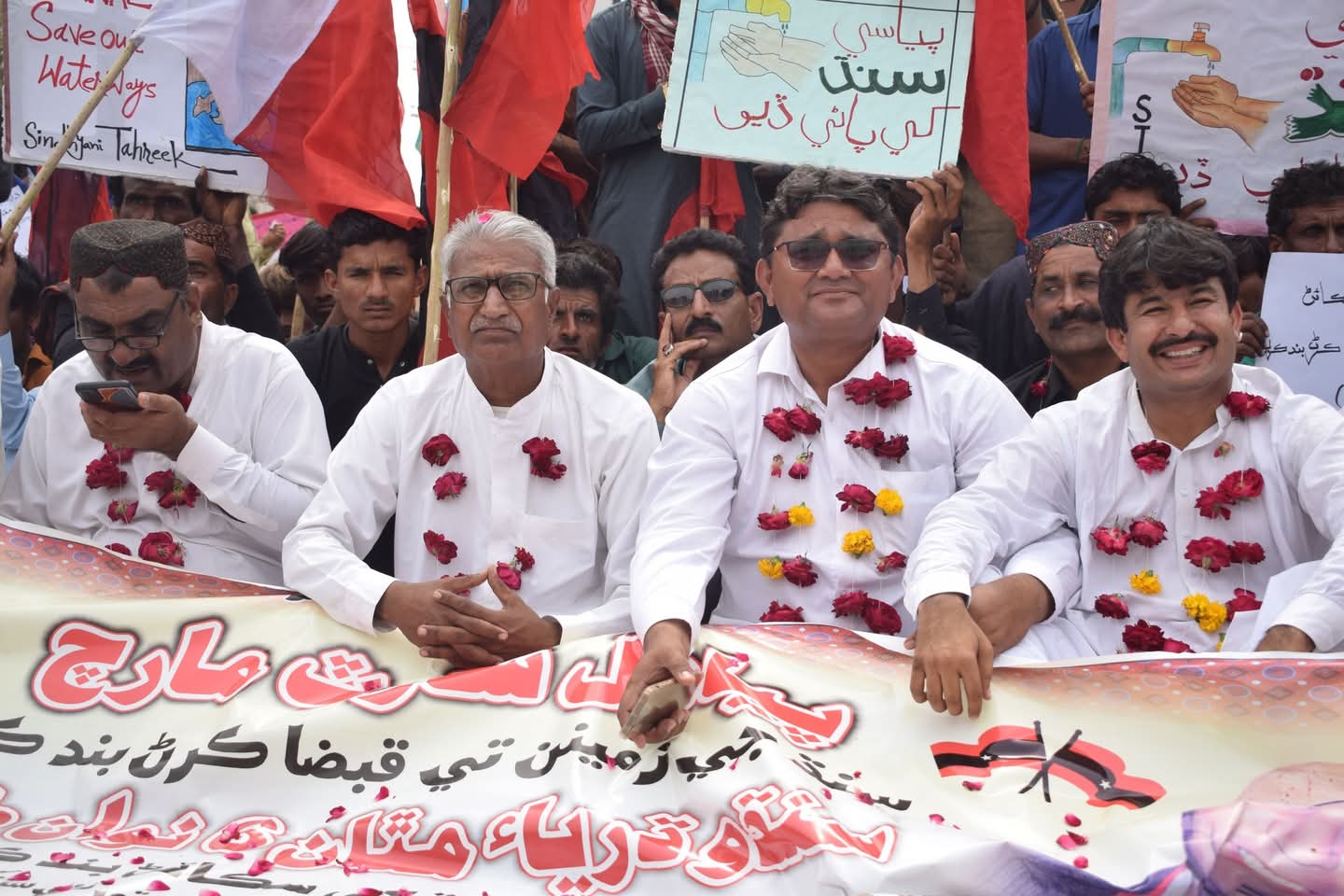
Golarchi-Badin Road Blocked, Traffic Disrupted several hours
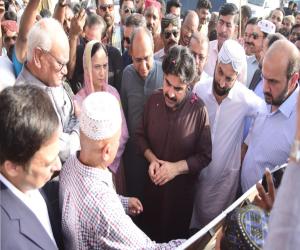
A large protest rally and sit-in were organized by Awami Tehreek in Golarchi against corporate farming and the construction of six new canals. The protesters, including a significant number of women and children, carried placards demanding the removal of illegal occupations on Sindh’s lands and the restoration of the natural flow of the Indus River.
Awami Tehreek’s central president, Advocate Vasand Thari, criticized Sindh Chief Minister Murad Ali Shah, saying, “Instead of representing Sindh, he is acting as Maryam Nawaz’s spokesperson.” He accused the Pakistan Peoples Party (PPP) of running a campaign against the Sindhi nation's peaceful struggle against the new canals.
Advocate Vasand Thari said that the construction of six new canals is a plot to sell Sindh’s water to corporate farming companies, leading to a “genocide” of seventy million Sindhis.
Central Senior Vice President Noor Ahmed Katiar and Central Vice President Sattar Rind also spoke at the protest, accusing the PPP of conspiring to sabotage the Sindhi nation’s democratic struggle. "The joint press conference of Murad Ali Shah and Ahsan Iqbal supporting the canals exposes the PPP as a crime partner of the federal government in looting the Indus," said Lal Jarwar, Central information Secretary of Awami Tehreek.
Dr. Dildar Laghari, another central leader, added, "By participating in the inauguration ceremony of the Kachhi Canal, the PPP endorsed the PML-N government's agenda of supporting the six new canals."
The rally, which blocked the several hours Golarchi-Badin road, was led by Awami Tehreek’s leadership, including Advocate Vasand Thari, Noor Ahmed Katiar, Sattar Rind, Lal Jarwar, Dr. Dildar Laghari, Mehran Das, Muhammad Ali Talpur, and others.
Protesters highlighted the plight of residents from Ahmad Rajo, who are being displaced to provide land to corporate farming companies. Displaced villagers and Amir Azad Panhwar, Central Vice President of SUP, joined the rally.
Speakers demanded to know why, despite Murad Ali Shah’s claims that the canals could be rejected at any forum, no action had been taken to stop them. They questioned why the PPP had not tabled resolutions against the canals in the Senate, National Assembly, and provincial Assemblies.
Leaders criticized the PPP for its involvement in water theft through Chashma-Jhelum and Taunsa-Panjnad link canals, which divert Sindh’s rightful share of water to irrigate Punjab's lands. They accused the Sindh government of turning a blind eye to the illegal TP and CJ link canals, and now planning to hand over all of Sindh’s water to corporate farming companies through the construction of six new canals.
The protestors stressed that water is not merely a technical issue, but a political, economic, and existential matter for seventy million Sindhis. They accused the PPP of attacking Sindh’s 5,000-year-old civilization by supporting corporate farming and the new canals, stating that the PPP had caused more harm to Sindh than previous authoritarian regimes.
They demanded accountability from the PPP for every inch of Sindh’s land and every drop of its water. The protesters asserted their constitutional right to peaceful protest, condemning the PPP’s authoritarianism and suppression of dissent.

They accused the PPP of using the 26th Constitutional Amendment and PECA Act amendments to stifle the judiciary and media. Despite these challenges, the Awami Tehreek vowed to continue its peaceful democratic struggle to restore the natural flow of the Indus River and to bury the six-canal project just as the Kalabagh Dam project was defeated.