Read Palijo's Book to be an advocate of Indus Water*
 Chehra WebDesk
*Read Palijo's Book to be an advocate of Indus Water*
Book Review By: Kalavanti Raja
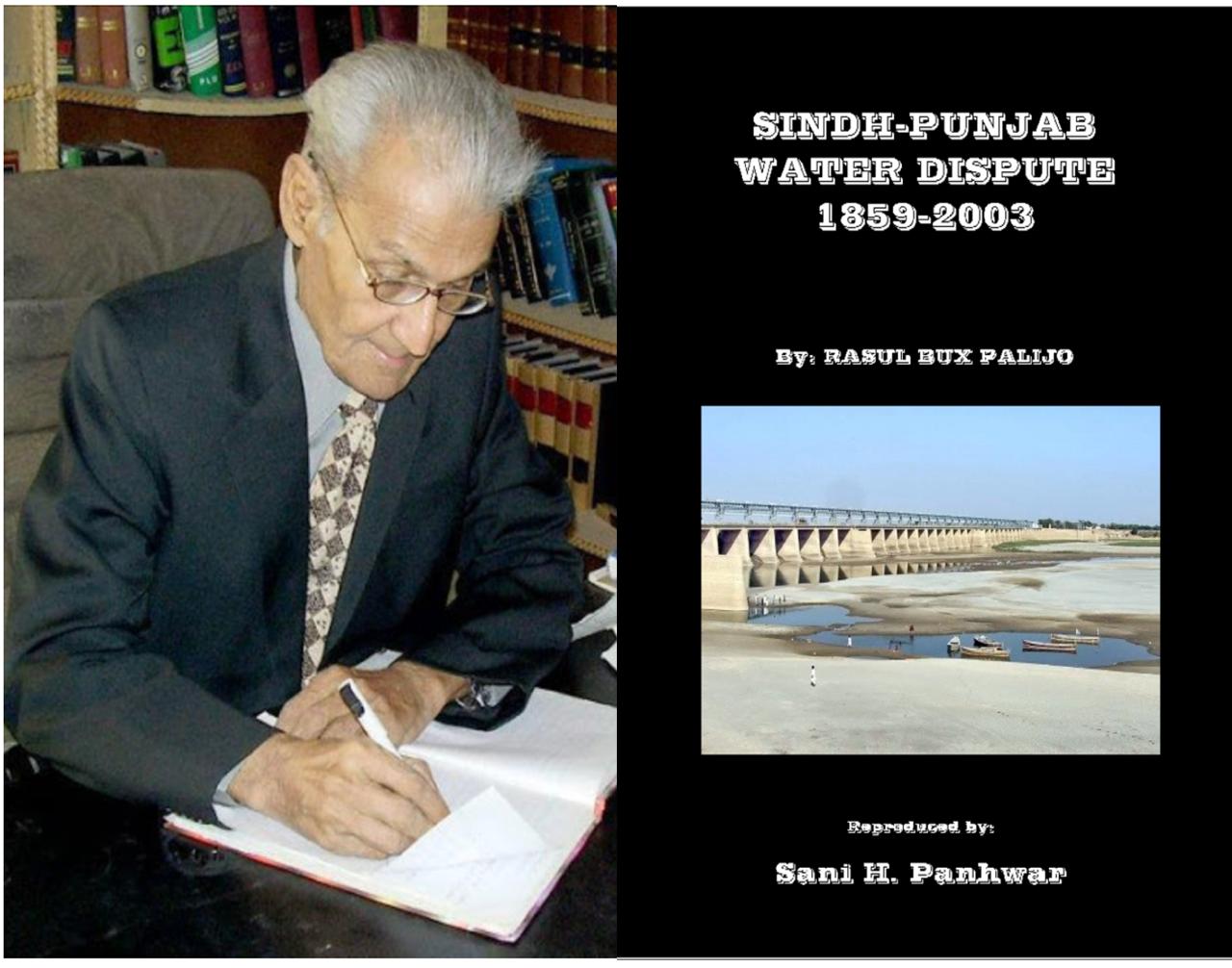
Rasool Bux Palijo’s Sindh-Punjab Water Dispute (1859–2003) is not merely a book—it is a piercing, passionate, and politically charged document that lays bare the long and painful history of water injustice in Pakistan. First published as an exhaustive chronicle of over a century of Sindh’s struggle for its rightful share of Indus River waters, the book has gained renewed relevance as Pakistan faces a deepening water crisis, marked by rising provincial tensions and ecological distress.
Palijo, a visionary leader, jurist, and political activist, spent over 35 years leading Sindh’s resistance against water exploitation—not only through courtroom arguments and scholarly articles but through mass mobilization, sit-ins, marches, and a people’s movement rooted in dignity and survival. His book encapsulates this lived activism in gripping detail, tracking how colonial and post-colonial regimes engineered policies and constructed infrastructure—like the Greater Thal Canal and proposed Kalabagh Dam—that systematically deprived Sindh of its ecological lifeline.
What sets this book apart is Palijo’s unique ability to combine rigorous historical documentation with a searing moral urgency. It is both a legal case and a revolutionary text. While it presents treaties, administrative decisions, and statistics, it also speaks to the emotional and existential anxieties of Sindh’s people. The narrative is not cold or detached—it burns with indignation and resolve. For Palijo, water is not just a resource; it is identity, culture, economy, and survival.
In the current context, where controversial projects and corporate farming schemes have reignited debates around water distribution, this book stands as a critical lens through which to understand the crisis. Palijo dismantles the myth that water conflict is merely a technical issue. Instead, he reveals it as a political problem rooted in unequal power relations, centralized policymaking, and disregard for ecological justice. He frames the water crisis as a test of federalism in Pakistan—a challenge that determines whether provinces can coexist in fairness and mutual respect.
The book’s appeal today extends beyond activists and policymakers. Ordinary citizens, students, and young readers are rediscovering it as a tool of awareness and empowerment. It educates readers about not only what happened but why it matters now. The clarity and depth with which Palijo explains complex water agreements and their violations make this work accessible even to those new to the topic. Yet, it remains intellectually rich and emotionally compelling.
Palijo passed away in 2018, but his ideas, resistance, and vision endure. This book is more than his legacy—it is a living document. It revives suppressed histories, challenges dominant narratives, and calls upon the reader to think critically about justice, ecology, and federal coexistence. In a time of climate vulnerability and provincial unrest, reading Sindh-Punjab Water Dispute is not just important—it is urgent.
In conclusion, Rasool Bux Palijo’s work is essential reading for anyone who wishes to understand the roots of Pakistan’s water conflict, and even more so for those committed to building a just and equitable future. It is a powerful reminder that history matters, that resistance has a voice, and that the struggle for water is a struggle for life itself.