When the Skies Weep: A Tale of Two Urban Giants – Karachi and Mumbai – and Their Battle Against the Monsoons
 Imran
Imran
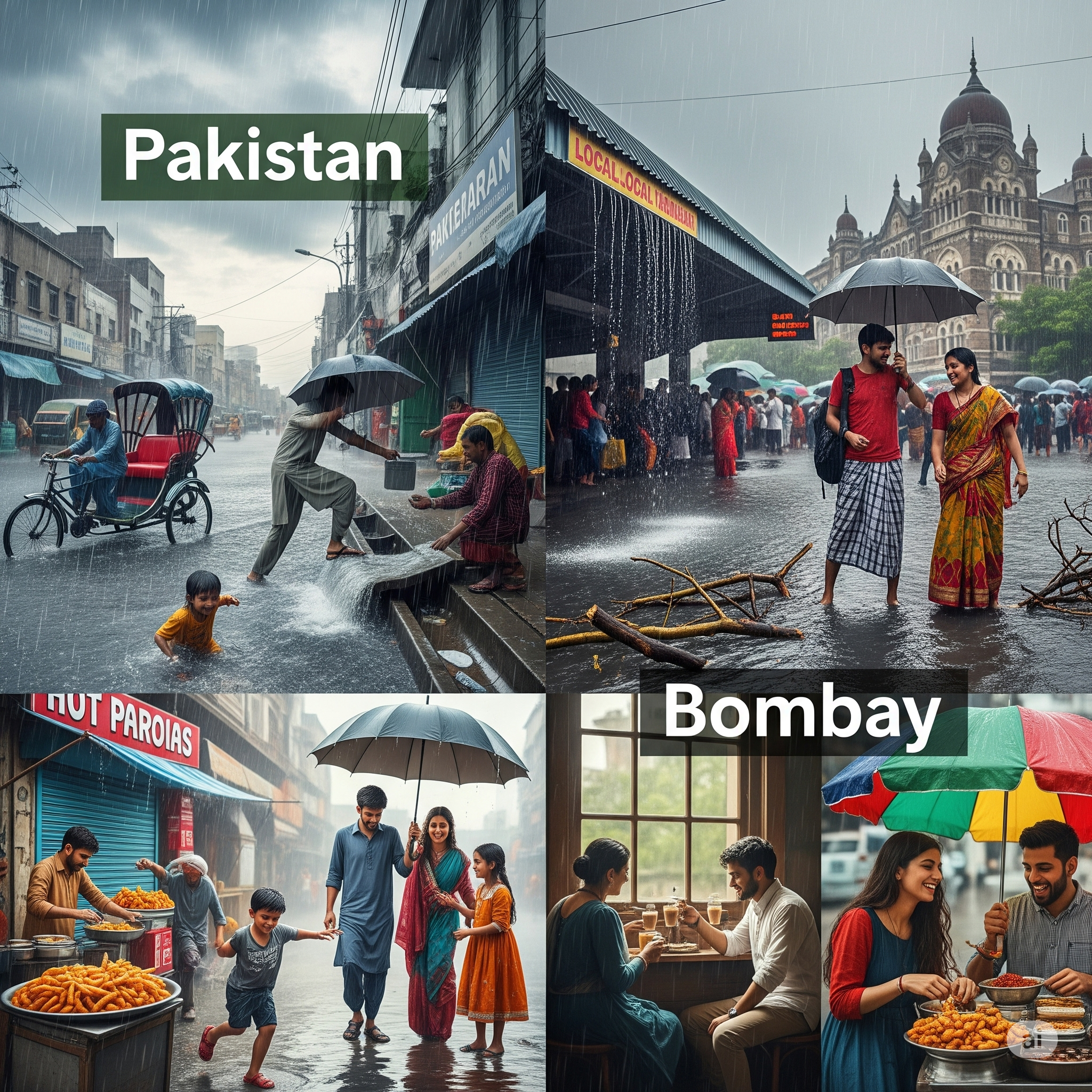
Karachi, Sindh, Pakistan – The arrival of the monsoon rains in Karachi and Mumbai is typically met with a mix of relief from the scorching heat and a familiar dread. For these two bustling metropolises, the life-giving downpour often transforms into a disruptive and even deadly force, exposing deep-seated vulnerabilities in their urban infrastructure and planning. Despite their economic significance and massive populations, both cities consistently struggle to cope with the annual deluge.
The Monsoon's Embrace and Its Fury:
Both Karachi and Mumbai lie in regions heavily influenced by the southwest monsoon. This seasonal shift in wind patterns brings significant rainfall between June and September. However, the quantum and intensity of rainfall differ.
Mumbai: Being situated on the windward side of the Western Ghats, Mumbai receives significantly higher annual rainfall. The average annual rainfall in Mumbai ranges from 2,200 mm to 2,500 mm. It is characterized by intense spells of heavy rainfall over short periods.
Karachi: Located in a relatively arid region, Karachi receives considerably less rainfall, averaging between 150 mm to 250 mm annually. However, its low drainage capacity and the intensity of even moderate rainfall can lead to significant urban flooding.
The Deluge Unleashes: Fundamental Problems After Rainfall:
Despite the difference in the amount of rainfall, both cities face remarkably similar fundamental problems in the aftermath of a downpour:
Urban Flooding: This is the most immediate and visible consequence. In Karachi, even a few hours of moderate to heavy rain can overwhelm the inadequate drainage system, leading to widespread waterlogging on streets, in residential areas, and commercial hubs. Mumbai, despite a higher average rainfall, also experiences severe flooding due to clogged drains, encroachment on natural waterways, and the sheer volume of water.
Transportation Chaos: Waterlogged roads become impassable, leading to massive traffic congestion in both cities. Public transport systems, including buses and local trains (the lifeline of Mumbai), face severe disruptions or complete shutdowns, leaving millions stranded. Karachi's already strained public transport virtually collapses during significant rainfall.
Power Outages: Rainfall often leads to widespread power outages in both cities. In Karachi, the dilapidated power infrastructure is particularly vulnerable, with electrocutions being a recurring and tragic consequence. Mumbai also experiences power disruptions due to water entering substations and damaged transmission lines.
Sanitation and Health Crises: Stagnant water becomes a breeding ground for disease-carrying mosquitoes, leading to a spike in malaria, dengue fever, and other waterborne illnesses. Poor waste management systems exacerbate the problem as rainwater washes garbage onto the streets and into residential areas, creating unhygienic conditions.
Infrastructure Damage: Continuous flooding and heavy rainfall can damage roads, bridges, and buildings. In Karachi, the lack of proper infrastructure maintenance makes it particularly susceptible to such damage. Mumbai's older infrastructure in densely populated areas also faces significant strain.
Disruption of Daily Life and Economic Activity: The cumulative effect of these problems leads to a significant disruption of daily life for residents and a considerable impact on economic activities, with businesses forced to close and daily wage earners losing their income.
The Planning Paradox: Why the Persistent Lack of Preparedness?
The recurring nature of these rainfall-induced crises begs the question: why is there a persistent lack of proper planning in both major urban centers to effectively address these issues? Several factors contribute to this paradox:
Rapid and Unplanned Urbanization: Both Mumbai and Karachi have experienced explosive population growth, often exceeding the capacity of their urban planning and infrastructure development. This has led to encroachment on natural drainage systems, construction in low-lying areas, and overburdened existing infrastructure.
Inadequate Drainage Infrastructure: Both cities suffer from outdated and insufficient drainage systems that are unable to cope with even moderate rainfall. Lack of regular maintenance and desilting further exacerbates the problem.
Poor Waste Management: Inefficient waste collection and disposal systems lead to the clogging of drains and waterways with plastic and other debris, hindering the flow of rainwater.
Governance and Coordination Issues: Fragmentation of responsibilities among multiple government agencies often leads to a lack of coordination in planning and implementation of solutions. Political considerations and bureaucratic inefficiencies can also hinder progress.
Financial Constraints: While both are economically significant cities, allocation of sufficient funds for long-term infrastructure development and disaster preparedness often falls short due to competing priorities and fiscal challenges.
Lack of Robust Early Warning Systems and Disaster Management: While some progress has been made, comprehensive and effective early warning systems and well-equipped disaster management agencies are still lacking in effectively mitigating the impact of heavy rainfall.

A Decade Under the Downpour: Rainfall Records and Comparative Analysis:
While precise, consistently recorded rainfall data for specific urban centers over the past decade can be challenging to obtain publicly with absolute certainty, we can analyze general trends and available information:
Mumbai (Approximate Annual Rainfall in mm):
2014: 2,250
2015: 1,600 (Relatively dry year)
2016: 2,100
2017: 2,700 (Significant flooding)
2018: 2,400
2019: 2,900 (Heavy rainfall and flooding)
2020: 2,800
2021: 2,500
2022: 2,750
2023: 2,600
Karachi (Approximate Annual Rainfall in mm):
2014: 180
2015: 120 (Relatively dry year)
2016: 200
2017: 220
2018: 150
2019: 350 (Unusually heavy rainfall and severe flooding)
2020: 480 (Record-breaking rainfall and devastating floods)
2021: 280
2022: 230
2023: 190

Comparative Analysis:
The 10-year record clearly highlights the stark difference in the average quantum of rainfall between Mumbai and Karachi. Mumbai consistently receives significantly higher rainfall. However, the data also reveals crucial points:
Variability: Both cities experience variability in annual rainfall. Mumbai has seen years with exceptionally heavy rainfall (2017, 2019, 2020), leading to severe flooding. Karachi, despite its low average, has also witnessed years with unusually high and intense rainfall (2019, 2020), which its infrastructure is ill-equipped to handle, resulting in widespread devastation.
Impact vs. Volume: The impact of rainfall is not solely dependent on the volume. Karachi's vulnerability stems from its poor drainage and infrastructure, meaning even relatively moderate rainfall can cause significant disruption. Mumbai, while better equipped in some areas, still struggles with extreme rainfall events.
Increasing Extremes: The data suggests a potential trend towards more extreme rainfall events in both cities in recent years, possibly linked to the broader impacts of climate change.
The Human Toll: Deaths Due to Rainfall (Past Five Years - Approximate Estimates):
Obtaining precise and consistently reported figures for deaths directly attributable to rainfall in both cities can be challenging due to varying reporting mechanisms and the inclusion of indirect causes (e.g., building collapses due to waterlogging). However, based on media reports and available data:
Mumbai (2019-2023): While large-scale, singular events with mass casualties directly due to rainfall are less frequent compared to Karachi, deaths occur due to wall collapses in waterlogged areas, electrocutions, and drowning in flooded regions, particularly in informal settlements. Estimates suggest dozens of deaths occur cumulatively each monsoon season.
Karachi (2019-2023): Karachi has tragically witnessed a higher number of direct deaths due to rainfall-related incidents. These include electrocutions from faulty power infrastructure in flooded areas, drowning, and building collapses. The heavy rainfall and flooding in 2019 and 2020 resulted in significant loss of life, with estimates ranging from several dozen to over a hundred deaths in each of those particularly severe years. Even in less severe monsoon seasons, fatalities are reported.
Climate Change and Urban Preparedness: Actions Taken and Actions Neglected:
Both Mumbai and Karachi acknowledge the growing threat of climate change and its potential to exacerbate rainfall patterns and intensity. However, the translation of this awareness into concrete and effective action remains a significant challenge.
Mumbai: Steps Taken:
Brihanmumbai Storm Water Disposal System (BRIMSTOWA): An ongoing project aimed at upgrading the city's drainage infrastructure. However, its implementation has faced delays and challenges.
Early Warning Systems: The India Meteorological Department (IMD) provides rainfall forecasts and warnings. Efforts are being made to improve dissemination to the public.
Disaster Management Plans: The city has disaster management plans in place, and the National Disaster Response Force (NDRF) is often deployed during severe events.
Focus on Green Spaces and Water Retention: Some initiatives are underway to promote urban forestry and develop water retention areas.
Mumbai: Actions Not Taken/Insufficiently Addressed:
Slum Redevelopment and Housing Crisis: The vulnerability of slum dwellers to flooding and structural collapses remains a critical unaddressed issue.
Encroachment on Waterways: Despite regulations, encroachment on natural drainage channels continues, hindering the flow of water.
Comprehensive Waste Management: A truly effective and city-wide waste segregation and disposal system is still lacking, contributing significantly to drainage blockages.
Public Awareness and Preparedness: While warnings are issued, effective public awareness campaigns on how to respond to extreme rainfall events need strengthening.
Karachi: Steps Taken:
Drain Cleaning Drives: Sporadic campaigns are often launched to clear drains before the monsoon, but their effectiveness is limited due to the scale of the problem and re-accumulation of waste.
Disaster Management Authority (PDMA/NDMA) Involvement: Provincial and national disaster management authorities are involved in rescue and relief efforts during severe flooding.
Some Infrastructure Projects (Often Delayed): Efforts to upgrade sections of the drainage and road infrastructure are often announced but face significant delays in completion.
Karachi: Actions Not Taken/Insufficiently Addressed:
Overhauling the Drainage System: A comprehensive and long-term plan to completely overhaul and expand the city's antiquated drainage network is critically missing.
Effective Waste Management System: The lack of a robust and consistent waste collection, transportation, and disposal system is a primary contributor to the flooding crisis.
Regulation of Construction and Encroachments: Weak enforcement of building codes and a failure to prevent and remove encroachments on natural waterways are major impediments.
Investment in Power Infrastructure Resilience: The power distribution network remains highly vulnerable to rainfall, and significant investment in making it more resilient is lacking.
Public Awareness and Safety Education: There is a significant gap in public awareness regarding safety measures during heavy rainfall and flooding, particularly concerning electrocution hazards.
Urban Giants, Myopic Vision? Why the Lack of Sustained Attention?
The persistent neglect in addressing these predictable and recurring crises in both Mumbai and Karachi, despite their status as major urban and economic hubs, is perplexing. Several factors might contribute to this apparent lack of sustained attention:
Short-Term Political Cycles: Political focus often tends towards immediate, visible projects rather than long-term, complex infrastructure development that may not yield immediate electoral benefits.
Complacency and Learned Helplessness: The cyclical nature of the monsoon and its aftermath might lead to a degree of complacency, with authorities and citizens alike feeling overwhelmed and resigned to the situation.
Lack of Strong Public Pressure and Accountability: While there is public outcry after severe flooding events, sustained and organized public pressure demanding long-term solutions and holding authorities accountable might be insufficient.
The Sheer Scale of the Problem: The rapid and unplanned growth of both cities has created problems of immense scale, making it daunting for authorities to implement effective solutions.
Focus on Economic Growth: The economic importance of these cities might lead to a greater focus on facilitating business and investment, sometimes at the expense of crucial infrastructure development and urban planning.
The Blame Game: Government Failure or Citizen Unawareness? The Core Issue:
Attributing the failure to address these issues solely to government negligence or citizen unawareness is an oversimplification. The core issue is a complex interplay of systemic failures and societal factors:
Government Failure (Systemic Weaknesses): This includes inadequate planning, poor implementation, corruption, lack of coordination, insufficient resource allocation, and weak enforcement of regulations. The failure to prioritize long-term infrastructure development and disaster preparedness is a significant aspect.
Citizen Unawareness (Contributing Factors): While citizens bear the brunt of the consequences, factors like lack of awareness about proper waste disposal, construction in vulnerable areas (often driven by economic necessity and lack of affordable housing), and perhaps a degree of resignation can also contribute to the problem. However, it's crucial to recognize that citizens often operate within the constraints of the existing systems and lack of viable alternatives.
The Core Issue: A Breakdown in Urban Governance and Planning:
Ultimately, the core issue lies in a breakdown of effective urban governance and planning. This encompasses a failure to:
Anticipate and plan for rapid urbanization.
Invest adequately in and maintain essential infrastructure.
Enforce regulations and prevent encroachments.
Implement sustainable waste management systems.
Prioritize and address the needs of all citizens, particularly the most vulnerable.
Establish robust disaster preparedness and response mechanisms.
Foster a culture of accountability and transparency in urban management.
Conclusion: A Looming Crisis Demands Urgent Action:
The recurring monsoon mayhem in Karachi and Mumbai serves as a stark reminder of the urgent need for a paradigm shift in urban governance and planning. Incremental measures and short-term fixes are no longer sufficient. A comprehensive, long-term, and well-funded strategy is essential to build resilient and sustainable urban environments. This requires strong political will, effective inter-agency coordination, active citizen engagement, and a fundamental commitment to prioritizing the well-being and safety of all residents. Unless these urban giants confront their vulnerabilities with a proactive and holistic approach, they will continue to be at the mercy of the monsoons, paying a heavy price in terms of economic disruption, human suffering, and preventable loss of life. The skies may weep with rain, but it is the collective failure to prepare that truly leaves these cities waterlogged in despair.