Two Megacities, One Shared History: An Investigative Look at Karachi and Mumbai
 Imran
Imran
Two Megacities, One Shared History: An Investigative Look at Karachi and Mumbai
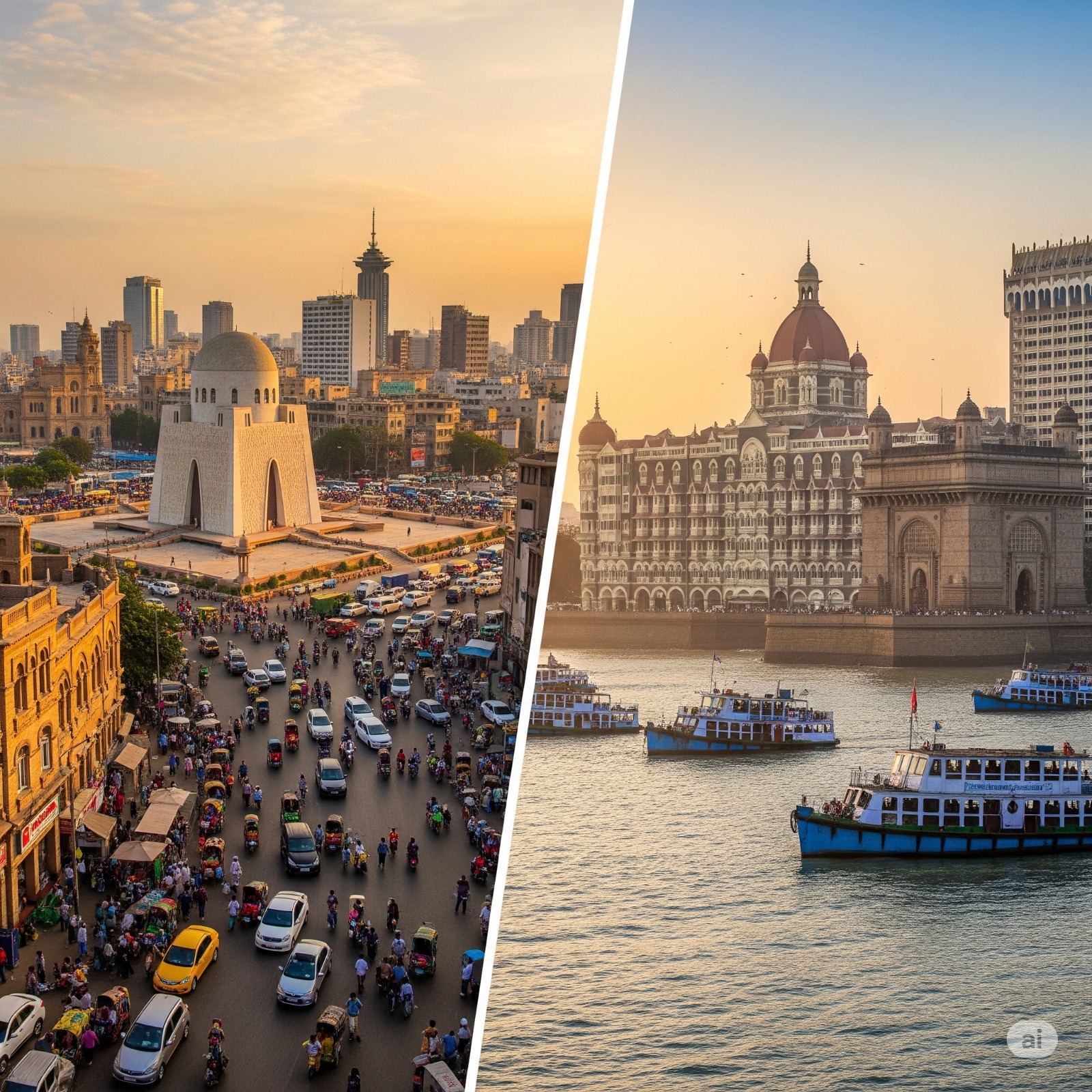
Karachi and Mumbai, the bustling port cities and financial hubs of Pakistan and India, respectively, share a complex and intertwined past. Separated by the 1947 partition, these cities have evolved along different paths, yet their similarities, from a vibrant street culture to a diverse populace, are undeniable.
Demographics and Society
While both are megacities, their demographic profiles and growth trajectories show key differences.
Population: Mumbai, as India's financial capital, has a significantly larger metropolitan population, estimated at over 23 million in 2025. This contrasts with Karachi's metropolitan population of around 18 million in the same period. Karachi, however, has experienced a faster annual population growth rate, at an average of 4.04% from 2017 to 2023, largely fueled by internal migration.
Gender Demographics: Pakistan's overall population has a slight male-to-female ratio of 1.03 to 1. In India, the 2011 census reported a sex ratio of 929 females per 1000 males in Maharashtra, a number that is projected to have slightly improved in the past decade. Within Mumbai's urban areas, the sex ratio is lower, at 903 females per 1000 males, likely due to male-dominated labor migration.
Languages: Both cities are linguistic melting pots. In Mumbai, Marathi is the official language, but Hindi and English are widely spoken. The city's multi-ethnic character means other languages like Gujarati, Konkani, and Urdu are also prevalent. In Karachi, Urdu is the most spoken language, particularly among the Muhajir community. However, due to migration, a significant portion of the population also speaks Sindhi, Punjabi, Pashto, Balochi, and other regional languages of Pakistan.
Education and Literacy
Access to education and literacy rates reflect the challenges and progress in both countries.
Literacy Rates: While specific data for Mumbai isn't readily available from the past five years, the literacy rate for Maharashtra state as a whole was 82.34% in 2011. In Pakistan, the national literacy rate was around 60% in 2015, with a notable gap between urban and rural areas. Karachi, being a major urban center, has a high literacy rate for some of its districts, with Karachi Central reaching over 85% in recent years. This highlights the stark urban-rural divide in both nations.
Educational Attainment: Data from various government surveys indicates a persistent gender gap in literacy in Pakistan, with male literacy at 70% and female literacy at 49% in 2015. This disparity is a critical area for targeted educational policy and investment. In Mumbai, female literacy has seen significant gains, though challenges remain in ensuring equitable access to higher education for all.
Politics and Core Issues
The political landscapes of Karachi and Mumbai are shaped by their diverse populations and historical legacies.
Karachi: The city's politics are often defined by ethnic and linguistic lines. The Muttahida Qaumi Movement-Pakistan (MQM-P) has historically dominated, representing the city's Urdu-speaking Muhajir population. However, parties like the Pakistan Peoples Party (PPP) and the Pakistan Tehreek-e-Insaf (PTI) have also gained significant ground, reflecting the city's diverse ethnic composition.
* Mumbai: Mumbai's political scene is influenced by a blend of regional and national parties. The Shiv Sena, a Hindu nationalist party, has long held sway in the city, focusing on Marathi identity politics. They contest power with national parties like the Indian National Congress and the Bharatiya Janata Party (BJP), creating a dynamic and often contentious political environment.
Core Issues: Both cities grapple with similar challenges that stem from rapid, unplanned urbanization.
Karachi: Core issues include a struggling public transport system, power shortages, inadequate waste management, poor infrastructure, and urban flooding during monsoon seasons. Ethnic and political violence, though less frequent in recent years, remains a lingering concern.
Mumbai: Challenges here include immense traffic congestion, a strained public transport network, rising air pollution, and a severe housing crisis. The city's notorious slums, which house a large portion of its population, represent a significant socio-economic challenge.
Culture, Food, and Traditions
Despite their political separation, the cultural and culinary ties between Karachi and Mumbai are remarkably strong, a testament to their shared subcontinental history.
Similarities: Both cities are known for their vibrant street food culture, which serves as a great equalizer. From spicy biryani and kebabs to chaat and gola ganda, many dishes are enjoyed on both sides of the border. The tradition of large-scale, joyous wedding celebrations and family gatherings is also deeply ingrained in both societies.

Differences: Karachi's culture is heavily influenced by the influx of Muhajir and other communities from across Pakistan, resulting in a rich mix of traditions. Its food scene, for example, is famous for its nihari and halim, brought by immigrants from India. Mumbai's culture, on the other hand, is a unique blend of Maharashtrian traditions with a more cosmopolitan, Bollywood-inspired ethos. The city's cuisine is known for its vada pav, pav bhaji, and a wide variety of seafood.
Marriage Ratios: Data from both nations indicates that traditional arranged marriages remain prevalent, although love marriages are becoming more common in urban centers. In Pakistan, government data shows an average marriage age of 25.1 years for males and 22.0 for females. In India, the average age is 26.5 years for males and 22.7 for females, showing a similar trend of later marriages in urban areas.