3rd Pakistan Labour Academy (PLA) Concludes Successfully with Key Stakeholder
 Imran
Imran

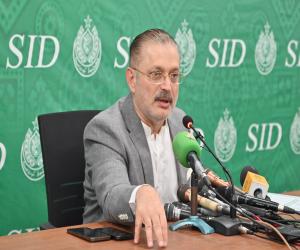
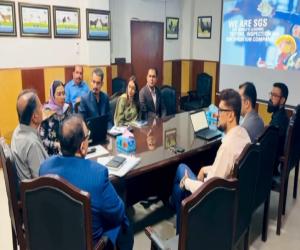
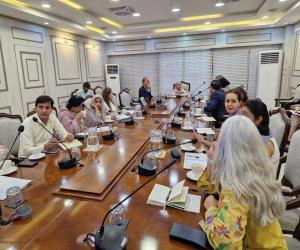
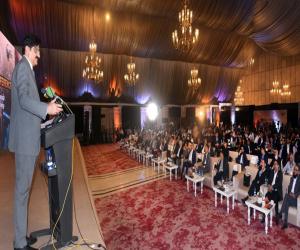
Karachi, February 21, 2025: The closing ceremony of the 3rd Pakistan Labour Academy (PLA-3) was held in Karachi, bringing together key stakeholders, policymakers and labour rights advocates, union leaders and government officials. The event was jointly organized by the Friedrich Ebert Stiftung (FES) Pakistan, Sindh Human Rights Commission (SHRC), and the National Institute of Labour Administration and Training (NILAT) in Karachi. Over 30 participants from across Pakistan participated in this one-week residential course,m from February 16 to February 21, 2025.
Dr. Rudiger Lotz, German Consul General in Karachi, graced the event as the chief guest. He emphasized that labour rights are fundamental human rights and stressed the need for young labour unions to be well-versed in both employee and employer rights. He highlighted Germany's extensive experience with labour unions and their role in strengthening the economy, noting that Germany heavily relies on supply chain due diligence law which makes Pakistan to comply with the labour and human rights in industrial sector. Dr. Lotz also pointed out that 85% of Pakistan’s exports to Germany come from the textile sector. He discussed the importance of women's participation in the workforce, climate change, and improving the work environment through training and workshops.
SHRC Chairperson Iqbal Detho commended FES for its support in empowering workers and urged the leadership of Sindh Labour Department to demonstrate a similar commitment. He congratulated the participants on successfully completing the course and advocated for a dedicated budget for NILAT’s training programs. He also proposed the establishment of a Sindh Labour Academy to provide specialized education for labour activists and enhance NILAT’s role in collaboration with the Labour and Human Resources Department.
Detho highlighted that SHRC is the only body in Sindh with a mandate on business and human rights. He stressed the importance of the GSP+ trade scheme, calling for its benefits to be reinvested in Sindh, particularly Karachi, where a majority of production takes place. He further urged the implementation of Sindh’s minimum wage of Rs 37,000 per month and called for a structured dispute resolution system within the labour department. Additionally, he shared that SHRC has translated Germany’s Due Diligence Law into Urdu for better accessibility in Pakistan.
Muhammad Ali Shaikh, Director General of NILAT, appreciated the efforts of FES-Pakistan and SHRC in organizing a valuable training program for young labour union leaders. He stressed the need for such initiatives to be held regularly at NILAT to further educate and empower workers. He reiterated that despite being the majority, the working class is often neglected, and the government tends to prioritize corporate interests over labour rights. He emphasized the importance of strengthening tripartite mechanisms involving government institutions, trade unions, and employers to resolve labour issues.

Abdullah Dayo from FES provided an overview of the Academy and he added that it is Pakistan's first ever labour academy whose aim is to build the capacity of young workers on induatrial relations and the protection of labour rights and sustainable economic growth.

Senior officials from the Sindh Labour and Human Resource Department, including Senior Director Mr. Syed Athar Shah spoke about the current challenges faced by workers in Pakistan. A recent survey revealed that 85% of workers do not receive minimum wages, highlighting the urgent need for more oversight and enforcement of labour laws, also addressed the gathering. Participants shared their experiences and provided recommendations for future training programs.

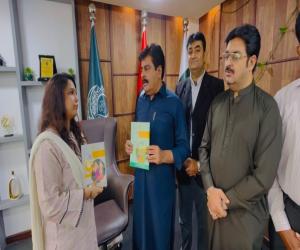
The event concluded with the distribution of certificates to participants in recognition of their successful completion of PLA-3 in Karachi.