From Promise to Disappointment: Murad Shah and the Fate of His Constituency
 Chehra WebDesk
Imdad Soomro
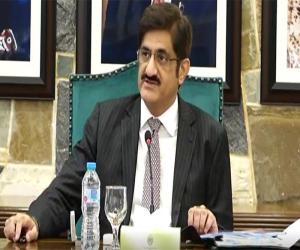
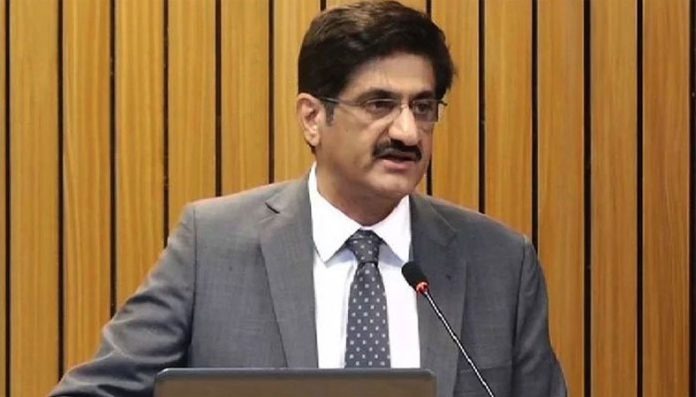
Chief Minister Syed Murad Ali Shah’s eight-year tenure in Lakiyari Sehwan has come to an end, and within a few days, Sindh will have a new Chief Minister. Sharjeel Memon is considered the frontrunner, while Nasir Shah is also a strong contender.
Before discussing or criticizing Murad Ali Shah’s tenure, it’s important to consider how much authority he actually had and how constrained he was. One must also reflect on how many “de facto” Chief Ministers operated in Sindh and how many systems were truly functional.
Fundamentally, Shah Sahib is a highly professional individual—an expert in statistics, economics, and a hardworking person. However, from his constituency team to his government team, with few exceptions, the majority were incompetent, corrupt, and sycophantic. As a result, his constituency, region, and Sindh as a whole could not benefit from his capabilities, even though he could have achieved much despite limited powers.
His working style was not political or public-oriented but resembled that of a strict bureaucrat. This is because he was never part of active politics. His entry into politics was purely due to hereditary reasons, being the son of Syed Abdullah Shah. He lacked meaningful engagement with his constituents and had limited interest or understanding of the broader issues facing Sindh.
If we compare his eight-year tenure with his father Syed Abdullah Shah’s two-and-a-half-year term and Syed Qaim Ali Shah’s tenure, the latter two were more beneficial for the people of Sindh and their constituencies. During Syed Abdullah Shah’s time, the people of his constituency were respected, and even the poorest had access to the Chief Minister’s House. In contrast, Murad Ali Shah remained confined to a few close relatives in his constituency—Asif Shah, Hajjan Shah, Sikandar Rahpoto, and later Saleem Bajari. With no checks or accountability, the general public remained neglected, while these four families—originally from middle-class backgrounds—became millionaires, billionaires, and even trillionaires. This mirrors the broader trend during the PPP government, where the people of Sindh suffered while hundreds of street-level individuals became extraordinarily wealthy.
Asif Shah’s family was originally poor, Sikandar Rahpoto’s family were lower-tier landlords, Hajjan Shah wasn’t particularly wealthy, and the Bajari family was outright poor. Uncle Hassan Bajari, may Allah grant him paradise, was a kind man but essentially a retired teacher with no landholdings. In any case, the land and agriculture in Bajari and Sehwan are in a devastated state, much like the constituency itself.
Despite limited powers, much could have been done for Sindh and the constituency—but it wasn’t.
Murad Ali Shah has faced serious allegations of organized corruption within the finance department. It’s a known fact that without money, getting anything done in that department is nearly impossible. During his tenure, corruption and bribery rates in the finance department and its sub-offices skyrocketed.
No significant development work was done in the constituency. The cities of Sehwan and Bhann have turned into garbage dumps. Drinking water is unavailable from his UC Wahur to major towns and villages. The sewage system is broken. Law and order and healthcare facilities are virtually nonexistent. No new educational institution was established in Sehwan, nor was any center created for youth education, training, or career counseling. A simple comparison between Khairpur and Sehwan makes the disparity clear.
Along with the majority of his constituents, some of his ministers—who themselves aspired to be Chief Minister—were unhappy with him during his tenure. Madam Faryal and the Zardari family, including Asif Zardari, were also displeased with him. Nasir Shah from Sukkur has been receiving congratulations for years, but his ambitions were never fulfilled due to Murad Ali Shah’s strategies. Principally, if one compares Murad Ali Shah with Nasir Shah, Murad Ali Shah is the better choice.
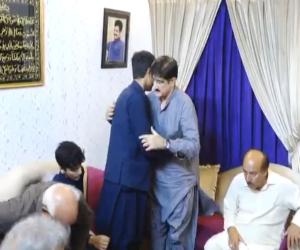
Personally, I’ve been a harsh critic of his, but he never responded with disrespect. I met him once in person during Baba Sain’s condolence gathering, spoke twice over the phone, and exchanged messages once or twice. Yet, his and his family’s behavior—especially that of Syed Azhar Shah and Syed Imdad Shah—was always kind, loving, and warm.
There’s much more to say, but for now, this is enough.