Digital Revolution Saves Lives: Karachi's E-Challan System (TRACS) Slashes Monthly Road Fatalities by 40%
 Jyoti Maheshwari
Karachi:
In a landmark step toward modernizing traffic management and ensuring greater transparency on the city’s roads, the Faculty of Management, Business Administration & Commerce at SMIU organized an insightful seminar titled “Responsible Citizenship: Promoting Road Discipline among the Youth” on October 29, 2025, at the Sir Shahnawaz Bhutto Auditorium.
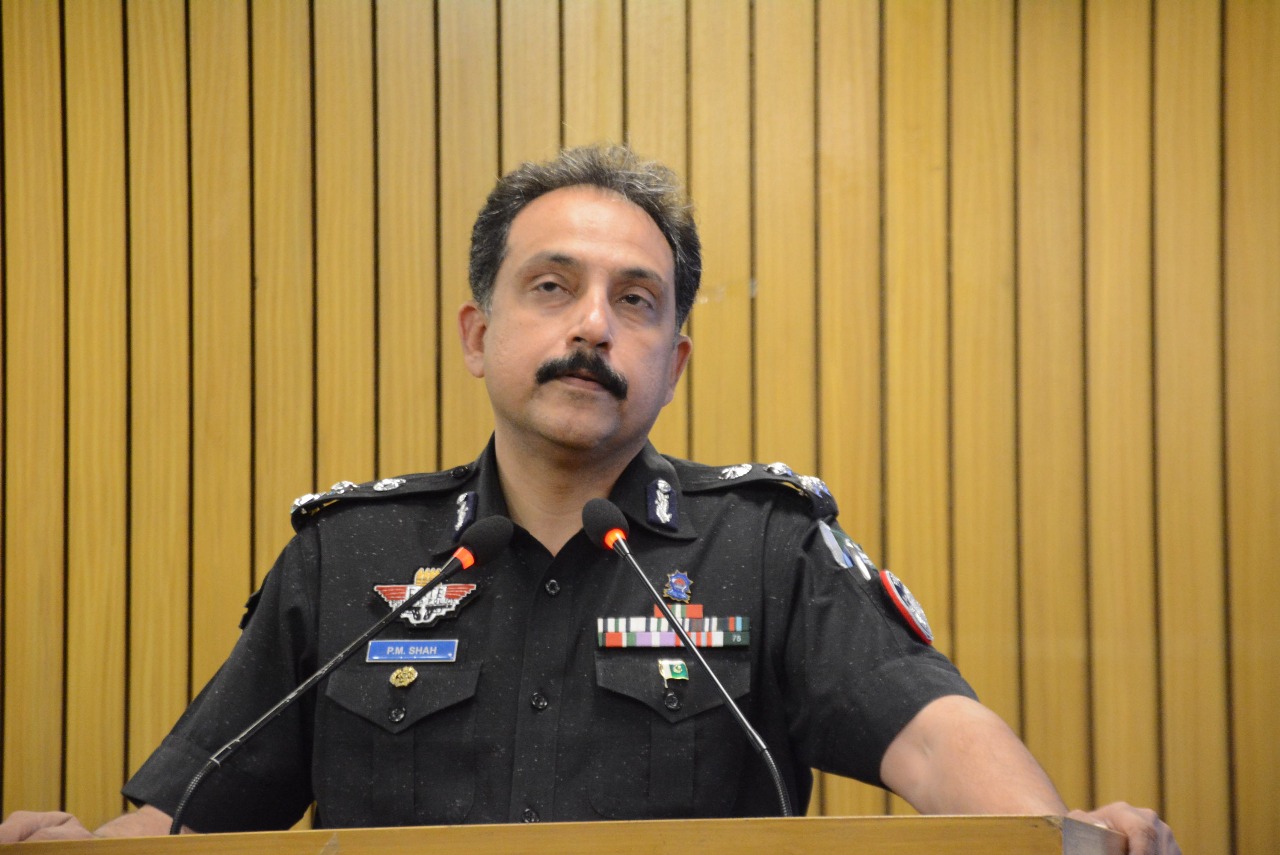
The distinguished Guest Speaker, Syed Pir Muhammad, Deputy Inspector General (DIG) Police, Traffic, delivered an engaging and thought-provoking address, emphasizing the importance of responsible road behavior. He highlighted the recent reforms introduced by the Karachi Traffic Police, particularly the innovative TRACS (Traffic Reforms and Automated Citation System), which is a modern e-Challan mechanism designed to promote transparency, efficiency, and accountability in traffic management.

The DIG Shah stated that the Sindh Government’s e-Challan initiative represents a transformative stride under the Karachi Safe City Project, introducing automation and digital monitoring in traffic law enforcement. He said the system is designed to improve road safety, reduce direct public-police interaction, and promote accountability through data-driven governance. Karachi, he noted, is a city of more than twenty million people that has long suffered from severe traffic congestion, poor road discipline, and a high frequency of accidents. Official data shows that before the implementation of TRACS, an average of ninety people lost their lives in road accidents each month in Karachi. This figure has now dropped to around fifty fatalities per month — a significant improvement, though still a serious concern for public safety.

The DIG Syed Pir Muhammad Shah shared that a detailed analysis of road accident data reveals that 53 percent of the victims are motorcyclists, 32 percent are pedestrians, and the remaining 15 percent are drivers or passengers of cars, trucks, and tankers. This means that together, motorcyclists and pedestrians account for nearly 85 percent of all road fatalities in the city, underlining the urgent need for systemic reform in traffic regulation, road infrastructure, and driver education.

To facilitate citizens and ensure fairness in implementation, eleven TRACS Service Centers have been established across Karachi. These centers enable citizens to check and pay their challans, file appeals or corrections in case of wrongful issuance, and process applications within ten working days. They also serve as information points for public assistance and awareness. Moreover, the TRACS Mobile App has been designed to empower citizens by allowing them to view their challan history, pay fines online, receive safety alerts, and even report violations by uploading photographs directly through the app.
Responding to the questions during the session, DIG Shah explained that citizens could appeal against emergency-related violations by presenting valid evidence such as hospital records. He further added that the enforcement of parking and one-way rules would improve as soon as the city’s designated parking areas and road signage are expanded. TRACS, he said, will operate in close coordination with the Karachi Metropolitan Corporation, Traffic Engineering Bureau, and other departments to improve overall traffic infrastructure. Future expansion plans include extending TRACS to cover multi-storey parking facilities, highway monitoring, and complete citywide integration.

The Vice Chancellor of Sindh Madressatul Islam University (SMIU) Dr۔ Mujeeb Sahrai reflected on the session’s significance, describing it as both educational and deeply thought-provoking. He observed that true learning often extends beyond classrooms—it lies in observing life, understanding people, and cultivating discipline in our daily conduct. Linking the discussion to broader social behavior, he spoke about the importance of road discipline and public responsibility, sharing a personal reflection that compared our local civic habits with those found in developed nations such as Singapore, Japan, the United Kingdom, and across Europe.
He remarked that citizens in these societies follow rules not because they are affluent or technologically advanced, but because they possess awareness, respect for the law, and a sense of civic duty. People there plan their journeys carefully, abide by traffic regulations, and even view fines or parking fees as contributions toward public order. In contrast, he noted that in many developing societies, people often take public services and facilities for granted, expecting benefits without a corresponding sense of responsibility.
The Vice Chancellor concluded by extending heartfelt gratitude to the esteemed guest speaker for his inspiring and thought-provoking address. He presented shields and souvenirs to the honorable guest speaker and other distinguished participants as a token of appreciation.