Sindh Human Rights Commission marked the International day for the Abolition of Slavery with calls for Special Courts for the differently-able Persons
 Imran
Imran
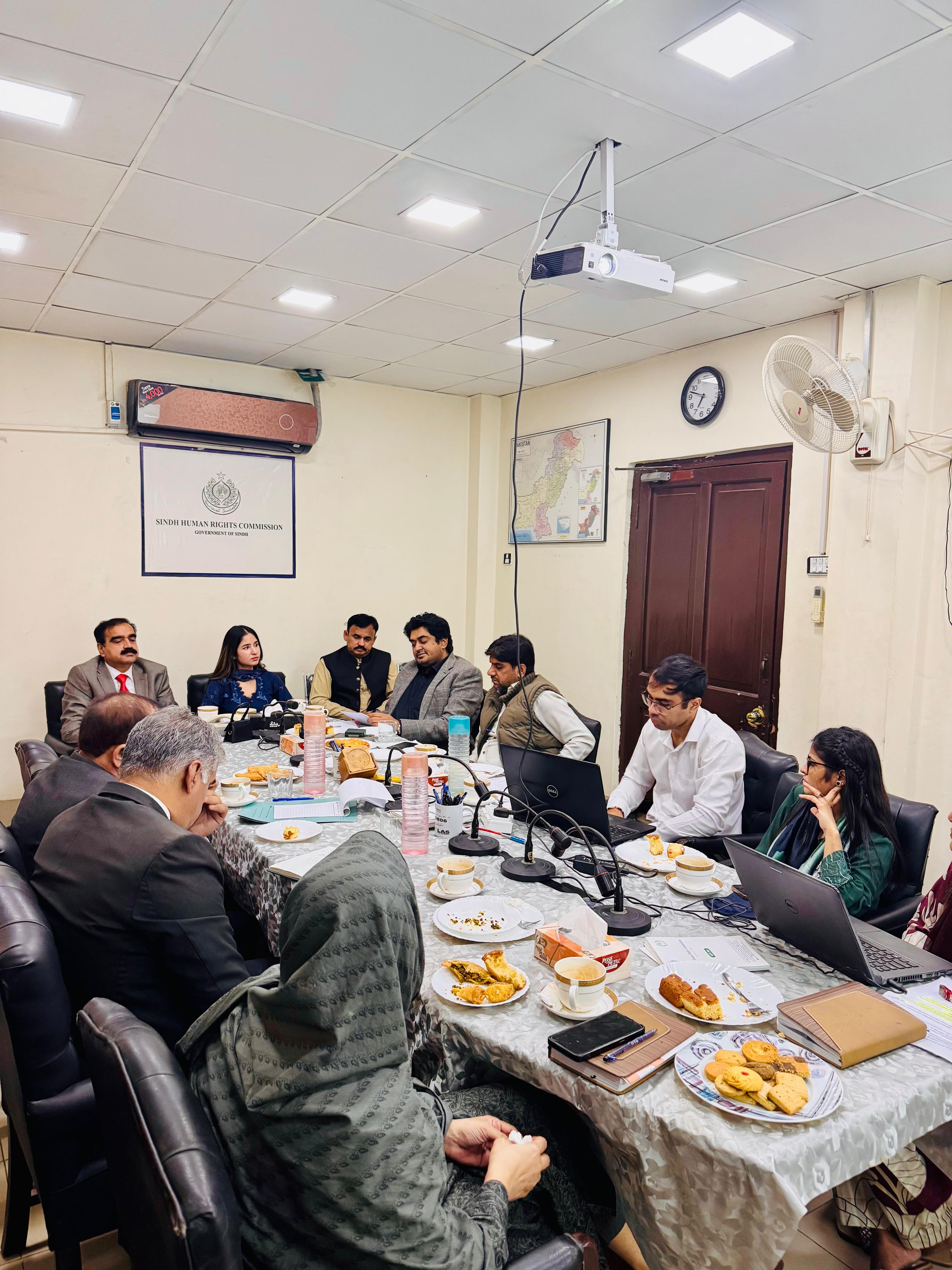
Karachi: The Sindh Human Rights Commission (SHRC) organized a consultation on the elimination of child labour and bonded labour in Sindh for the observation of International Day for the Abolition of Slavery bringing together government officials, labour department representatives, civil society organizations, and human rights activists to discuss effective strategies for addressing these serious human rights issues.
Barrister Rida Tahir, Business and Human Rights Member SHRC provided an overview of the Sindh Bonded Labour System (Abolition) Act, 2015 and highlighted that a child is defined as a person under the age of 18 in the Sindh Child Protection Authority (Amendment) Act, 2021 which is in line with the United Nations Convention on the Rights of the Child. She further said that the SHRC observed this important day for the Abolition of Slavery with calls for stronger Protection. She highlighted that the Trafficking in Persons Act, 2018 and The Smuggling of Migrants Act 2018 have been enacted to safeguard the rights of vulnerable individuals.
MPA Barrister Shiraz Shoukat Rajper and Member SHRC highlighted that the Provincial Assembly of Sindh amended the Sindh Child Protection Authority Act in 2021, introducing an expanded definition of abuse. The revised definition now provides children with better protection to combat issues like child labor, child beggary, and child trafficking.
He also underscored the importance of promoting compulsory education in rural areas, expanding vocational training opportunities, and upholding the rule of law to protect vulnerable communities.
The Secretary SHRC, Agha Fakhar Hussain, welcomed all participants on behalf of the Sindh Human Rights Commission. He said today’s consultation reminds us that modern-day slavery persists, and it is our collective duty to address forced labour, child labour, and exploitation. The SHRC’s expanded mandate strengthens our resolve to protect vulnerable workers and children. Let this gathering inspire meaningful action, stronger coordination, and lasting change across Sindh.
Tehseen Fatima, Member Human Rights, SHRC, emphasized that cases of bonded labour and child labour should be effectively incorporated into the work of the District Vigilance Committees. She highlighted that child labour persists due to socio-economic challenges and the lack of proper facilities and infrastructure in educational institutions.
Altaf Khoso, CEO Pakistan Legal United Society, underlined the need for improved employment opportunities for persons with disabilities, including children. He stressed that dedicated courts should be established for them.
Maheen Arif highlighted that child labour continues to be linked with modern slavery due to debt bondage .
Sayed Athar Ali Shah, Regional Director, Labour & Human Resources Department, Karachi, stated that while the legal framework, relevant acts, and safeguards already exist, the key challenge now is ensuring their effective implementation. He explained the definition of forced labour and added that agricultural cases are also being addressed in labour courts. He further mentioned that labour laws have been consolidated and, although originally designed for the formal sector, steps are being taken to reduce gender discrimination.
He also pointed out that non-payment of minimum wages and unpaid overtime constitute forms of bonded labour. He acknowledged the government’s progress, noting that child labour has decreased from 20% in 1996 to 10%, although bonded labour remains prevalent.
The SHRC stressed the need for effective law implementation, inter-departmental coordination, and community awareness to protect children and workers from bonded and child labour in Sindh.