The Tragic Loss of Dr. Akash Kumar and Karachi’s Unending Street Crime Nightmare If we don't take action, who will stay? No doctor will want to remain in this country.
 Chehra WebDesk
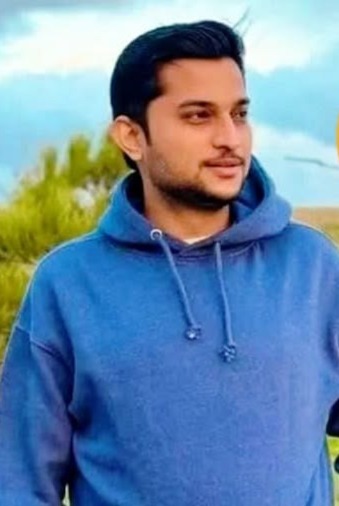
The Tragic Loss of Dr. Akash Kumar and Karachi’s Unending Street Crime Nightmare "If we don't take action, who will stay? No doctor will want to remain in this country."
Kheem Chand, Uncle of the deceased
KARACHI: It was supposed to be a routine family errand on a busy Monday afternoon in Clifton, one of Karachi's most upscale neighborhoods. Instead, it turned into a gruesome nightmare.
Dr. Akash Kumar, a promising 28-year-old physician and the son of a prominent cotton industrialist, was driving with his father and cousin. They had just withdrawn PKR 5 million from a bank near Teen Talwar and were heading to another branch to deposit the funds. They had no idea they were already being trailed by four armed dacoits.
As their car pulled up outside the target bank, the criminals closed in. Sensing danger, the bank’s security guard opened fire. What followed was a chaotic, high-stakes shootout in broad daylight.
When the dust settled, Dr. Akash lay mortally wounded in the chest. Taking advantage of the chaos, the dacoits snatched a bag containing PKR 2.5 million and fled the scene. Dr. Akash was rushed to Jinnah Post Graduate Medical Centre (JPMC)—the very hospital where he served as a doctor—but he could not survive his injuries.
With his tragic demise, Dr. Akash became the 43rd victim to lose his life to street crimes and dacoities in Karachi this year.
Outrage on the Streets of Clifton
The tragic news sparked instant fury and grief. Outside JPMC, devastated relatives and colleagues gathered, their sorrow quickly hardening into anger over the city’s lawlessness.
In protest, the family took Dr. Akash’s body to the busy Teen Talwar intersection, placing the coffin on the main road. The protest paralyzed traffic in the heart of Clifton for hours. Demonstrators demanded immediate justice and the arrest of the culprits.
The gridlock prompted high-level intervention. Mayor Karachi Barrister Murtaza Wahab and SSP Keamari arrived at the scene to negotiate with the grieving family.
The anger of the people is completely justified,"Mayor Wahab said, offering condolences to the grieving father. Someone has lost their loved one; a precious life has been taken. We stand with the family in this hour of immense grief.
Following assurances of swift action and the arrest of the killers, the family ended the sit-in, allowing traffic to resume.
Who Fired the Fatal Shot?
The police investigation is currently moving on two tracks. While investigators hunt for the four fleeing dacoits, a critical question remains: whose bullet killed Dr. Akash?
According to SSP South Mahzoor Ali, it is still unclear whether the young doctor was hit by a bullet from the dacoits or by the guard's retaliatory fire.
A ballistic report will confirm whose weapon fired the fatal shot,"* SSP Ali stated, adding that the security guard has been taken into custody for questioning. Police are also scanning CCTV footage from the surrounding areas to trace the escape route of the dacoits.
A Somber Farewell and Unanswered Questions
On Tuesday, a heavy cloud of grief hung over Karachi's Hindu community as the final rites of Dr. Akash Kumar were performed at the local crematorium Shamshan Ghat according to Hindu religious traditions.
The tragedy brought top Sindh government officials—including Chief Minister Murad Ali Shah, Provincial Ministers, Interior Minister Zia-ul-Hasan Lanjar, and IG Sindh Javed Alam Odho—to the victim’s residence to offer condolences.
The loss of a young doctor during a street crime is highly tragic,"* said Chief Minister Murad Ali Shah. "We have taken strict notice of this incident, and the police are actively working to arrest the culprits.
IG Sindh Javed Alam Odho assured the family that the investigation is being handled on a priority basis. However, the grieving family remains skeptical of mere promises, expressing deep reservations over the police's performance and demanding concrete, visible progress.
Dr. Akash's death is not just a statistic; it is a grim reminder of a city under siege by street criminals. For the family of the young doctor, the void left behind is permanent—and for Karachiites, the fear of who might be next remains closer than ever.