Sindh CM, Paigham-e-Aman Committees pledge to strengthen interfaith harmony, counter extremism
 Adnan Athar
Murad Ali Shah says Sindh’s Sufi traditions offer a model of peaceful coexistence; religious leaders, minority representatives unite for national solidarity and peace
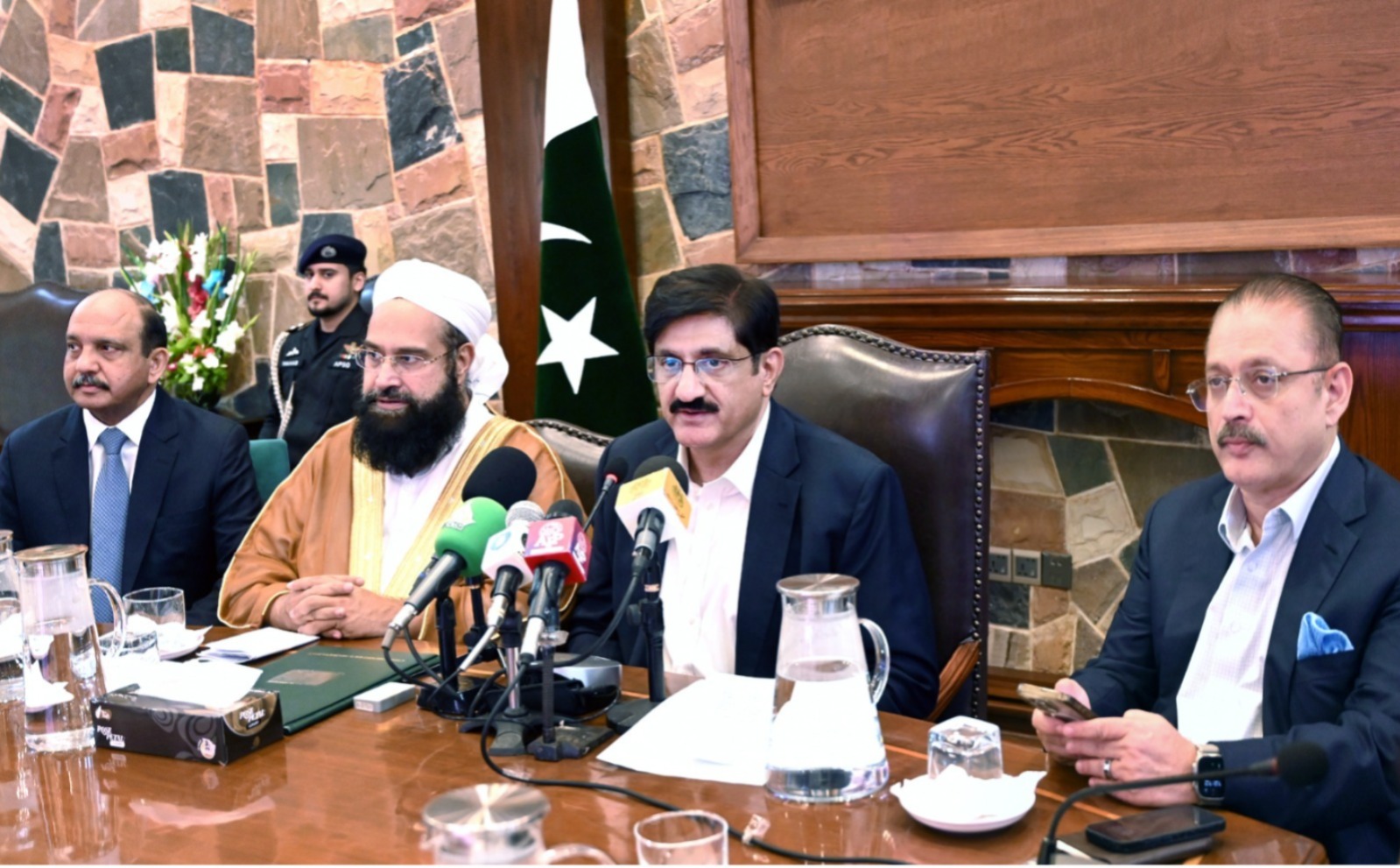
Sindh Chief Minister Syed Murad Ali Shah on Wednesday reaffirmed his government’s commitment to promoting peace, religious harmony, interfaith dialogue and national unity, as leaders of different faiths, religious scholars and representatives of minority communities pledged to work together to counter extremism, sectarianism and hate-based narratives under the banner of Paigham-e-Aman.
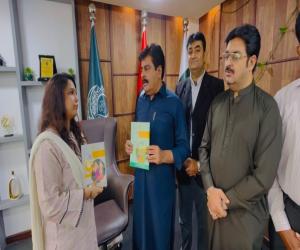
The commitment was made during a high-level meeting and subsequent joint press conference held at the CM House, where the Chief Minister met a delegation of the National Paigham-e-Aman Committee (NPAC) and the Provincial Paigham-e-Aman Committee (PPAC) Sindh, led by NPAC Coordinator Maulana Tahir Mehmood Ashrafi.
The meeting was attended by Senior Minister Sharjeel Inam Memon, Minister for Religious Affairs Riaz Shah Shirazi, Minister for Labour Saeed Ghani, Chief Secretary Sindh Asif Hyder Shah, Additional Chief Secretary Home Iqbal memon, Secretary to the CM Asif Jameel, Commissioner Karachi Hassan Naqvi, Inspector General of Police Javed Alam Odho, Additional IGP Karachi Azad Khan, senior government officials, religious scholars, minority representatives and members of the National and Provincial Paigham-e-Aman Committees. Among the participants were Mufti Muhammad Jan Naeemi, Rajesh Kumar Hardasani, Sardar Ramesh Singh Khalsa, Pandit Maharaj Goswami Geer and other prominent religious leaders.
Welcoming the delegation, Chief Minister Murad Ali Shah said Sindh has historically been a land of tolerance, coexistence and cultural diversity where people belonging to different faiths, sects and ethnic backgrounds have lived together with mutual respect and understanding. “Sindh’s centuries-old traditions of Sufism, inclusiveness and harmony provide a strong foundation for peace, social cohesion and national unity,” he said.
The Chief Minister appreciated the efforts of the National Paigham-e-Aman Committee in promoting peace and strengthening dialogue among different segments of society. He said peace, tolerance and mutual respect were indispensable for sustainable development, economic progress and social stability.
Mr Shah emphasised that protecting the constitutional rights of all citizens and ensuring equal opportunities for minority communities remained a key priority of his government. He highlighted measures undertaken by the provincial government to facilitate the peaceful observance of Muharram, Eid Milad-un-Nabi, Chehlum, Christmas, Easter, Diwali, Holi and other religious occasions across Sindh.
Murad Ali Shah said that extremism, sectarianism and hate speech could only be defeated through a comprehensive and coordinated effort involving government institutions, religious scholars, educators, media organisations, youth and community leaders. “Religious scholars and Mashaikh have a pivotal role in promoting the true teachings of Islam based on peace, moderation, compassion and respect for humanity,” he said.
Referring to contemporary challenges, the Chief Minister observed that online radicalisation, misinformation and hate-driven narratives required collective action and responsible communication. He stressed the need to engage educational institutions and young people in promoting constitutional values, civic responsibility, tolerance and national unity.
The Chief Minister described the Paigham-e-Pakistan narrative as a national consensus framework against extremism, violence and sectarian hatred, and called for its promotion at all levels. He also welcomed initiatives aimed at strengthening interfaith dialogue and enhancing engagement with Hindu, Christian, Sikh, Parsi and other minority communities.
Ashrafi calls for national unity
Speaking during the meeting and later at the joint press conference, Maulana Tahir Mehmood Ashrafi thanked the Sindh Government for supporting religious harmony and praised Sindh’s role in fostering peaceful coexistence among different faiths and sects.
He said NPAC and PPAC were working across the country to strengthen the message of peace, tolerance, unity and national solidarity.
Highlighting the importance of safeguarding national institutions, Maulana Ashrafi urged political forces to resolve differences through democratic and constitutional means while avoiding rhetoric that could undermine state institutions. “Our soldiers are our brothers and sons. We are proud of our armed forces and the sacrifices rendered by our martyrs and ghazis for the defence of the country,” he said.
Paying tribute to the armed forces, law-enforcement agencies and the families of martyrs, he said the nation owed a debt of gratitude to those who had sacrificed their lives for Pakistan’s security and sovereignty. “No one should be allowed to disrespect the sacrifices of our martyrs. They have given everything for the protection of the country,” he added.
Maulana Ashrafi called upon all segments of society to reject extremism, violence and divisive narratives and to stand united against forces seeking to create instability in the country.
Peace Essential for Economic Growth:
Chairman of the Council of Islamic Ideology (CII), Allama Dr Raghib Hussain Naeemi, stressed the importance of dialogue, unity and engagement among all schools of thought and religious communities.
He said meaningful dialogue among different sects and faiths leads to greater understanding and more positive outcomes for society. “Whenever people of different schools of thought and religions sit together and engage in dialogue, it produces better understanding and better results,” he said.
Allama Naeemi emphasised that peace and stability were directly linked to economic growth and prosperity.
“A peaceful environment is essential for investment, development and national progress,” he said, adding that religious scholars and institutions across the country were actively working to curb extremism and promote moderation and social harmony.
Referring to the Paigham-e-Aman initiative, he said the movement aimed to eliminate the ideology of takfir and strengthen a culture of peace, coexistence and national unity.
Minority representatives reaffirm commitment
Speaking on behalf of minority communities, NPAC member Rajesh Kumar Hardasani said minority communities in Pakistan were actively contributing to efforts aimed at promoting peace, tolerance and interfaith harmony. He called for an end to sectarian and political divisions and paid tribute to the country’s martyrs and their families for their sacrifices.
Rajesh Kumar emphasised that protecting the lives, property and rights of minority communities was essential for building an inclusive and peaceful society.
Religious education reforms and social cohesion
NPAC member Mufti Abdul Rahim highlighted the need for continued reforms and confidence-building measures in the religious education sector.
He said concerns relating to religious seminaries should be addressed through consultation, constructive engagement and educational improvements. He stressed the importance of curriculum development and positive intellectual and character-building of students to promote moderation, responsible citizenship and national cohesion.
Sharjeel Memon highlights message of Peace
Addressing the press conference, Sindh Senior Minister for Information, Transport and Mass Transit Sharjeel Inam Memon said the core message of Paigham-e-Aman was to promote peace, harmony, tolerance and mutual respect throughout society.
“Our message is simple: all segments of society must work together to make Pakistan a cradle of peace and stability,” he said.
He noted that religious scholars played a critical role in shaping public opinion and therefore had an important responsibility to promote moderation, interfaith harmony and unity among different schools of thought.
Sharjeel Memon said Pakistan had always upheld religious harmony and the protection of minority rights. He noted that the white portion of Pakistan’s national flag symbolised the country’s commitment to safeguarding the rights of minorities and ensuring equal citizenship for all.
The Senior Minister said Pakistan’s defence was in strong and capable hands and paid tribute to the country’s martyrs, describing their sacrifices as a source of pride for the entire nation. “The sacrifices of our shuhada will always be remembered with gratitude and respect, and will continue to inspire future generations,” he said.
Joint resolve for peace and stability
The meeting agreed to strengthen coordination among district administrations, law-enforcement agencies, religious leaders and local peace committees to proactively address emerging challenges and maintain communal harmony throughout the province.
Participants also discussed arrangements for a proposed Provincial Ulema, Mashaikh and Interfaith Harmony Conference under the Paigham-e-Aman framework.
Concluding the meeting, Chief Minister Murad Ali Shah assured the delegation that the Sindh Government would continue working closely with NPAC and PPAC Sindh to strengthen peace messaging, community outreach and preventive engagement mechanisms.
“Collective efforts are essential for building a stronger, more peaceful and united Pakistan,” the Chief Minister said.