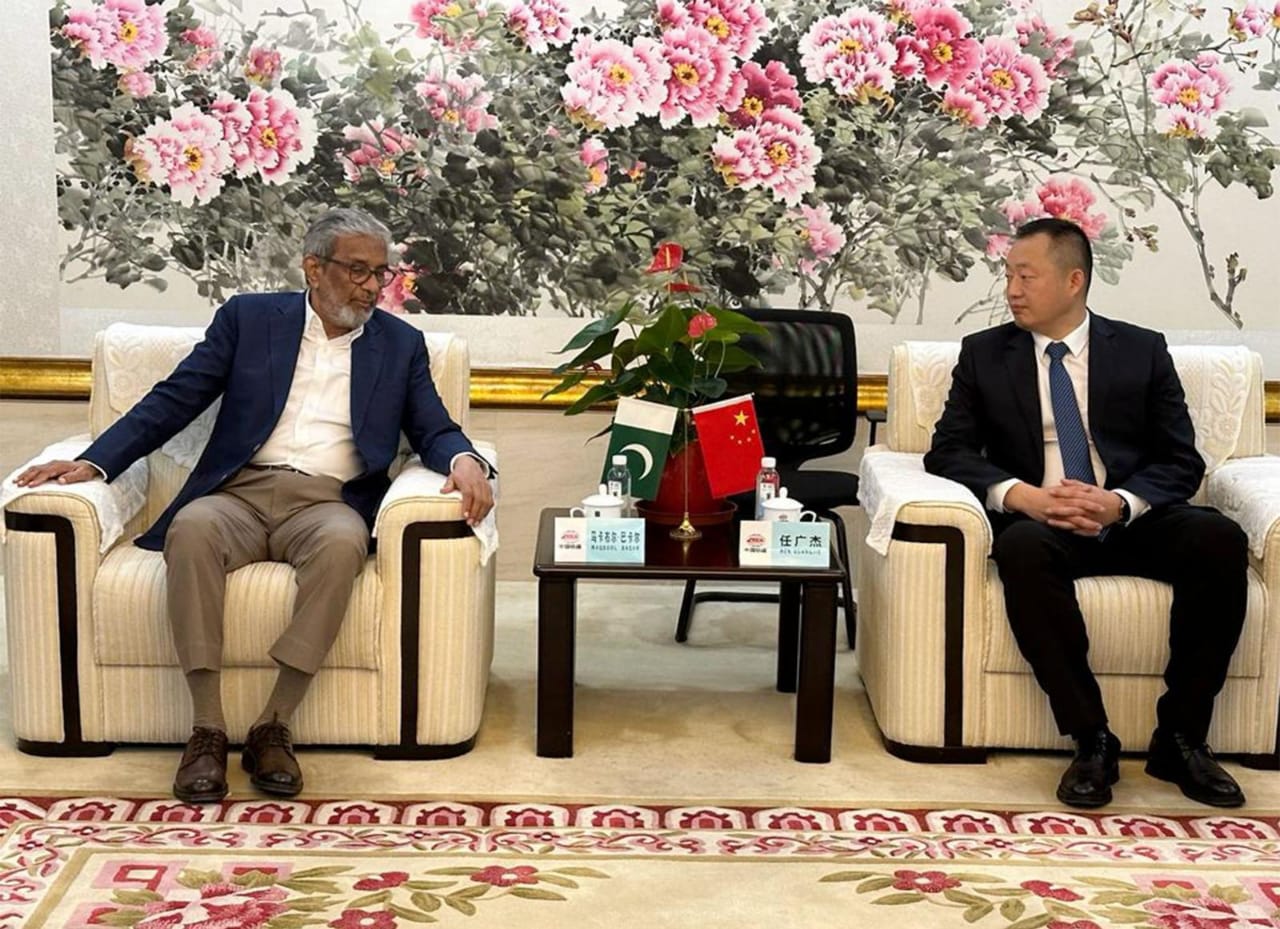
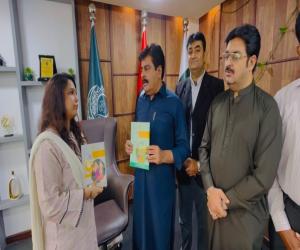
KARACHI Caretaker Sindh Chief Minister Justice (rtd) and Vice President CRCC: Mr. Li Samaa in their meeting CRCC International Headquarters agreed to remove the only two remaining bottlenecks to start the much awaited Karachi Circular Railway (KCR).
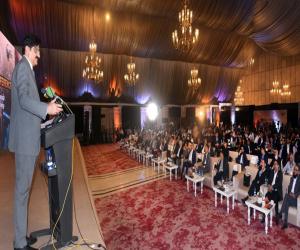
The meeting held here in the sideline of The Third Belt and Road Forum for International Cooperation here at Beijing.
Justice Baqar said that in a Review meeting of CPEC Projects held on Feb 9, 2023 it was decided that China Railway Authority required afresh feasibility based on Chinese standard to establish funding/ project cost of the KCR Project.
The Sindh government Transport dept completed KCR Feasibility Study along with the collaboration of Chinese Firm (CRCC) with revised cost of $2.002 billion.
At this CRCC Vice President said that a joint survey conducted by the Sindh government in collaboration of ICRCC International has been submitted to the Chinese authorities.
He pointed out that now only two issues were left to resolve for starting the project.
The CRCC vice chairman urged the Sindh CM to settle the issues of Right Of Way (ROW) and Sovereignty guarantee to be issued by Pakistan government.
At this, the interim CM said that his government and the Ministry of Railways of Pakistan have discussed ROW issues and the agreement between the two would be achieve shortly.
He added that as far as sovereignty guarantee was concerned that has not been an issue now.
The CRCC vice President termed it a good news to carry forward the project. The CM said that his government through the federal government of Pakistan would approach the Chinese authorities to speed up the KCR project.
The CM said that the updated feasibility Study has also been submitted to China Railway Authority through Planning Commission.
Under the updated feasibility the KCR's circular route spans approximately 43 kilometers (27 miles), intricately connecting Karachi's diverse landscape, including industrial zones, residential neighborhoods, and bustling commercial districts.
It weaves through pivotal locations such as Karachi City Station, Landhi, Malir, Drigh Road, and Orangi. This well-structured route played a pivotal role in reducing traffic congestion and combatting air pollution by offering a reliable alternative to road transportation.
Out of its 24 Stations 11 would be at Grade and 13 elevated. It’s ridership would be 650,000 passengers/day

 Irfan Ali