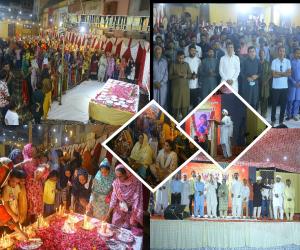
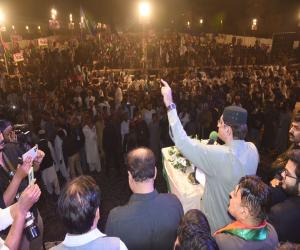
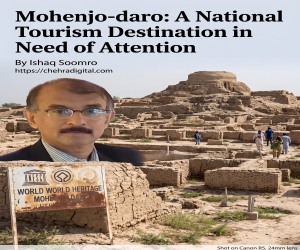
A memorial meeting with GM Syed
 Ishak Soomro
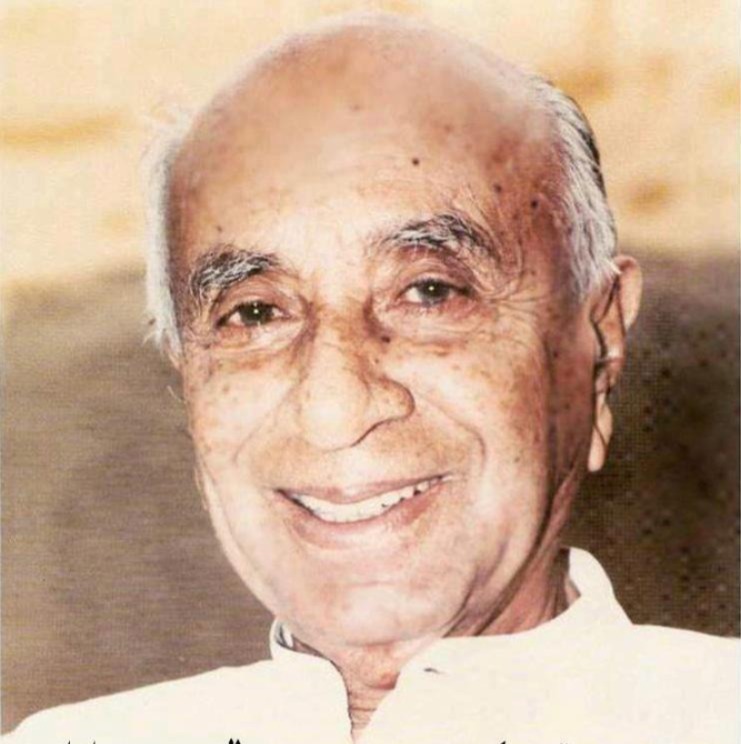
GM Syed is a Sindhi politician and researcher who played an important role in the political, academic, literary and social history of Sindh.

He himself remained involved in the politics of modern Sindh, especially after the separation of Sindh from Bombay, the passing of a resolution in the Sindh Assembly (1943) in support of Pakistan, and even after personally participating in the 1970 elections, he continued to speak out. Sindh remained independent until his death.

Apart from this, GM Syed, who has the honor of giving Sindhi history and literature Pagham Latif, Janab Guzarium Jinsan, Jain Detho Mon, and many other books, will be remembered as a historical and prominent figure among the Sindhi politicians of the 20th century.
I knew the name of GM Syed and his work since childhood, because Sakrand and Saan city are still the twin cities of Sindh. In between are the village of Mehrabpur, Pai Jungle and the Indus River. Therefore, GM Syed himself, his agricultural lands, political, personal and social connections, including Syed Imdad Muhammad Shah, Ameer Haider Shah, and Zain Shah, are still present with many communities and people of Sakrand. GM Syed’s political influence extended to the Sakrand taluka and the surrounding area and its personalities, especially Syed Hassan Bakhsh Shah, who was the grandfather of the current Member and Deputy Speaker of National Assembly Syed Ghulam Mustafa Shah, who was considered GM Syed’s right-hand man.
Due to his connection with GM Syed, Syed Hassan Bakhsh Shah became a member of the Sindh Assembly several times. I first heard the name of GM Syed from my grandfather, Muhammad Fazal Soomro. My grandfather worked in the postal department during the British era. He called him (Jem Shah) even today, the elders of Sakrand call him Jem Shah. Grandfather would travel all day to deliver letters to him. He would tell us stories of GM Syed. I wished that somehow I could talk to this great politician of Sindh, while GM Syed’s birthday, which was celebrated every year on January 17, I got the opportunity to attend many of his birthday celebrations.
To attend the birthday party, early in the winter morning, go to Mehrabpur by jeep or bus, then walk in the forest, board on a boat, cross the Indus River, and join the crowd of people heading towards the sun. Birthday gathering. The Saan is known for GM Syed and his politics. In fact, there is nothing but GM Syed. The first and last detailed meeting with GM Syed was thanks to Dr. Shabbir Memon, A dear friend like Shabbir Memon, who is no longer with us, passed away at a young age.
Along with Dr. Shabbir, I, two of my childhood classmates Pir Hamdullah are currently the Sajjada Nashin of Dargah Khanyarvi Sharif, my other dear friend is Faiz Rind, who was active in politics from the platform of SPSF in Mehran. University/College Nawabshah. Faiz Rind is currently working as an agricultural engineer in Khairpur. Our detailed meeting with GM Syed took place 42 years ago today in December 1983 at his riverside bungalow in Saan town.
GM Syed was very familiar with Sakrand and the people of Sakrand. He asked Pir Hamdullah about his father and other elders, he later narrated many interesting and colorful incidents from his life. He also spoke in detail about the ongoing MRD movement and the politics of Sindh at that time. He recently described the brutal killing of 16 people by the army in Punhak Khan Chandio village of Sakrand as a movement of power-hungry people and said that these people are dying for power. Why should we feel sorry for them?
He said that the Pakistan People’s party( PPP) s people are the enemies of Sindh, their anger is clearly visible in their statements and gnashing of teeth, as they named every opponent, especially any leader of the PPP.
He said that I met Zulfikar Ali Bhutto's wife Nusrat Bhutto and his daughter Benazir Bhutto at Al-Murtaza House Larkana to offer my condolences. I told them that Zulfikar Bhutto was killed by Punjabis, now you talk about the independence of Sindh. He added that 'We are with you, you will not get anything from Pakistan's politics', he added that Nusrat Bhutto remained silent on my statement, however Benazir Bhutto said that we cannot do so because our politics is for federalism of Pakistan.
Referring to efforts to bring Sindhis and Urdu-speaking immigrants closer, he said that migrant leaders Nawab Muzaffar Ali Khan and others keep coming to meet me in Saan. The migrants are scattered, but they will move forward.
He laughed and said that the people of Sindh hate Zia-ul-Haq, we are angry that Imdad Muhammad Shah's son was named after Zia-ul-Haq. He took us on a tour of his library, in one room there were pictures of some important politicians of Sindh including Zulfikar Ali Bhutto. The importance cannot be denied. He said while conversation, he went out for prayers, I asked him Is he also prayed? After being silent for some time, he replied, "Yes... I have become accustomed to it."
Every room in his bungalow had a telephone set and air conditioning. The books and shelves were decorated with great sophistication. During our conversation with GM Syed, we asked him various questions about how Sindh would be governed after independence, democratic, socialist or some other? He replied that this was a question after independence. It was clear from our questions that we were neither affiliated with his party nor his supporters, so his attitude towards us sometimes became harsh during the conversation. During this discussion, for some time, the student leaders of Jey Sindh, Dodo Mahari and Ghulam Mustafa Shah (Thatto), who were probably the central figures of SPSF at that time, were also sitting. They were enjoying from our sweet and sour conversation.
GM Syed was a delicate, sophisticated and knowledgeable person by nature and temperament and a very hospitable person. Until 1983, or perhaps for many years after that, there was no restaurant/Hotel in Saan. Because GM Syed used to say that whoever comes to Saan is my guest which was a wonderful example of the hospitality traditions of Sindh. His greatest quality was that he personally saw every guest from the front door. Although we wanted to leave him, we begged him not to create such trouble, but he did not leave his traditions. We took many pictures with him. I was lucky to meet this great man of Sindh for two days.

He spoke openly about Sindh and Sandhi’s, Muhajar immigrants and the MRD movement. At that time, my reading and understanding was limited. After that, I have read almost all his books. I still have many files of his statements, interviews, etc. He was a great politician of Sindh as well as a great writer. I feel that GM Syed is the only politician of Sindh who, along with politics, can gain knowledge about the recent past of Sindh by reading what we, history students like him, have written.