Pakistan Presents "Irrefutable" Evidence of Indian-Sponsored Terrorism Following Pahalgam Attack Allegations
 Irfan Ali
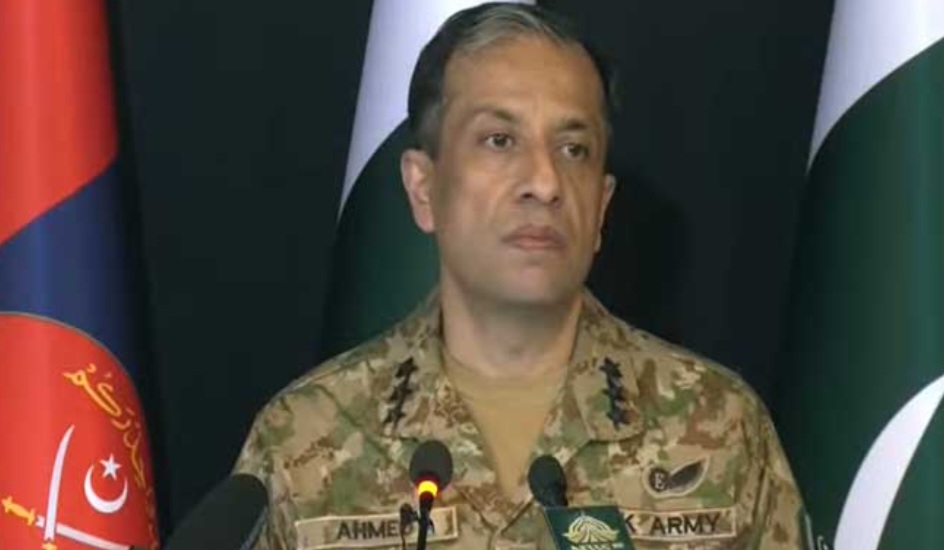
Rawalpindi, Pakistan – Days after India accused Pakistan of involvement in the Pahalgam attack in Indian Illegally Occupied Jammu and Kashmir (IIOJK), Director-General (DG) of Inter-Services Public Relations (ISPR), Lieutenant General Ahmed Sharif Chaudhry, presented what he described as "irrefutable" evidence of Indian state-sponsored cross-border terrorism against Pakistan.
Addressing a press conference at the General Headquarters, Lt Gen Chaudhry stated unequivocally, "India is involved in state-sponsored cross-border terrorism against Pakistan." He emphasized that despite New Delhi's allegations regarding the Pahalgam attack a week prior, no evidence had been provided to substantiate these claims.
The DG ISPR revealed that Pakistan had uncovered Indian-operated terror networks within its borders. These networks are allegedly involved in supplying explosives, Improvised Explosive Devices (IEDs), and other lethal materials to terrorists with the intention of targeting both Pakistani security forces and innocent civilians. Lt Gen Chaudhry asserted that the evidence presented was "just one small component of the broader pattern of state-sponsored terrorism being orchestrated by India."
This development follows a series of escalating actions by India after the Pahalgam attack, including the alleged suspension of the Indus Waters Treaty, revocation of Pakistani visas, and closure of the Wagah-Attari border crossing. Pakistan has responded by ordering the expulsion of Indian diplomats and military advisors, cancelling visas for Indian nationals (excluding Sikh pilgrims), and closing its side of the main border crossing. Islamabad has vehemently denied any involvement in the Pahalgam attack and offered to participate in a credible and transparent investigation.
Amidst warnings from Pakistan's Defence Minister Khawaja Asif about the potential for an "all-out war," the United Nations has urged both nations to exercise "maximum restraint." A recent report in The New York Times suggested that India is actively seeking international support to justify potential military action, despite what the publication described as "limited concrete evidence" directly linking Pakistan to the attack.
"Irrefutable Evidence" Detailed
Lt Gen Chaudhry provided specific details regarding the alleged Indian-sponsored terrorism, stating that on April 25, a terror suspect trained in India, identified as Abdul Majeed, was apprehended near the Jhelum bus terminal. Security forces reportedly recovered 2.5 kilograms of explosive material during the operation.
Further investigation revealed that Majeed was in possession of an Indian drone recovered from his residence, along with Rs1 million in cash. Forensic analysis of his mobile phone allegedly uncovered communication with contacts in India, including direct conversations with an Indian Subedar named Sukhwinder.
The DG ISPR elaborated that India is actively supplying explosives to terrorists for attacks targeting both civilians and security personnel within Pakistan. Intercepted communications reportedly implicated four Indian Army officers in terrorism-related coordination: Major Sandeep Verma, Subedar Sukhwinder, Havaldar Amit, and one sepoy.
According to Lt Gen Chaudhry, these Indian handlers were instructing terrorists to "cause civilian casualties in Pakistan" and to "carry out attacks so the world perceives Pakistan as a hub of terrorism." He further claimed that the handlers even sent videos demonstrating how to manufacture bombs.
The chief military spokesperson stated that Major Sandeep allegedly admitted to orchestrating terrorism from "Balochistan to Lahore." He detailed specific incidents based on the investigation:
* On November 22, Subedar Sukhwinder allegedly guided Abdul Majeed to retrieve an IED and a damaged drone near Head Marala.
* On November 30, Majeed allegedly planted the IED on a military vehicle in Jalalpur Jattan, resulting in four fatalities. He reportedly received Rs656,000 after the attack.
* On March 18, Major Sukhwinder allegedly provided the location of another IED near Kotli. The following day, schoolchildren discovered the suspicious bag, and an army unit recovered the bomb.
* Following the recovery of the bomb in Kotli, Indian media allegedly falsely claimed the discovery of five bombs in IIOJK, which the DG ISPR denounced as "blatant propaganda."
* On April 22, 2025, Sukhwinder allegedly delivered another IED near Nadalah and, the next day, instructed Majeed to carry out a bomb attack at a local bus stand.
Adding to the tensions, the Pakistan Army reportedly shot down an Indian quadcopter drone near the Line of Control (LoC) in Azad Jammu and Kashmir earlier on Tuesday.
The presentation of this alleged evidence by Pakistan is likely to further escalate the already strained relations between the two nuclear-armed neighbors, raising concerns about regional stability.