Sindh Human Rights Commission, expresses concerns over the killing of youth; Calls for Urgent Measures to Protect individuals from violence linked to transgender community.
 Sidra Arif

Karachi
Sindh Human Rights Commission, expresses concerns over the killing of youth; Calls for Urgent Measures to Protect individuals from violence linked to transgender community.
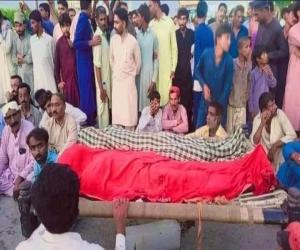
The Sindh Human Rights Commission (SHRC) urges authorities to investigate the motives behind the killing of 21-year-old Ali Khan in Orangi Town, Karachi, allegedly at the hands of his father for his association with members of the transgender community. This deeply disturbing incident, reportedly involving torture and subsequent murder, is not an isolated case but a disturbing one and it is a stark reflection of the persistent societal transphobia and the dangerous attitudes and behavior that continues to place transgender persons and those working for their rights at risk of extreme violence, incitement of violence and hate speech.
Despite various interventions by SHRC over the years—ranging from cases of protection from Harassment, wrongful detention and exclusion & facilitation of CNICs for transgender—the reality remains that transgender persons continue to face discrimination, systemic neglect, and threats to their safety. Institutional gaps, social stigma, and weak enforcement of existing laws have limited the impact of efforts aimed at ensuring the dignity and protection of the transgender community.
SHRC’s engagements with NADRA, the police, healthcare institutions, the Social Welfare Department, and various departments of the Government of Sindh, civil society, and stakeholders in the arena of Business and Human Rights have highlighted the structural barriers that transgender persons continue to face in accessing and realizing their rights. While the Transgender Persons (Protection of Rights) Act, 2018, a federal legal framework provides rights to the transgender community, its implementation remains inconsistent at provincial level. Moreover, the protections it offers are insufficient without corresponding provincial adaptation, effective enforcement, and robust accountability mechanisms.
This tragic case is a grim reminder that in the absence of a dedicated protective measures, there are no comprehensive institutional safeguards to prevent such acts of hate, violence and incitement of violence. The SHRC therefore reiterates its call for the enactment of a special law for the protection and welfare of transgender persons in Sindh, in compliance with the Constitutional obligations and International Human Rights Standards, tailored to the religious and cultural diversity. Such a law must not
only criminalize acts of violence and discrimination against transgender persons but also establish concrete procedures for redress, protection, and social inclusion.
In addition to legislation, there is an urgent need for province-wide programming focused on mainstreaming trans-community in socio-economic activities through skill development and other social protection measures, including targeted public awareness campaigns, education reform, gender-orientation training for elements of criminal justice system and healthcare professionals, and sustained engagement with religious and community leaders. Without tackling the deep-rooted biases and social narratives that belittles transgender persons, legal reform alone will not achieve the desired impact.
The SHRC calls on the provincial policy makers, support institutions, civil society, and the media to recognize this as a human rights abuses early warning. The lives, safety, and dignity of transgender persons in Sindh can no longer be treated as an afterthought. It is time to move toward a systematic change through legislation, institutional and administrative reforms, and a collective societal commitment through social construction of norms to uphold the rights of all, regardless of gender identity or expression.