A 42-MEMBER DELEGATION OF THE SENIOR MANAGEMENT COURSE CALLS ON CHIEF SECRETARY SINDH
 Imran
Imran
Karachi
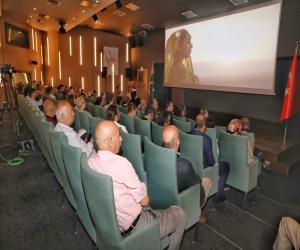
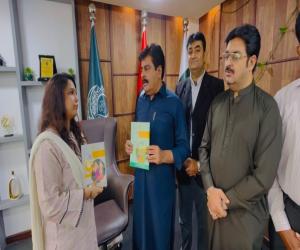
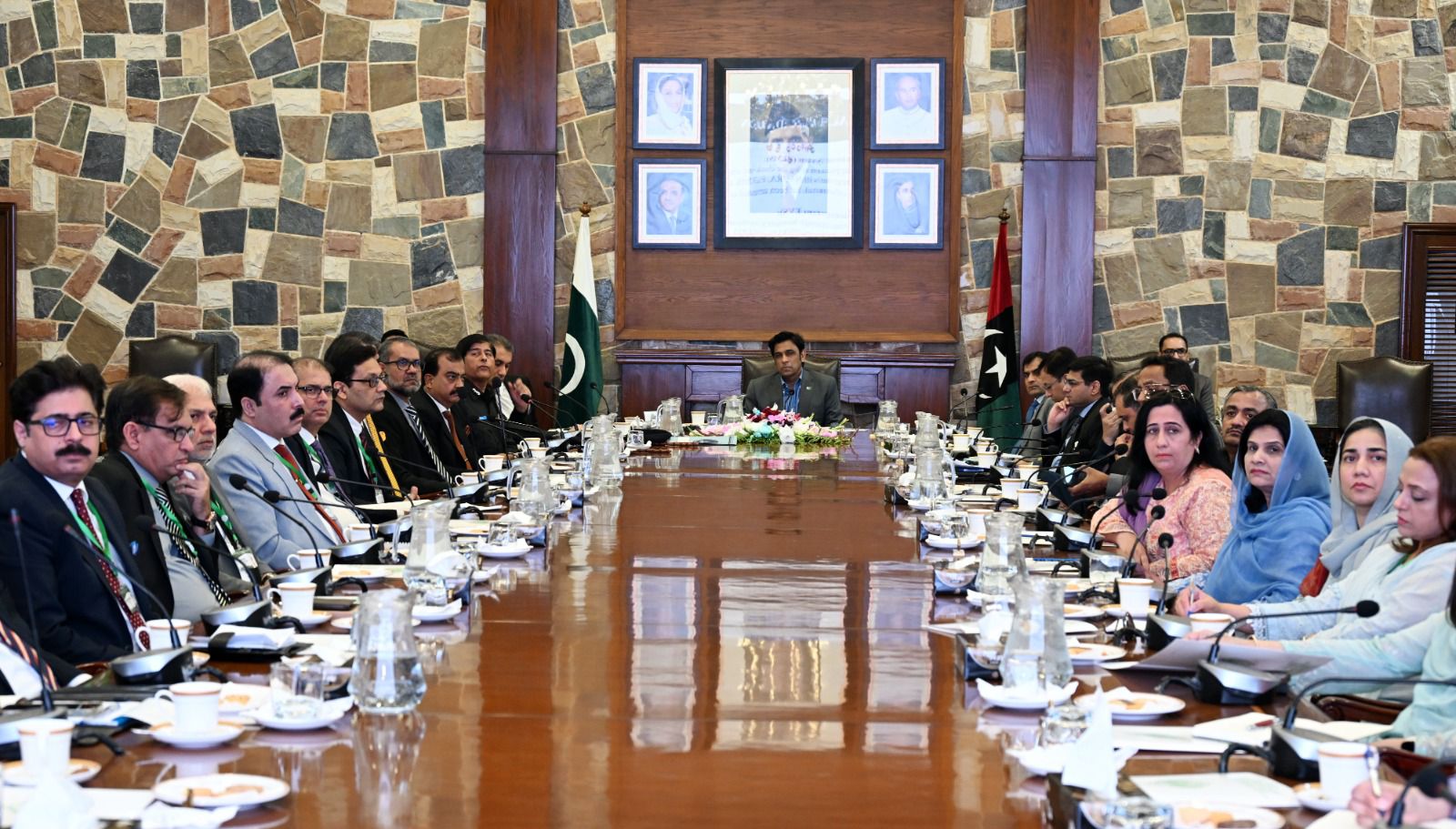
Chief Secretary Sindh Asif Hyder Shah met with a 50-member delegation of the Senior Management Course. Inspector General of Sindh Police Ghulam Nabi Memon, Additional Chief Secretary Home Muhammad Iqbal Memon, Chairman Planning & Development Board Syed Najam Ahmed Shah, Additional Chief Secretary Local Government Waseem Shamshad Ali, Director General Public Private Partnership Unit Assad Zamin, and Director General PDMA Syed Salman Shah were also present. The delegation was comprehensively briefed on Sindh’s development projects, housing initiatives, police reforms, and disaster preparedness for the monsoon season and floods.
Chief Secretary Sindh Asif Hyder Shah informed the participants that Rs. 1,018 billion has been allocated for the Annual Development Program (ADP) 2025-26. Among the flagship projects, Shahrah-e-Bhutto is Sindh’s largest Public Private Partnership (PPP) project with a total cost of Rs. 54.08 billion. The 39 km-long 3x3 high-speed access-controlled corridor will connect DHA (Korangi Creek Avenue) with M-9, and 74% of its construction has already been completed. The Chief Secretary further highlighted other mega projects under implementation, including Korangi Causeway Bridge costing Rs. 6.135 billion, Malir River Bridge at Murghikhana with a cost of Rs. 3.006 billion. Other key urban infrastructure schemes include the 65 MGD Additional Water Supply Project for Karachi at a cost of Rs. 9.146 billion, the Qasimabad Sewerage System Phase-III Hyderabad costing Rs. 3.108 billion, the Lyari Transformation Package worth Rs. 5 billion, and the Karimabad Underpass in Karachi District Central with a cost of Rs. 3.810 billion. Chief Secretary also mentioned the Delta Blue Carbon Project covering 350,000 hectares, which has already generated 3.1 million verified carbon credits, yielding USD 14.7 million revenue deposited into the provincial account, with an annual revenue potential of USD 15 to 20 million in the years ahead.
Inspector General of Sindh Police Ghulam Nabi Memon briefed the delegation that the annual police budget stands at Rs. 189.7 billion, including Rs. 153.8 billion for salaries and Rs. 35.96 billion for operational expenses. In Kacha areas, the police have successfully carried out 760 intelligence-based operations and 352 search-and-sweep operations. The IGP further outlined key reform initiatives including the establishment of a state-of-the-art CTD Fusion Center at a cost of Rs. 772 million equipped with advanced digital forensics and video enhancement technology. The Sindh Smart Surveillance System is being deployed with AI-enabled cameras across 42 toll plazas, while the Karachi Safe City Project, worth Rs. 6.62 billion, will see the installation of 1,300 surveillance cameras across the city. Other IT-based initiatives include the Police Station Record Management System across all police stations, E-Driving License, Violation Management System, Hotel Eye Management System, Employee Verification System, and E-tagging of repeat offenders. Police welfare measures include a Rs. 4.962 billion Health Insurance Scheme, which provides up to Rs. 1 million in medical coverage for every police officer and their families. The Shaheed Package has been enhanced from Rs. 23 million to Rs. 60 million, while families of martyred officers are entitled to salary until retirement and two job opportunities.
Director General PDMA Sindh briefed that during the 2022 monsoon floods, 24 districts were affected, impacting 12.3 million people, damaging 2.08 million houses. For the Monsoon 2025, the Pakistan Meteorological Department had forecasted 33% to 55% above-normal rainfall in Sindh. In response, PDMA has developed a comprehensive contingency plan focusing on hazard analysis, resource mapping, evacuation strategies, and simulation exercises. DG PDMA further informed that to support affected communities, emergency relief supplies have already been distributed to district administrations, including 100 dewatering pumps, 13,095 tarpaulin sheets, 1,280 life jackets, 11,520 tents, 12,000 hygiene kits, 33,020 mosquito nets, 9,000 animal mosquito nets, 11,000 plastic mats, 11,000 jerry cans, 11,010 kitchen sets, 900 portable toilets, 10,210 woolen mattresses, and 2,500 first aid kits. Additionally, PDMA and District Disaster Management Authorities (DDMAs) maintain large warehouses stocked with over 280,000 tents, 1.83 million mosquito nets, 96,722 mats, 37,331 cotton mattresses, 133,590 jerry cans, 9,835 first aid kits, and 36,524 kitchen sets to ensure rapid and effective disaster response capability across all districts.
Concluding the session, Chief Secretary Sindh Asif Hyder Shah emphasized that the Government of Sindh remains fully committed to providing essential public services, reducing poverty, and ensuring sustainable development through integrated development projects, robust police reforms, and efficient disaster risk management mechanisms to protect the people of the province.

The participants of the delegation appreciated the flagship projects of the Sindh Government, especially the Public Private Partnership initiatives which have enabled the province to deliver large-scale infrastructure on modern standards, and the Sindh Peoples Housing for Flood Affectees Program which is transforming the lives of vulnerable families by providing safe housing solutions. The delegates noted that these initiatives reflect Sindh Government’s strong commitment to inclusive development, resilience against disasters, and long-term poverty reduction. They lauded the innovative financing models under PPP and the community-focused design of housing projects that ensure both transparency and sustainability.