Lahore Ranks 5th Most Polluted City Globally on AQI: Artificial Rain Attempts Fall Short
 Nadia Nawaz
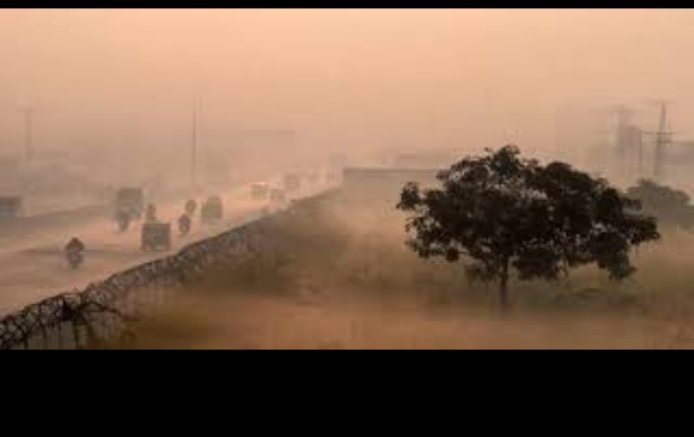
Despite concerted efforts to combat smog through artificial rain, Lahore, the
capital of Punjab, remains the 5th most polluted city in the world, according
to a recent report by ARY News.
The Punjab government
executed a test for artificial rain through cloud-seeding in specific areas of
Lahore to alleviate the smog situation. However, the Air Quality Index (AQI)
for Lahore still measured a concerning 221 in the morning.
The severity of the pollution becomes even more apparent when examining
specific areas within Lahore.
Shrahra-e-Quaid-e-Azam
recorded an AQI over 396, the Ground Cantonment Area reached 300, and Mall Road
areas surpassed 400 on the AQI scale.
The AQI is determined based on five pollution categories:
ground-level ozone, particulate matter, carbon monoxide, sulfur dioxide, and
nitrogen dioxide.
Alarming
AQI Levels: Understanding the Health Risks
AQI levels ranging from 151-200 are considered unhealthy, while a rating
between 201 to 300 poses more significant health risks.
An AQI exceeding 300 is
classified as extremely hazardous. Experts note that air pollution tends to
escalate during the winter, with changes in wind speed, wind direction, and
lower temperatures contributing to increased pollution levels. In winter, the
air becomes denser, causing harmful particles to move downward and intensifying
the pollution in the atmosphere.
Winter Woes: Factors Contributing to Rising Air Pollution
The onset of winter brings a surge in air pollution attributed to factors such
as burning crop remnants, industrial emissions, and the combustion of coal,
garbage, oil, or tires. The resulting smoke and pollutants create a layer that
blankets the affected area, persisting from the beginning of winter until its
conclusion.
Experts emphasize the
need for comprehensive measures to address the root causes of air pollution in
order to safeguard public health and the environment.