Murad focuses on critical environmental drivers of stunting to control it Sindh govt- WB agree to work together
KARACHI Sindh Chief Minister Syed Murad Ali Shah has said that the critical environmental drivers of stunting including water, sanitation, hygiene, and the agri-food system are being focused on through effective interventions. “These interventions have been made through ADP schemes and from the ongoing World Bank projects.”
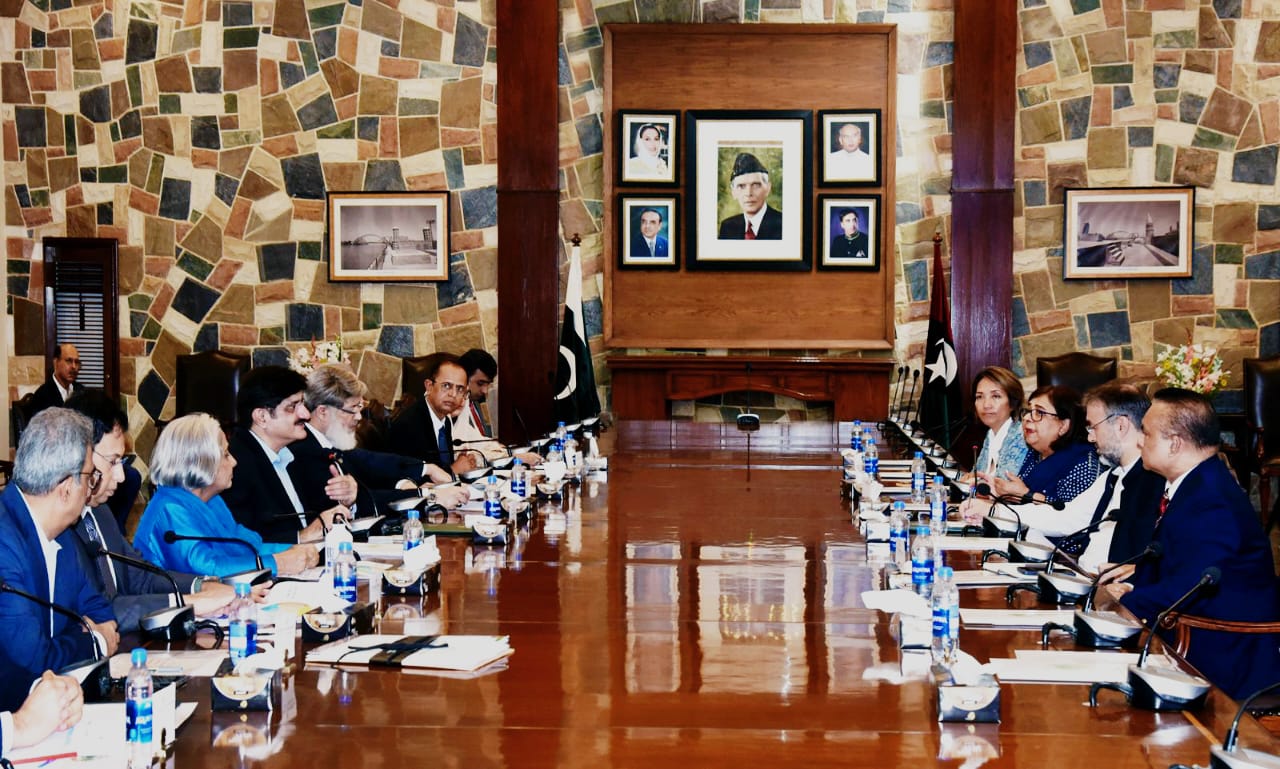
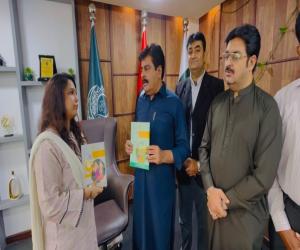
This he said on Monday while speaking with World Bank Country Director Mr Najy Benhassine who called on him along with his delegation to discuss the Child Stunting Mission.
The meeting was attended by Minister Health Dr Azra Fazal Pechuho, acting Chief Secretary Musadqi Ahmad, PSCM Agha Wasif, Chairman P&D Najma Shah, and Secretary Health Agha Wasif.
The World Bank delegation members were Economist Ghazaa Mansuri, Senior Health Specialist Ms Hinn Hinn Pyne and Senior Health Expert Ziauddin Hyder.
Murad Shah said that the overall stunting rate in Sindh as assessed by Unicef in its survey of 2014 was 48 per cent.
The Sindh government launched the World Bank-assisted Multi-Sectorial Accelerated Action Plan (AAP) in 2017 to reduce stunting from 48 per cent to 30 per cent by 2021 and then further reduction up to 15 per cent by 2026,” he said and added that the stunting rate has started coming down from 48 per cent but its assessment could be made through another survey.
Water, sanitation & hygiene: The chief minister and the World Bank team agreed that the provincial government would address environmental drivers of stunting by expanding access to safely managed water and sanitation. Mr Shah said that the local government and Public Health Engineering department were working to ensure the treatment of drinking water, sewage and effluent.
The chief minister said that the mass rollout of a behavioural change Campaign to shift cultural and behavioural practices was important for which PPHI and the health department were working. Murad Shah said that the declaration of Open Defecation Free (ODF) Villages was being made through water sources testing for biological and chemical contaminants.
Demos on the construction of household latrines were made in the villages and behaviour change communication campaigns were in progress. He added that his government was working to promote Community Led Total Sanitation (CLTS).
The chief minister said that the Public Health Engineering (PHE) department was responsible for rural water and sanitation services. “Now the PHE dept would be directed to focus on small, scattered community-level drinking water schemes with poor geographic targeting,” he said, adding that his party chairman Bilawal Bhutto Zardari has already directed him to invest in water treatment. Mr Shah said that under the party's election manifesto, the Sindh govt has decided to invest in water and sanitation schemes. It has also decided to increase the operation and maintenance (O&M) budget of water and sanitation schemes so that out-of-order schemes could be made functional, including RO plants.
The chief minister said that the Public Health Engineering (PHE) department was responsible for rural water and sanitation services. “Now the PHE dept would be directed to focus on small, scattered community-level drinking water schemes with poor geographic targeting,” he said, adding that his party chairman Bilawal Bhutto Zardari has already directed him to invest in water treatment. Mr Shah said that under the party's election manifesto, Sindh has decided to invest in water and sanitation schemes and increase the operation and maintenance budget so that out-of-order schemes could be made functional, including RO plants. Health: Discussing the Population, Health and Nutrition- related drivers of Stunting the chief minister decided to strengthen access to and quality of basic preventive/curative healthcare and improve practices related to childcare and feeding. He also decided to further strengthen the ongoing nutritional supplementation only for short-term high-risk situations. The family planning is already in progress.
Discussing the intervention, Murad Shah said that the Outpatient Therapeutic (OPT) Sites and Nutrition Stabilization Centers (NSC) have been established in 23 districts. He added that the treatment of Severe Acute Malnutrition (SAM) cases at Outpatient Therapeutic Sites (OTP) and Severe Acute Malnutrition (SAM) with Medical Complications at Nutrition Stabilization Centers (NSC) was being carried out. The patients are provided nutrition commodities (RUFT, MNP, F-75, F-100) and medicines (IFA tabs, Parenteral Iron, Deworm Tabs) to children, Adolescents and Pregnant & Lactating Women (PLWs). Capacity-building training for community-based management of Acute Malnutrition (CMAM) and Infant young and Child Feeding (IYCF) was being made.
Agri-food sector: To fix the agri-food system the chief minister decided to promote a shift to sustainable and regenerative farming and livestock management, promote crop diversification and livestock productivity to increase access to nutritionally dense and diverse foods for small farmers. It was also decided to ensure food safety and reduce post-harvest waste and losses.
Talking about the intervention under AAA, the CM said that Asset Distribution was started by providing livestock - five Goats and 10 poultry to each beneficiary household. Provision of Veterinary services in terms of vaccination and drenching twice a year (2 doses) was also carried out and launched awareness regarding nutrition and livestock-improved management practices.

 Imran
Imran