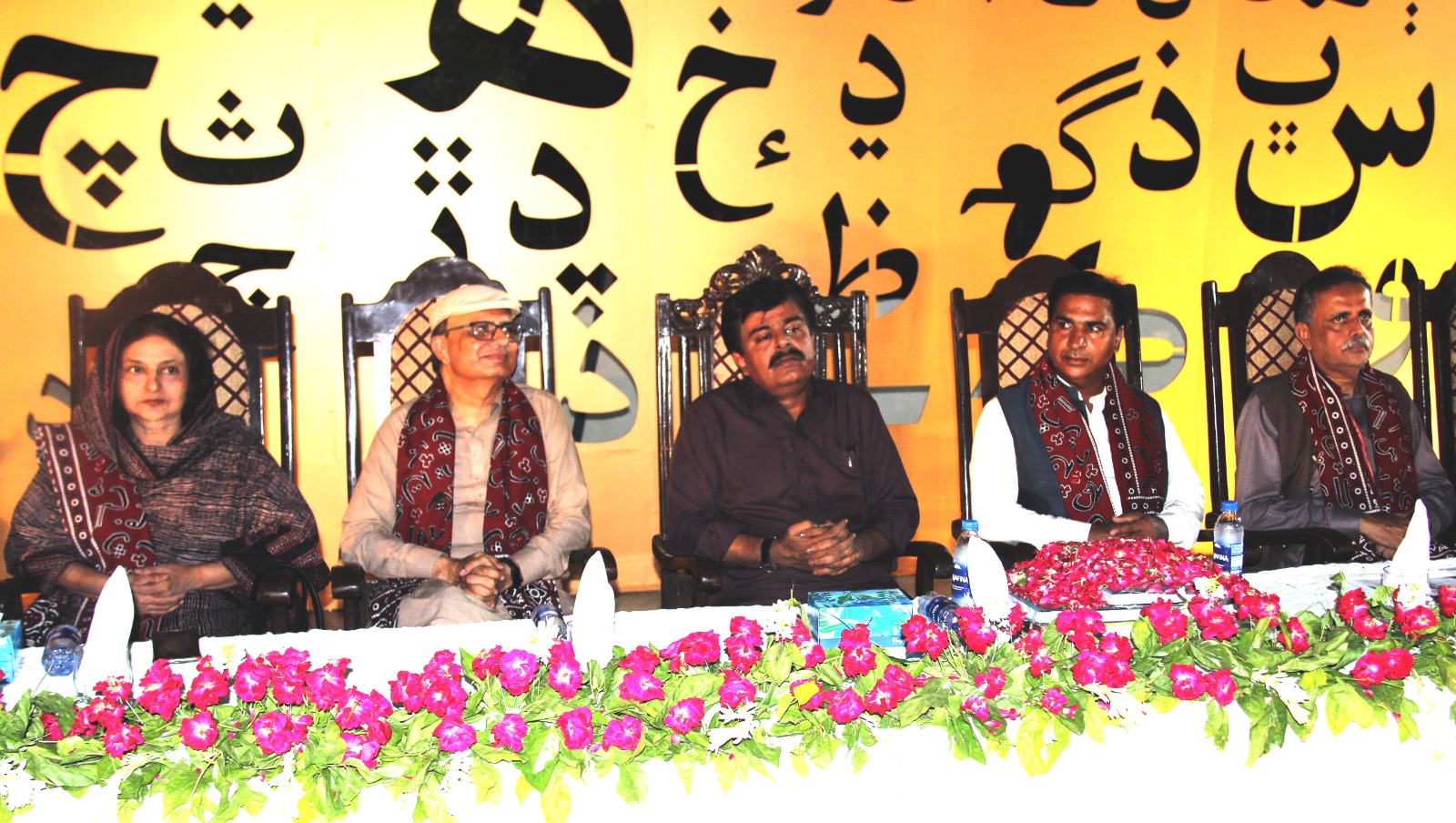
The Sindhi Language Authority hosted an awards ceremony along with the inauguration of the Sindhi Alphabet Museum and Open Stage
 Imran
Imran
Hyderabad
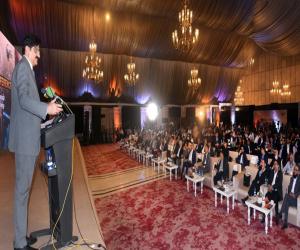
The Sindhi Language Authority hosted an awards ceremony along with the inauguration of the Sindhi Alphabet Museum and Open Stage.

The event was graced by provincial Minister for Education and Minerals, Syed Sardar Ali Shah, who in his presidential address remarked that ministries, titles, and positions bring responsibilities and one should fulfill them to the best of one’s ability — this is not an extra virtue, but a basic duty.

He emphasized the acute need for thousands of qualified Sindhi teachers in over 12,000 registered private schools, where 4 to 4.5 million children study, stating, “We simply do not have enough trained teachers.”

He called on everyone to recognize their responsibility and said that public questioning of such matters is a gesture of genuine concern.
Discussing the Mohenjo-daro script, the minister admitted there remain interpretational challenges, and the lack of access for foreign researchers, especially from India, complicates the deciphering of the Indus script. “Wherever remnants of the Indus civilization are found, further excavation is needed,” he said.
He warned against treating public offices as mere sources of employment, adding, “Globally, outsourcing is the norm, but we have overloaded our institutions with recruitments, which harms these bodies.” The minister encouraged the Language Authority to submit its needs in writing for prompt resolution.
Speaking to the media, Syed Sardar Ali Shah underscored two urgent tasks for the survival of Sindhi: the preservation of its ancient script and active language promotion. “Introducing Sindhi on media screens is key to saving the language,” he added, while also stressing the need to keep institutions like Government College Kali Mori functioning and open for admissions. Due to financial constraints, he noted, a university could not be established in Kohsar, explaining that “institutions do not operate on auto-pilot; it is the society and its people who sustain them.”

The minister pledged to arrange CPT training for 150,000 teachers and committed to ensuring jobs for capable Sindhi teachers, particularly in private schools, “Give me 12,500 Sindhi-teaching teachers, and employing them is my responsibility,” he said. “I can speak Sindhi but cannot teach — for that, we need teaching methodology.” He assigned the responsibility of preparing Sindhi teachers to the Language Authority.
Praising Dr. Ishaq Samejo’s contributions, he remarked that Urdu speakers have no objection to wearing Ajrak, but urged politicians not to exploit language for political gain.
Speaking at the event, Dr. Ishaq Samejo, Chairman of the Sindhi Language Authority, said aligning thousands of language tasks with institutional goals is a difficult process, but he has strived over his three years to connect the Authority’s objectives with society at large: “Language work is not just academic, it demands community engagement as well.”
He said Sindhi learning centers were established for teacher training, including one in Karachi where teachers from leading schools are now successfully teaching Sindhi. There are plans to expand these centers to district level, requiring support from the Education Department, and an endowment fund has been setup to sustain them.
He highlighted ongoing efforts to encourage research and linguistic quality, with technology-based awards and recognition for young researchers and writers — something unique to the Sindhi language in Pakistan. He also launched the Shaikh Latif Melas for children, aimed at fostering a connection between youth and the literary heritage of Latif.