58 years of Pakistan People’s Party
 Ishak Soomro
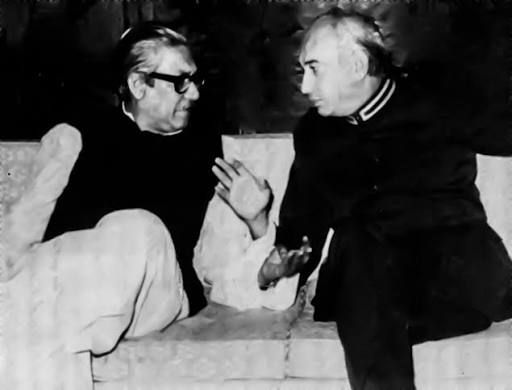
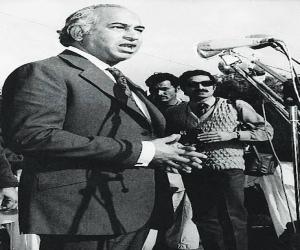
The Pakistan People's Party is celebrating its 58th anniversary today, having been founded by Zulfikar Ali Bhutto in the imperial city of Lahore on November 30, 1967. Earlier, Barrister Zulfikar Ali Bhutto began his political career by joining Ayub Khan's cabinet, resigned from the ministry over disagreement with the Tashkent Agreement, and founded the Pakistan People's Party.

The party was founded on four principles: Islam is our religion, democracy is our politics, socialism is our economy, and the source of power is the people. After forming the party, Zulfikar Ali Bhutto forced Ayub Khan to resign, and three years later won the first one-vote, one-person elections in Pakistan's history with a landslide victory in West Pakistan, especially Punjab and Sindh. Although Sheikh Mujibur Rahman's party, the Awami League, had a clear majority in East Pakistan, Sheikh Mujib was denied power, and then Mujibur was forced to liberate Bengal and create Bangladesh.

For 23 years after Pakistan's independence, the government structure in Pakistan remained authoritarian and bureaucratic, with the absence of a unified constitution, weak political parties, and even undemocratic forces ruling the country. In 1970, the Pakistan People's Party emerged as the first democratic and people-friendly party in the surviving West Pakistan.

The Pakistan People’s Party, its leadership and workers have made such sacrifices for democracy in this country in the last 58 years that there is rarely an example in history. The current leadership of the Pakistan People’s Party is in its third term. Zulfikar Ali Bhutto had only 12 years from 1967 to 1979 to lay the foundation of his Pakistan People’s Party.

In which he not only gave voice to the people but also gained power, brought development and prosperity to the country and after forming his party, in a short period of 12 years, through the joint conspiracies of world powers, generals and judges, he was not only deprived of power but also hanged. He held the positions of President and Prime Minister, gave the unanimous constitution of 1973, convened the Islamic Summit Conference in Lahore, and ruled for less than five years.

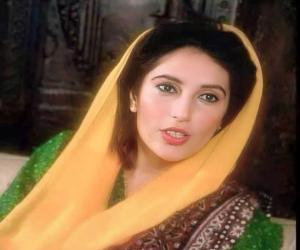
In April 1979, he was hanged in Rawalpindi Jail and his body was sent to Larkana. From there, his young daughter Benazir Bhutto took over the party and ran it successfully, and in her 30-year political career, she held the post of Prime Minister twice, lived in prison and exile, and buried the bodies of two brothers with her own hands. The country's prestige was enhanced but was murdered by extremists and dictators in the same city of Rawalpindi.

This is now the third leadership of the Pakistan People's Party, which started in 2007 after Benazir Bhutto, and is led by Bilawal Bhutto and Asif Ali Zardari.

The famous American biographer Stanley Wolpert, who wrote the biography of Zulfikar Ali Bhutto, writes in "Zulfikar Ali Bhutto of Pakistan" that Zulfikar Ali Bhutto's greatest desire was to become the "Chief Minister of Sindh", because his father Shahnawaz Bhutto, while leading the Ittihad Party from his city of Larkana, was defeated by Sheikh Abdul Majeed Sindhi in the first Sindh Assembly elections of 1937. In this shock, he said goodbye to politics and went to Bombay to settle down.

Where he served in the Bombay government as the Chairman of the Sindh Public Service Commission. Zulfikar Ali Bhutto, avenging his father's defeat, became the Prime Minister of Pakistan, and the leader of Asia. His daughter Benazir, after completing her studies abroad, returned to the country a few months before the fall of Zulfikar Ali Bhutto's government, aspiring to work in the Ministry of Foreign Affairs.

She also did some programs on foreign affairs on Pakistan Television, but after that she had to do politics to fulfill his father's mission, which also ended tragically in Liaquat Bagh, Rawalpindi. The Pakistan People's Party, whose workers and leadership made sacrifices to keep the party alive, the PPP is invincible in Sindh today,
In the 1970 elections, the Pakistan People's Party defeated traditional politicians like GM Syed, Ayub Khuhro, Qazi Fazlullah, and Pir Ali Muhammad Rashdi, who were considered the leading figures in Sindh politics since 1937, and laid the foundation for a strong and popular political party in Sindh. Because before that, there was no Awami Party or strong political leadership in Sindh. Personalities used to win elections, form governments and dismiss them. That is why today in Sindh, old families and personalities are competing with the Pakistan People’s Party. But no comparable alternative has been able to emerge.
A review of the current political landscape of Pakistan shows that for the last twenty years, no party has been able to win elections at the national level. For example, the Pakistan People’s Party wins elections in Sindh, the Muslim League-Nawaz in Punjab, and the Tehreek-e-Insaf in Khyber Pakhtunkhwa and Punjab, while the Muslim League-Nawaz could not win a single seat in Sindh. Therefore, it can be said that the political landscape of Pakistan will remain the same now.
Despite all these difficulties, the Pakistan People’s Party has so far won power at the center five times and in Sindh eight times from 1970 to 2024. However, despite winning more seats in the provincial assembly in 1990, 1996 and 2002, it was not allowed to form a government in Sindh. With the support of the establishment, Jam Sadiq Ali, Syed Muzaffar Hussain Shah, Arbab Rahim, Liaquat Ali Jatoi, and Ali Muhammad Mehr were appointed as the Chief Minister of Sindh. The Pakistan People’s Party is perhaps the only party in the subcontinent that has won every election in the same province of Sindh for the last 55 years.
Like Benazir Bhutto, the entry of Asif Ali Zardari and Bilawal Bhutto into politics is considered an accident. Asif Zardari, who returned after four years of self-imposed exile after Benazir's assassination, not only took over the leadership of the party, but also, under his own strategy, got Yousaf Raza Gilani elected as the Prime Minister at the Center and has now been elected President of Pakistan for the second time.
The leadership of Asif Zardari and Bilawal Bhutto has succeeded in forming the government in Sindh for the fourth time by winning every election due to their capabilities. At present, the personalities and families opposing the Pakistan People’s Party in Sindh look weak.

In today's Pakistan, where the situation in the two provinces of Khyber Pakhtunkhwa and Baluchistan, terrorism, and the rise of fundamentalist forces have increased the importance of the Pakistan People's Party. As for the Pakistan People's Party in Sindh, its leadership is in the hands of an extraordinary personality like Asif Ali Zardari, who, after spending 11 years of his life in prison and 4 years in exile, is doing politics with as much understanding as he can about the politics of this country.
Many people may not like it, but running the party successfully, becoming a part of the government and especially ruling Sindh continuously for twenty years is a clear proof of their successful political strategy. The success of the Pakistan People’s Party (PPP) for 58 years, its presence among the people, its presence in power and opposition and its continued popularity are the achievements of the party.

When the name and symbol of the Awami League, the party that won a landslide victory in Bengal in the 1970 elections and liberated the country with the sacrifices of 3 million Bengalis, is not even mentioned, this is the most bitter example in history.

At the national level and in Sindh as well, today there is a politics of Bhutto-friendship and Bhutto-enemy. Bhutto's sacrifice and the sacrifices of his family and the qualities that gave the people a language, political awareness and strength are the axis of Pakistani politics. This is the reason why the Pakistan People's Party is standing strong in the country after 58 years.
Professional Profile: Ishak Soomro
Ishak Soomro is a highly experienced professional specializing as a Journalist, Research Associate, and Columnist with a distinguished career spanning 15 years.
He possesses extensive expertise in multilingual communication and analysis, having written and contributed across three major languages: Sindhi, Urdu, and English