Who are the killers of Benazir Bhutto?
 Ishak Soomro
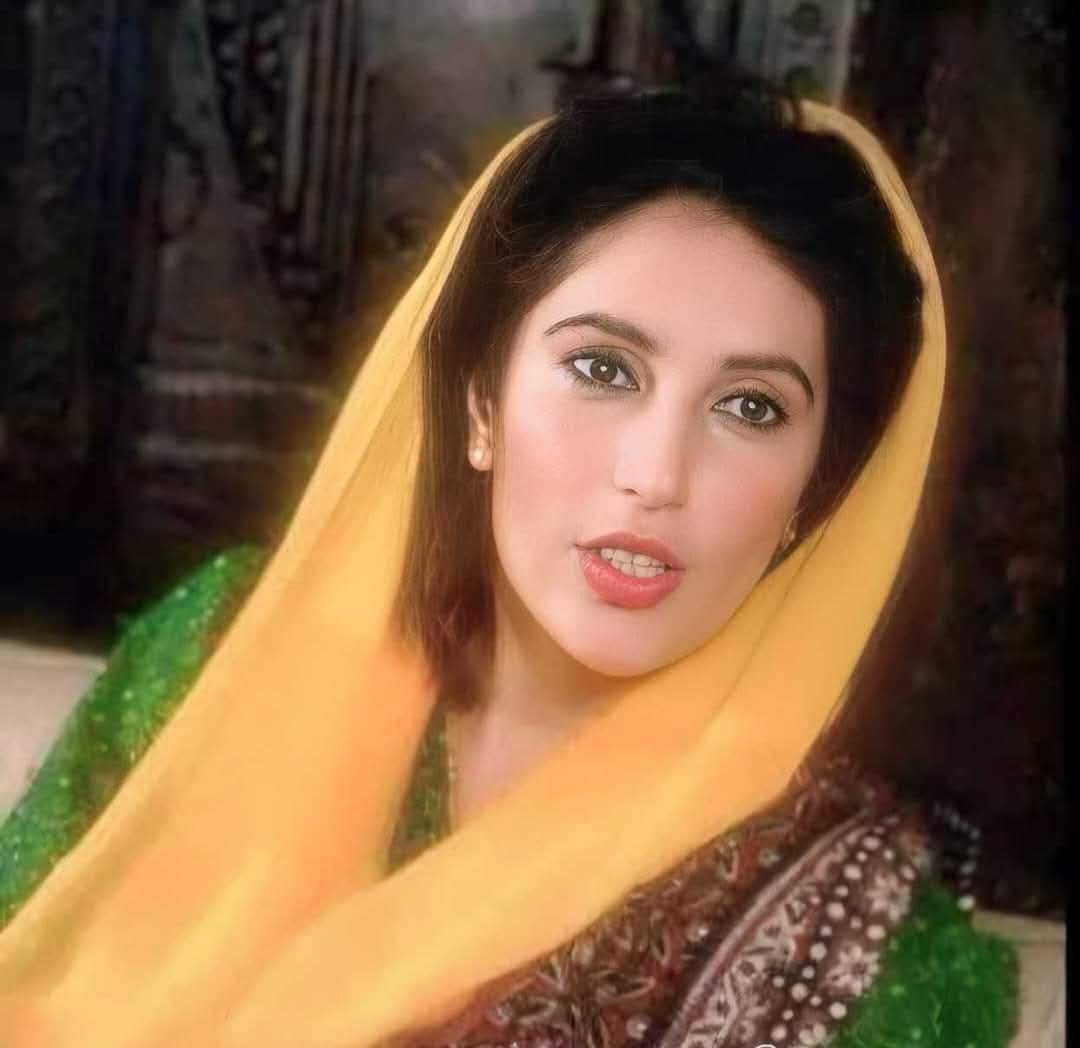
The Eighteenth death anniversary of Benazir Bhutto is being observed today. The main rally is being held at her last abode Ghari Khuda Bux Bhutto, "Judicial activism" is on the rise in the country. Benazir Bhutto's personality was full of many qualities and struggles. Today we will dare to write something about her murder case and its verdict.
In the Rawalpindi Anti-Terrorism Court, Judge Muhammad Asghar, while delivering the verdict in this important case that lasted for a decade, acquitted five accused of Tehreek-e-Taliban Pakistan, sentenced two police officers, DIG Saud Aziz and SP Khurram Shahzad, to 17 years in prison and a fine of 500,000 rupees each. The same court decided to seize the property of Army General Pervez Musharraf and to try him separately upon his return to the country.
The Rawalpindi court's decision surprised not only Benazir Bhutto's supporters but also the people of the entire country, as the five accused, who belonged to the Taliban, were acquitted despite confessional statements and other evidence.
The confessional statements of the accused involved in the Benazir Bhutto assassination case, data records of conversations on mobile phones and other things found during the investigation, and other information and evidence were collected by the country's most reliable agency, ISI itself. Among them, two people who shot and exploded Benazir Bhutto, Saeed alias Bilal and Ikramullah, were recovered.
Items including Bilal's shoes and the service company sandals worn by the other accused at that time were also recovered, which clearly shows that all five acquitted accused were involved in the assassination of Benazir Bhutto. In addition, a 17-second taped conversation between Tehreek-e-Taliban Pakistan chief Baitullah Mehsud and a cleric, recorded in Pashto, on December 28, 2007 at 9:14 am, congratulates Tehreek-e-Taliban leader Baitullah Mehsud, saying that this work was done by Ikramullah and Bilal, who are our men.
In response, Baitullah Mehsud says, "The boys were very brave and they fought very well." This recorded conversation was obtained by the ISI itself. Despite such solid evidence, the acquittal of the accused is a question mark.
On the other hand, two police officers were sentenced to seventeen years in prison and a fine of five hundred thousand rupees for not providing protection to Benazir Bhutto and for negligence, and for cleaning the scene of the incident with water.
The five accused who were acquitted were Aitzaz Shah, originally a resident of Sangalkot, Mansehra, who was then living in Metrol Colony, Karachi, Sherzaman of South Waziristan, Hasnain of Guljeewan Colony, Rawalpindi and his cousin Rafaqat Awan, and the fifth Rashid Ahmed Shabqadar, who was a resident of Charsadda, Khyber Pakhtunkhwa.
The accused confessed that they prepared the plan to assassinate Benazir Bhutto in Liaquat Bagh in Dok Saydan Quaid-e-Azam Colony, five kilometers away from Liaquat Bagh, which was the home of the two cousins, Rafaqat and Hasnain. Both of them were convinced by Qari Nadir alias Ismail and Nasrullah alias Ahmed, who were members of the Haqqania Akora Khattak University, that the solution to the problems was possible only through extremist methods. They also confessed that they were involved in terrorist activities in Rawalpindi even before assassinating Benazir Bhutto.
Various Pakistani agencies had also found from the records of Jamia Haqqania that both their names were listed in the register of those living in the madrassa.
On the day of the attack on Benazir Bhutto, Saeed alias Bilal and Ikramullah, the trained suicide bombers, Rafaqat and Hasnain had brought them to Liaquat Bagh in their taxi on December 27, 2007. Earlier in the morning, they had also gone to Faisal Mosque in Islamabad.
Earlier, they drew a map of Liaquat Bagh with the help of a pencil in the house of Dok Seidan and told Saeed alias Bilal and Ikramullah where and how to attack. They also applied henna bought from the market in Rawalpindi on their hands. It is said that suicide bombers are dressed like brides because they are told that the fairies are waiting for them in heaven. Surprisingly, a color photo of the bomber's hennaed hand is present in the file of this murder case.
A joint investigation team was formed by the police on May 17, 2010, which systematically collected detailed evidence from the admission register of Akora Khattak Madrasa and the accused. From this, it was confirmed that the accused involved in the murder were students from the madrasa's register.
It was further learned that a conspiracy to assassinate Benazir Bhutto was hatched in rooms 85 and 111 of the madrassa. According to the report, the accused Hasnain Gul was arrested by the police on January 5, 2008. He also recorded his confession before the magistrate, and the police also recovered the shawl, pair of joggers, and caps of the four accused who attacked him.
Which were confirmed by the FBI laboratory in America, Armed Forces Institute of Pathology Rawalpindi, forensic DNA and the final report that all these things belonged to these suicide bombers.
After a detailed study and review of the Benazir Bhutto assassination case, including documents, reports of various agencies and photographs, it becomes clear that the five acquitted accused, three of whom were Pashto speakers and residents of Khyber Pakhtunkhwa,
Rafaqat and Hasnain Awan were Punjabi-speaking residents of Rawalpindi, who are directly or indirectly involved in the murder, whose evidence includes phone call records, the entry register of the Haqqani Madrasa in Akora Khattak, etc. Apart from this, despite the reports of Pakistan's largest and most powerful agency, the anti-terrorism court's acquittal of the five accused is tantamount to damaging the credibility of the reports of domestic and foreign investigative agencies.

Three Prime Ministers of Sindh, Liaquat Ali Khan, Zulfikar Ali Bhutto, and Benazir Bhutto, were assassinated in the city of Rawalpindi, and the anti-terrorism court in the same city also did not do justice to Benazir Bhutto's blood, and by not providing justice, the impartiality of the country's judiciary was questioned.
Professional Profile: Ishak Soomro
Ishak Soomro is a highly experienced professional specializing as a Journalist, Research Associate, and Columnist with a distinguished career spanning 15 years.
He possesses extensive expertise in multilingual communication and analysis, having written and contributed across three major languages: Sindhi, Urdu, and English
ishaksoomro@yahoo.com